Manage Training Across Complex Partner Networks

Your partner ecosystem is not one simple hierarchy. LatitudeLearning lets locations participate in multiple networks – ownership, sales, service, brand, geography, training facilities, and more – so training can reflect how your business actually operates.

Model the relationships around your partner locations, connect people and roles to the right organizational context, and build training infrastructure that can scale with your network.
Your Partner Network Isn’t One Hierarchy

Trying to force those relationships into one hierarchy makes the LMS less useful to the business.

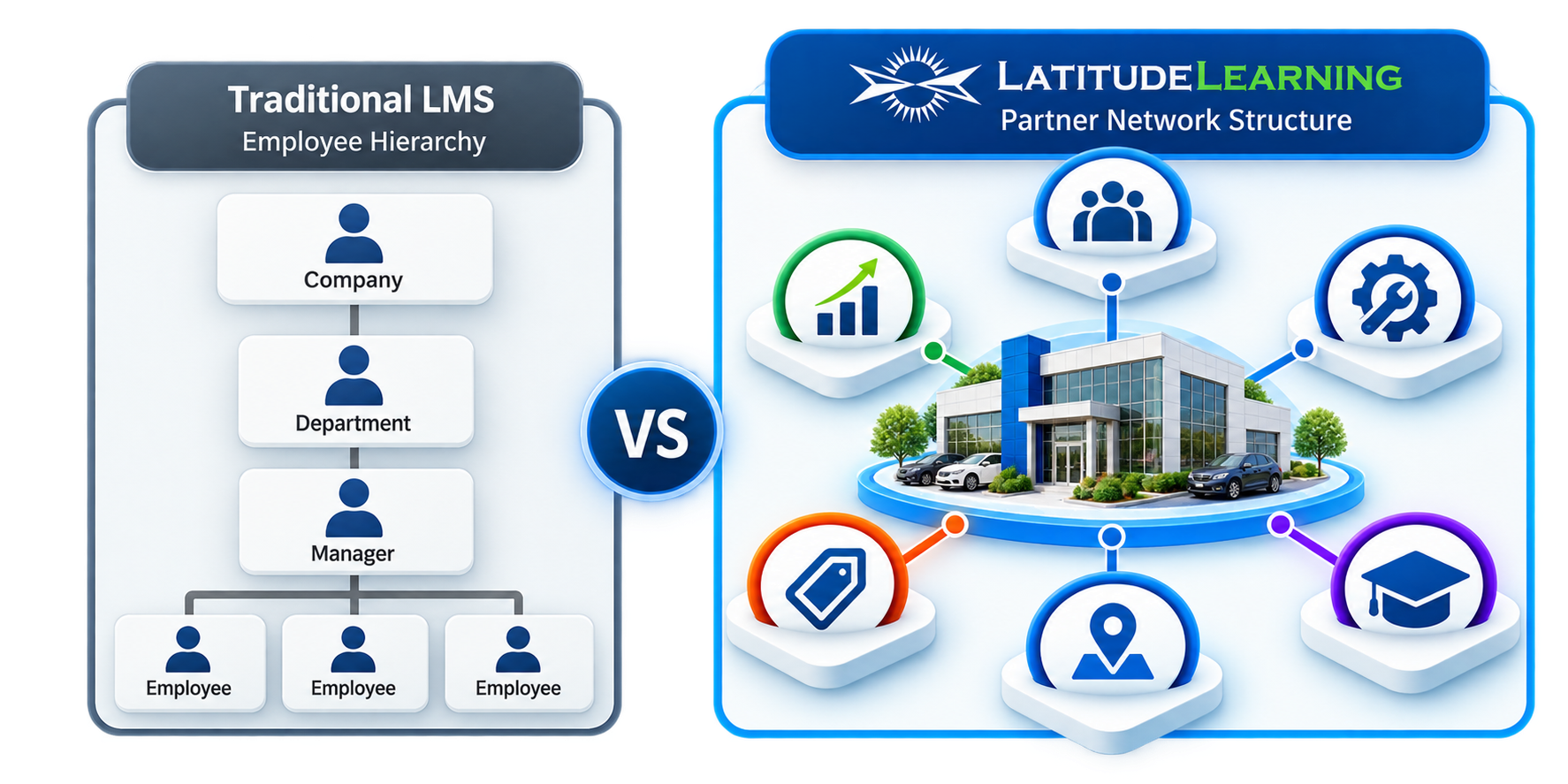
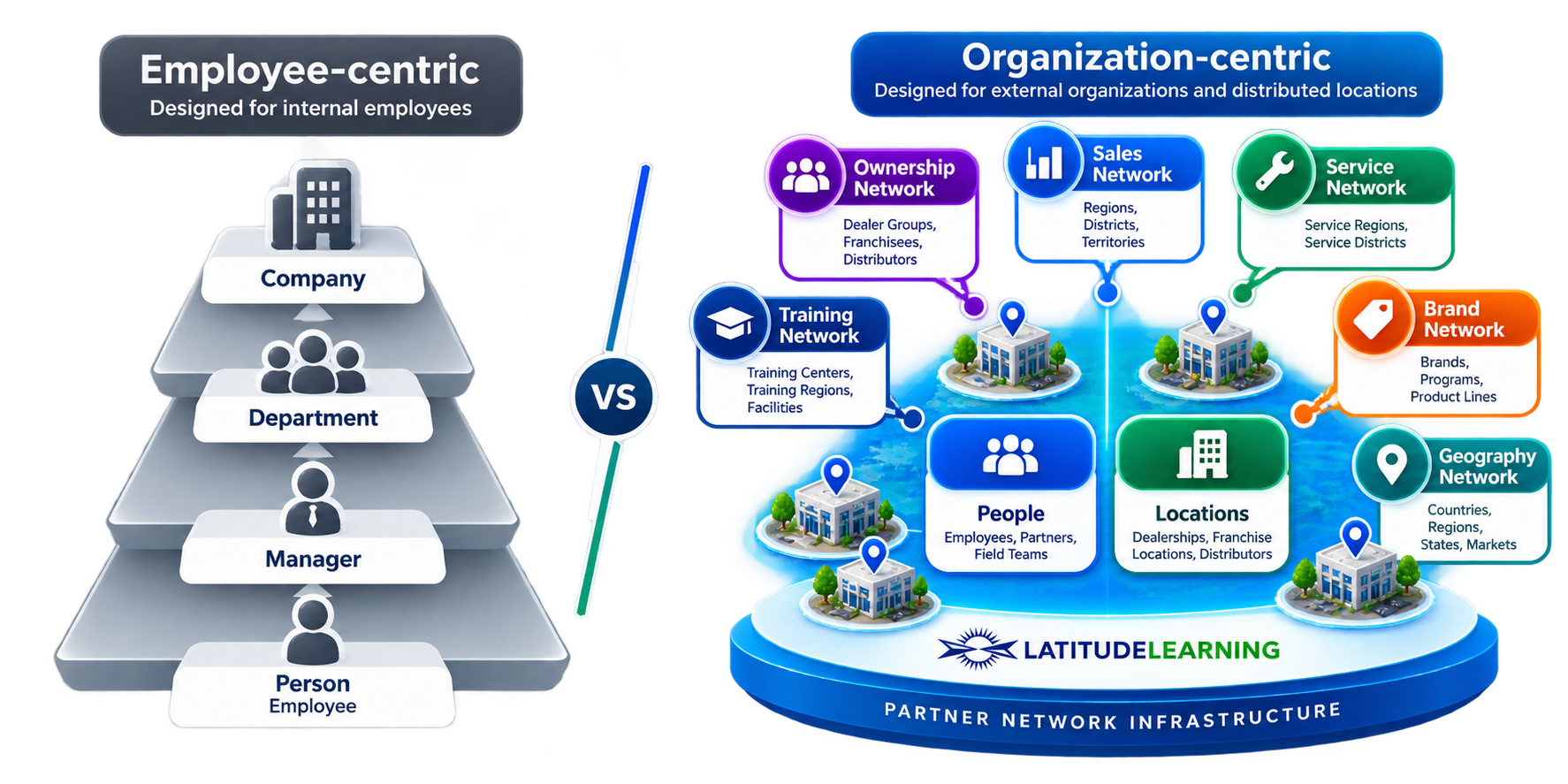
Employee training usually follows a predictable corporate structure: company, department, manager, employee. Distributed partner networks rarely work that way.

A dealer, distributor branch, franchise location, service partner, or reseller can have several relationships that matter at the same time. One location may be owned by a multi-location partner, assigned to a sales region and district, supported by a different service organization, associated with a brand, located within a geographic market, and served by a particular training facility.

The partner that owns that location may also own other locations across completely different regions, districts, brands, or training-center territories.

Model Your Network the Way Your Business Actually Operates

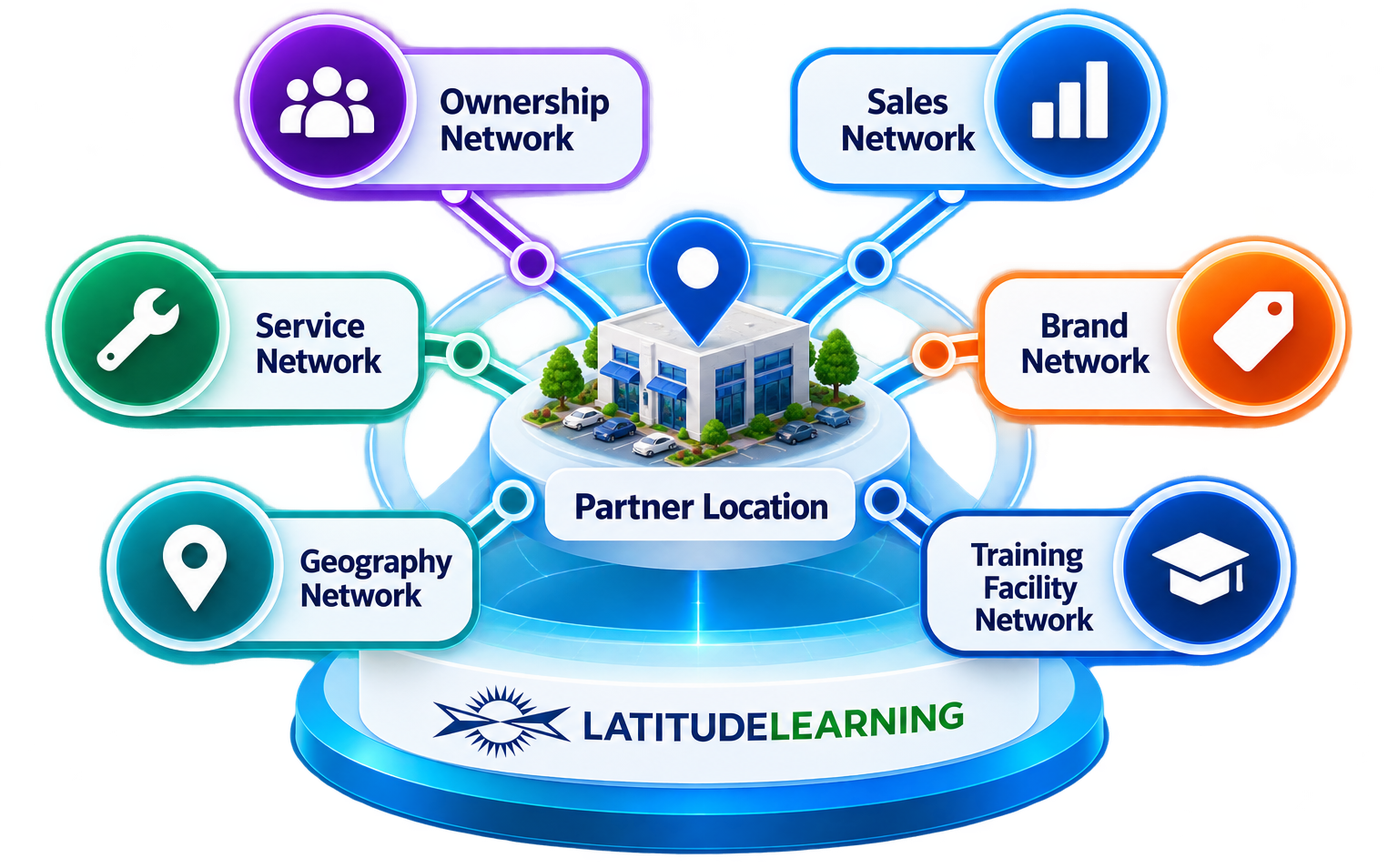
LatitudeLearning allows locations to participate in multiple networks at the same time. Each network can represent a different operational relationship without requiring the location to be duplicated or forced into one “correct” hierarchy.
Network What It Represents
Ownership Network Connect locations according to the partner organizations or groups that own them.
Sales Network Organize locations around sales regions, districts, territories, and field-support relationships.
Service Network Represent the service organization independently from the sales organization.
Brand Network Group locations according to brands, product lines, programs, or other brand relationships.
Geographic Network Organize locations by country, market, territory, or another geographic structure.
Training Facility Network Connect locations to the in-person training centers responsible for serving them.

The same location can participate in all of these networks while remaining one location in the training system.

One Location. Multiple Operational Relationships.

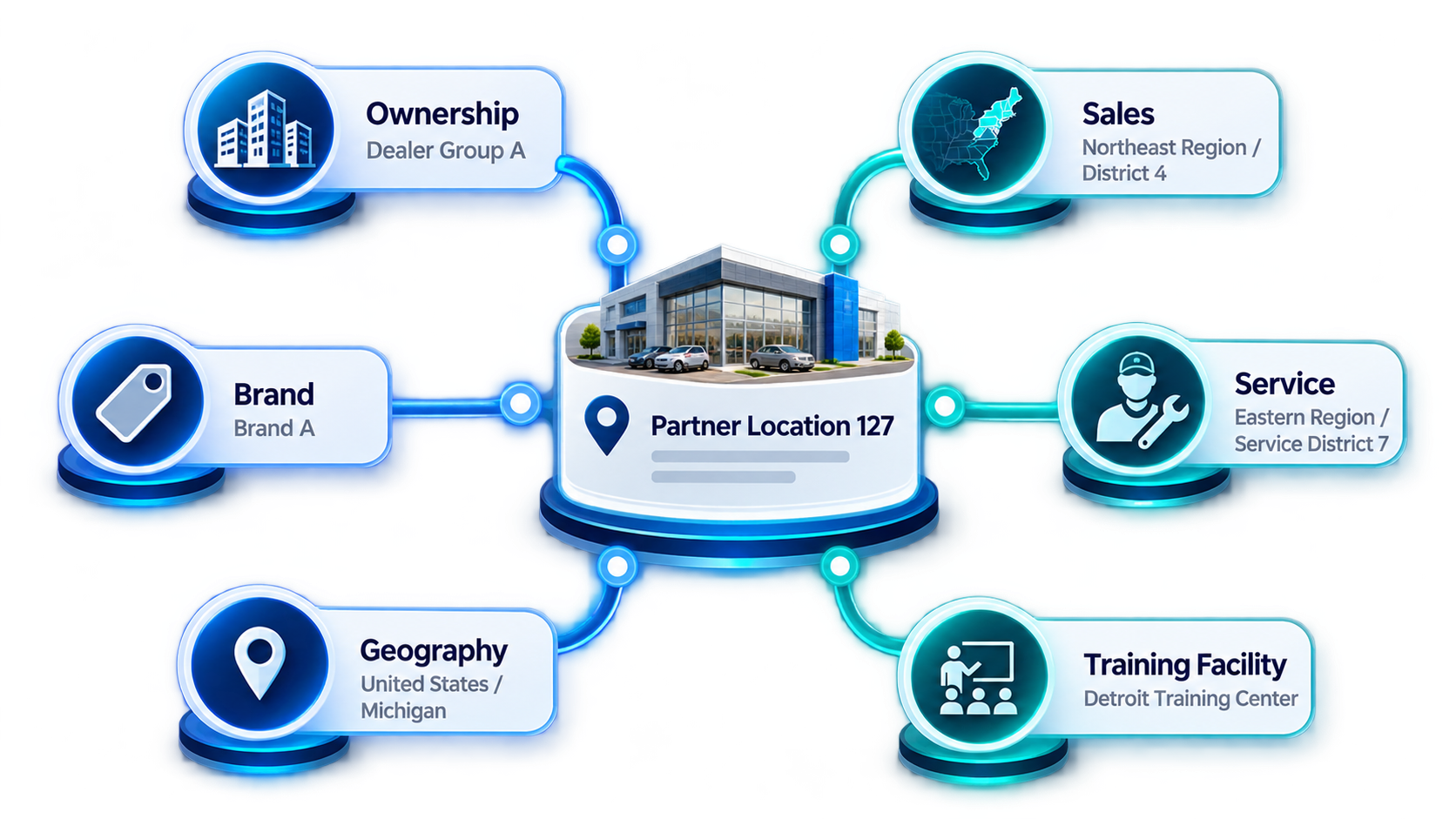
Consider a dealership owned by a multi-location dealer group. Its ownership relationship may connect it to locations in several states. Its sales team may report through one regional and district structure, while its service operation is supported through a different field organization. The dealership may represent a specific brand and be assigned to a training center based on geography or program requirements.

Those relationships do not need to line up – and LatitudeLearning does not require them to.
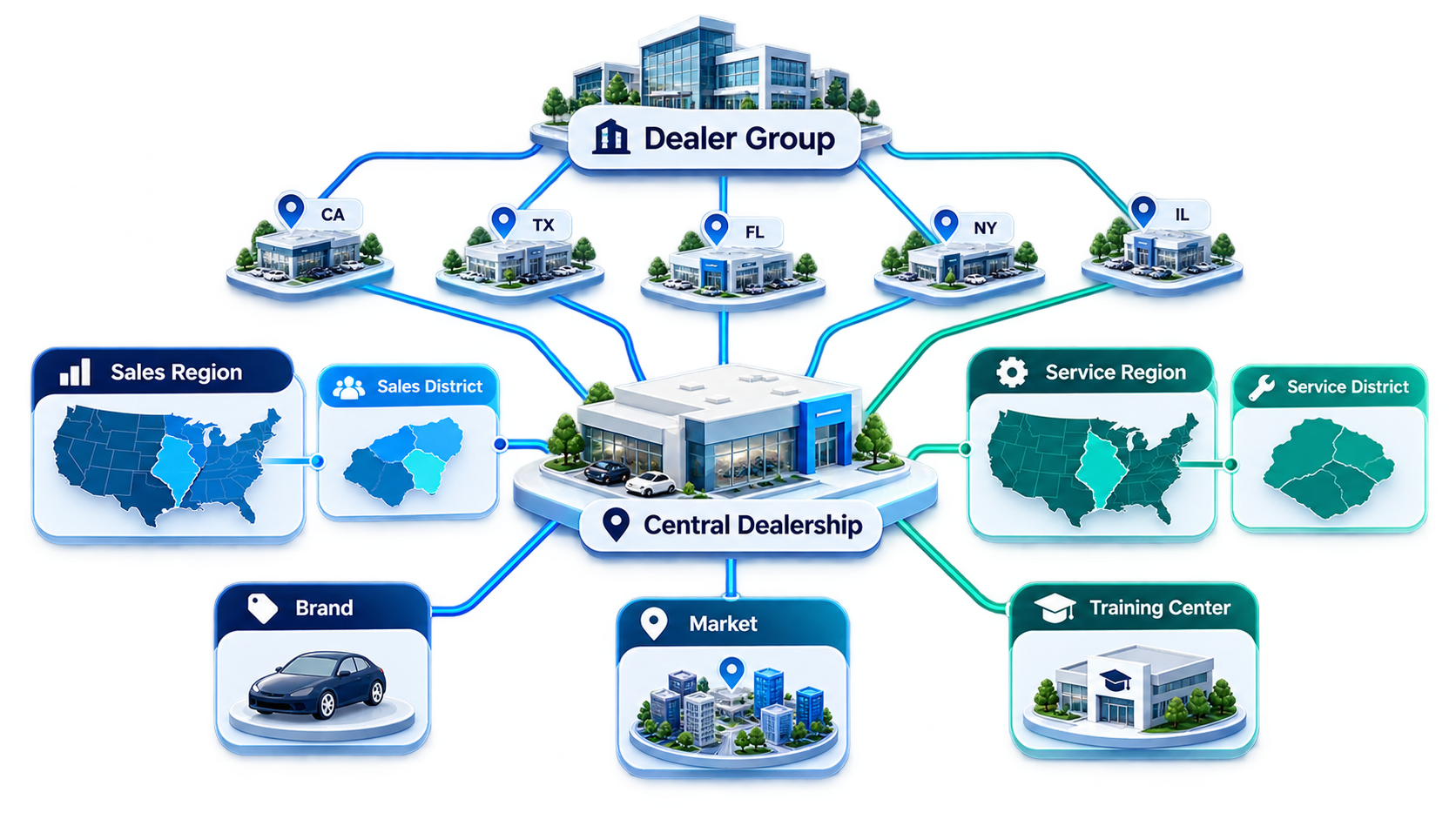
Ownership and operational structure do not have to be the same thing.

By representing the relationships separately, the LMS can preserve the way ownership, field support, brand management, geography, and training delivery actually work around the same location.

Give Every Team the Network View That Matters to Them

Different stakeholders may need to work with the same locations through different organizational views.

Stakeholder Relevant View
Partner Owner See training and readiness across the locations the organization owns – even when those locations cross regions or districts.
Sales Field Manager Focus on the partner locations within the sales region or district they support.
Service Field Manager View the locations and service personnel within the service organization they support.
Brand Team Understand training and readiness across locations representing a particular brand or program.
Training Operations Organize locations around the training facilities that deliver instructor-led or hands-on training.
Corporate Leadership Maintain a network-wide view across organizations, locations, roles, and operational relationships.

The business does not have to choose one hierarchy simply because the LMS requires one. LatitudeLearning can reflect the different relationships through which the organization already manages and supports the network.
One Infrastructure Model. Different Distributed Networks.

Dealer & Distributor Networks

Represent dealer groups, individual dealerships or branches, sales regions, service regions, brands, field teams, training centers, and other operational relationships without flattening the network into a single hierarchy.

Franchise Networks

Represent franchisees, multi-unit ownership groups, locations, territories, field operations, training regions, and other structures while maintaining system-wide training standards.

Partner Ecosystems

Manage resellers, service providers, agents, contractors, and other external organizations across programs, territories, roles, support structures, and training requirements.

Put Training Administration Closer to the Network

Managing training across a distributed network should not require corporate administrators to handle every user request, account change, or local training assignment.

LatitudeLearning supports delegated administration: portal administrators establish network-wide policies and automated requirements, while location administrators manage users and training activities at their locations.

Portal administrators can set the maximum number of users allowed at each location, specify the number of days since last login after which an inactive user is automatically deactivated, and configure automated training and certification assignments.

Location administrators can add users; deactivate and reactivate users; reset passwords; approve user requests; and assign training to people at their locations.

Corporate retains control over network-wide standards while local administrators handle routine activities. This reduces central administrative workload and helps the network scale without a matching increase in corporate administration.
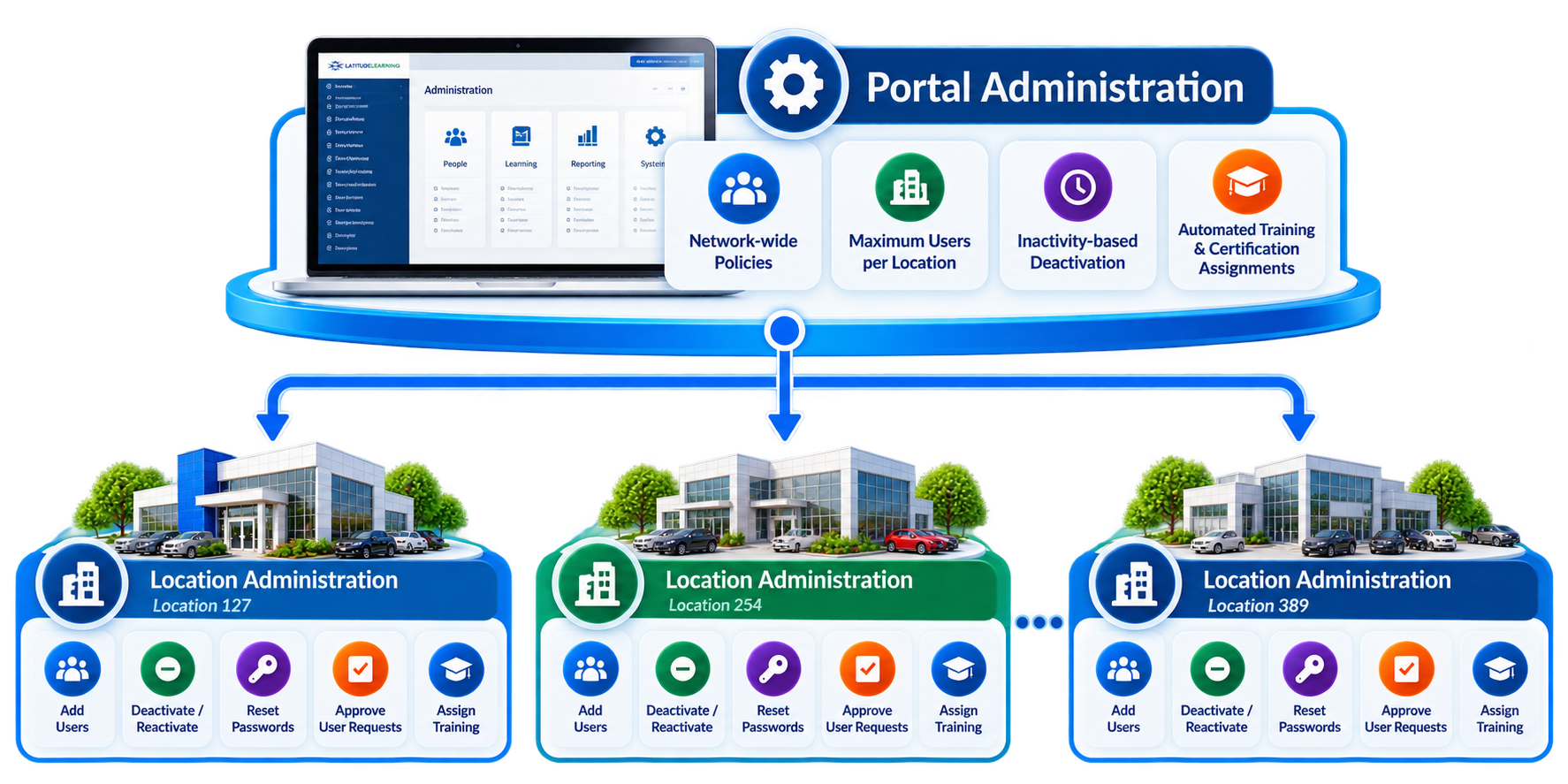
Centralized policies. Local control. Scalable training administration.

Turn Network Structure Into Training Infrastructure

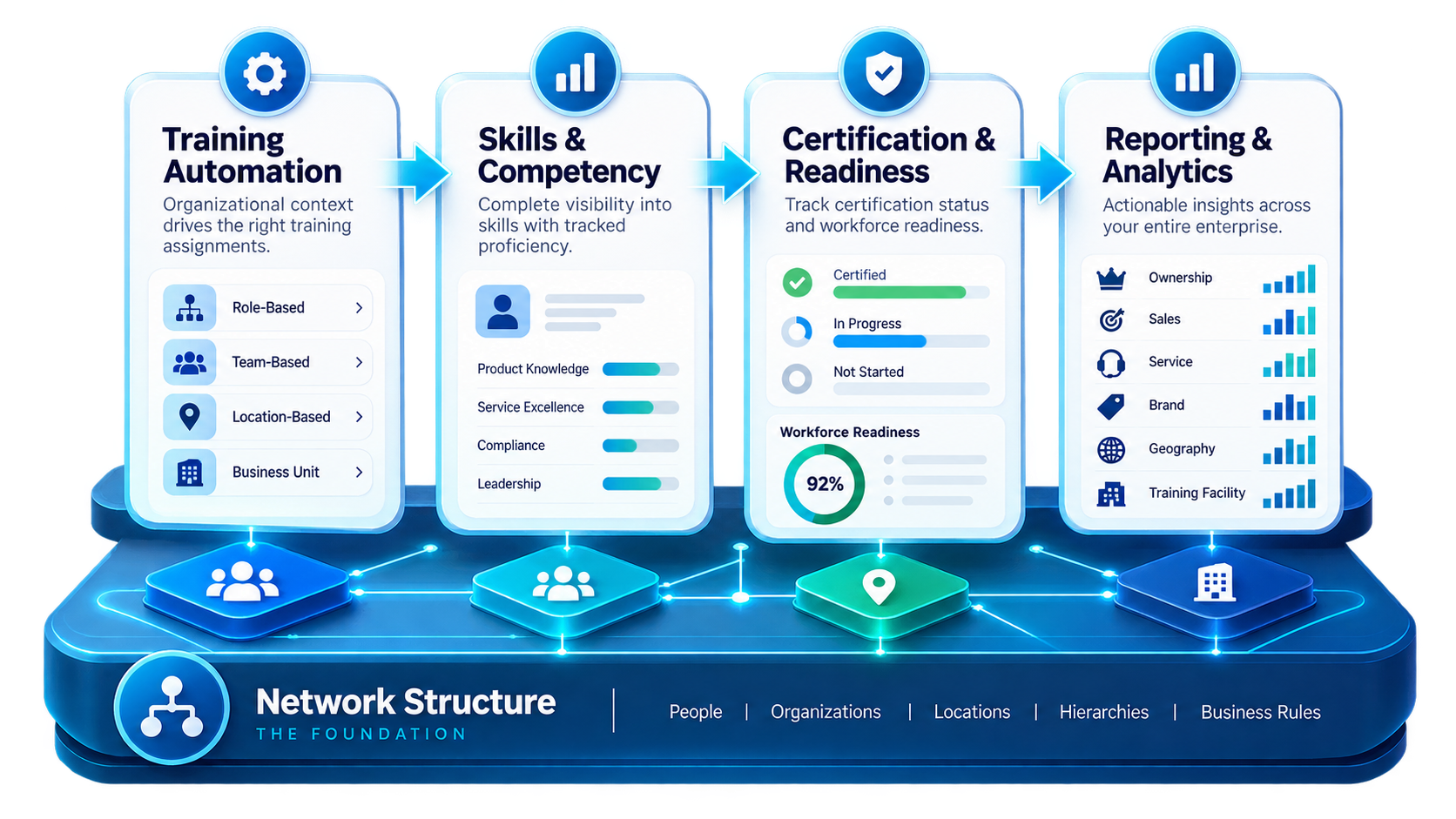
Network structure is the foundation, not the end goal. By reflecting the real relationships among organizations, locations, roles, and field teams, LatitudeLearning provides the organizational context for scalable training administration, assignments, skills development, certification, and reporting.

Automate Training

Who someone is, the role they perform, where they work, and the organizational relationships around that location can help determine the training they need. This reduces the need to manage requirements learner by learner.

Measure Readiness

Move beyond asking whether an individual completed a course. Understand whether the people supporting a location, partner organization, region, or program have met the requirements needed to perform.

See Performance in Context

View training performance through the organizational lens that matters: ownership, sales, service, brand, geography, training facility, or another network relevant to the business.

Your business can grow without forcing every partner, location, and field organization into a single hierarchy.

When your LMS reflects how your business actually operates, you have the foundation for more effective training administration, automated assignments, skills development, certification, and reporting. LatitudeLearning connects these capabilities within training infrastructure designed for distributed partner networks.
Scale Without Flattening Your Organization

Business Outcome Why It Matters
Reduce Manual Administration Use organizational context to reduce the work required to manage training across a growing network.
Align with Field Operations Reflect the sales, service, brand, and other field structures already responsible for supporting partner performance.
Maintain Network-Wide Standards Support distributed operations without giving up centralized training governance.
Understand Organizational Readiness Look beyond individual completions to identify readiness and training gaps across locations, partners, regions, and networks.
Grow with the Business Add organizations, locations, brands, regions, programs, and training facilities without rebuilding the LMS around one rigid hierarchy.
Your organization should not have to reorganize its business around the LMS. The LMS should reflect how your network actually operates.

Organization-Centric, Not Employee-Centric

Traditional LMS platforms are typically designed around employees inside a corporate hierarchy. LatitudeLearning was designed for organizations that must train people across independent companies, locations, roles, and operational relationships.

That is why Partner Network Management is not simply another feature added to LatitudeLearning. It is part of the architecture the platform is built around.

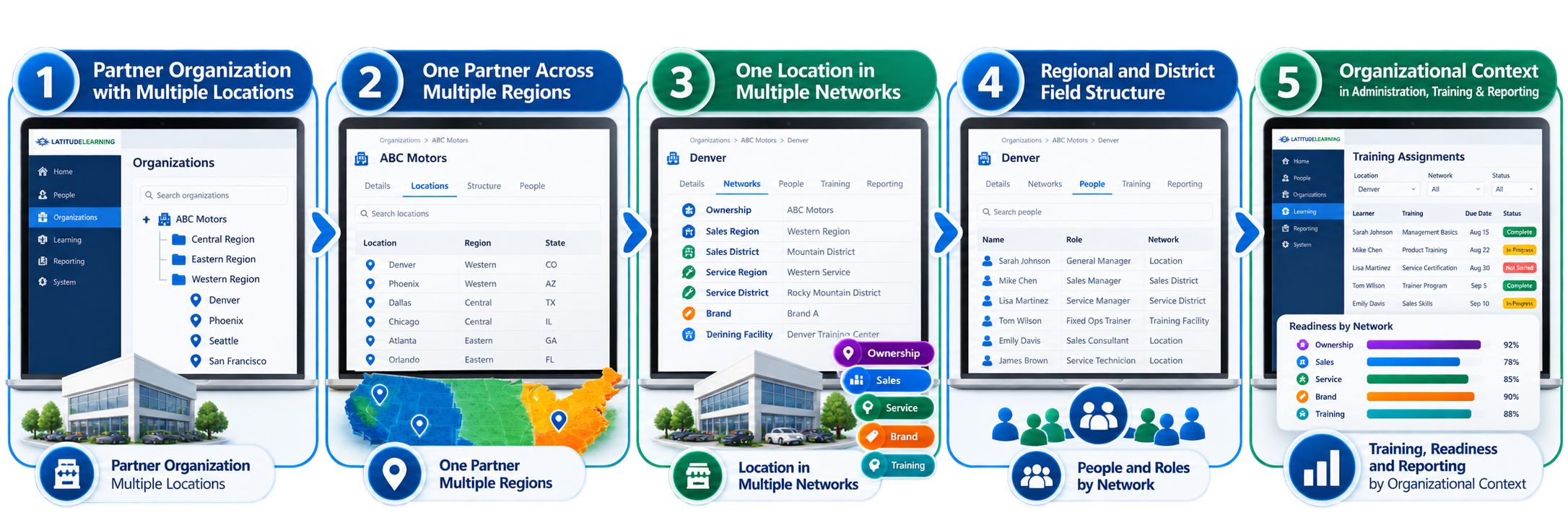
See Partner Network Management in Action

See how LatitudeLearning can represent organizations, locations, operational networks, roles, and training relationships in a system designed for distributed partner ecosystems.
Your Network Doesn’t Fit in One Hierarchy. Your LMS Shouldn’t Force It To.

Manage training around the real relationships between your partners, locations, field teams, brands, regions, training facilities, and people – with infrastructure designed to scale as your network grows.

faq

Frequently Asked Questions

Training Infrastructure FAQs

What is partner network management in an LMS?

Partner network management is the ability to organize training around the companies, locations, roles, and operational relationships that make up a distributed partner ecosystem. Instead of treating every learner as part of one employee hierarchy, LatitudeLearning can represent the organizational context in which partners actually operate.

How is partner network management different from employee user management?

Employee LMS platforms typically organize people within a corporate reporting structure. Partner networks often include independently owned organizations, multiple locations, field support teams, brands, regions, and other relationships that do not fit neatly into one hierarchy. Partner network management is designed for that broader organizational complexity.

Can a location belong to multiple networks in LatitudeLearning?

Yes. A location can participate in multiple networks so different operational relationships can be represented at the same time. Examples can include ownership, sales, service, brand, geography, and training-facility networks.

Can a partner own locations across multiple regions or districts?

Yes. Ownership can be represented separately from sales, service, geographic, or other network structures, allowing a multi-location partner to own locations that participate in different regions or districts.

Can LatitudeLearning represent separate sales and service organizations?

Yes. Sales and service can be represented as separate networks when the organization uses different regional, district, or field-support structures for those functions.

Can LatitudeLearning support a network of training facilities?

Yes. Training facilities can be represented as their own network, allowing locations to be associated with the in-person training centers that serve them while retaining their other organizational relationships.

Can training be managed based on organization, location, or role?

LatitudeLearning is designed to use organizational and learner context to support training administration and requirements across distributed networks. Specific assignment and automation rules should be configured to match the organization’s training model.

Can LatitudeLearning report across different network structures?

LatitudeLearning can organize and report training data in organizational context, helping teams analyze performance across the structures relevant to their programs. Specific reporting views should be confirmed during solution design based on the networks and relationships the organization needs to measure.