The goal of extended enterprise training is to equip people outside your corporate workforce with the knowledge and skills they need to represent your brand, sell and support your products, deliver your services, and execute consistently. The ultimate goal is to align their capabilities with your organization’s standards, objectives, and best practices—improving performance across the network.
But how does an organization turn this potential into reality? The Surefire Training Impact™ framework provides a structured path:
Why Partner Training Is an Endurance Sport, Not a Sprint
What Is Extended Enterprise Training and Why Does It Matter?


A successful journey starts with knowing where you want to go. This means beginning with the end in mind. You must first ask yourself: Why are we training partners?
Building an effective partner training program requires aligning internal stakeholders, engaging external partners, and overcoming operational challenges. A clear sense of purpose—the ‘Why’—keeps those efforts focused on the business outcomes that matter.
Discover your “Why” in the benefits that partner training can offer. With a wide range of diverse options available, the benefits you choose to pursue will define your destination and shape the ultimate goals of your partner training program.

Well-trained partners can sell more effectively, driving higher sales and revenue.

Training programs that cover operational processes help partners reduce costs, minimize delays, and ensure smoother operations.

Trained partners are more likely to comply with relevant regulations and standards, reducing the risk of legal issues and penalties.

Training empowers partners to deliver higher quality products and services, thereby improving overall business performance.

Partners who are quickly trained on new products or services can bring them to market faster.
Effective partner training reduces the need for extensive in-house teams, leading to cost savings.

Regardless of their location, trained partners represent the brand consistently, adhering to guidelines and standards that strengthen brand recognition.

Trained partners provide better service to end customers, leading to higher satisfaction, loyalty, and positive word-of-mouth.

A well-structured training program can be scaled across different regions and partner types, supporting global expansion.

Partners equipped with the right skills can address issues correctly the first time, reducing the costs associated with repeated repairs.

Certifications, recognition, and incentives included in training programs motivate partners to engage deeply with the brand.

Training helps partners stay current with industry trends, technologies, and best practices, fostering innovation and resilience.
With the desired business outcomes defined, the next step is identifying the people whose knowledge, skills, and performance influence those outcomes. Different partner audiences play different roles in achieving those outcomes, making it important to determine who needs training and what capabilities each audience requires.
Operational partners support critical business processes, including logistics, customer support, and technology implementation.

Once you know who needs to be trained, the next step is defining the knowledge and skills each audience needs to perform successfully.
Each type of partner requires different knowledge and skills based on their role, responsibilities, and the business outcomes they influence.
Train partners on the features, benefits, and use cases of the products they will be selling and servicing.
Include modules on sales techniques, negotiation tactics, customer engagement strategies, and effective closing of deals.
Focus on the technical aspects of products, such as installation, maintenance, and repair, ensuring that partners adhere to service delivery standards.
Train partners on the company’s marketing strategies, including messaging, branding, and promotional activities, ensuring consistent marketing efforts.
Provide training on operational aspects, such as order processing, inventory management, and logistics to streamline operations.
Equip partners to handle customer inquiries and provide excellent service, ensuring satisfaction along the way.
Ensure partners adhere to legal and ethical standards in all interactions.
Train partners on how to maximize their earnings through the company’s incentive structures, motivating them to reach milestones.
Ensure that operational partners understand and align with the company’s workflows and operational standards, maintaining consistency and efficiency.
Train partners on the specific software, tools, or equipment required for their roles.
Provide training on safety protocols and regulatory standards, ensuring partners operate within legal and safety guidelines.
Focus on improving customer interactions and service delivery, enhancing the overall customer experience.
Include modules on best practices in communication and teamwork to foster effective collaboration.
Encourage a culture of continuous improvement by equipping partners with the skills to identify inefficiencies and adopt best practices.
Train suppliers on the company’s quality standards, including specific quality control processes, to maintain consistent quality.
Ensure suppliers understand and comply with relevant legal, regulatory, and industry standards, reducing risks.
Educate suppliers on the company’s production processes, ensuring their deliveries align with the company’s workflows.
Include training on sustainable sourcing and environmentally friendly practices, aligning with the company’s sustainability goals.
Provide training on effective communication tools, fostering strong partnerships between the company and its suppliers.
Ensure suppliers can effectively use technology platforms.
Equip customers with the knowledge to use products or services correctly, ensuring they can maximize the product’s capabilities.
Guide new customers through the initial setup and integration of the product into their systems, helping them start their journey effectively from day one.
Empower customers to identify and resolve common issues independently, reducing their reliance on customer support.
Keep customers informed about updates and new features, ensuring they continue using the product effectively.
In industries with technical or hazardous components, training on compliance and safety standards is essential.
Offer certifications that validate a customer’s proficiency in using the product, adding value to their professional credentials.
Knowing what your partners need to know and do is only the beginning. The real goal of training is to turn knowledge into the ability to perform—and ultimately create people who can help others perform at the same level.
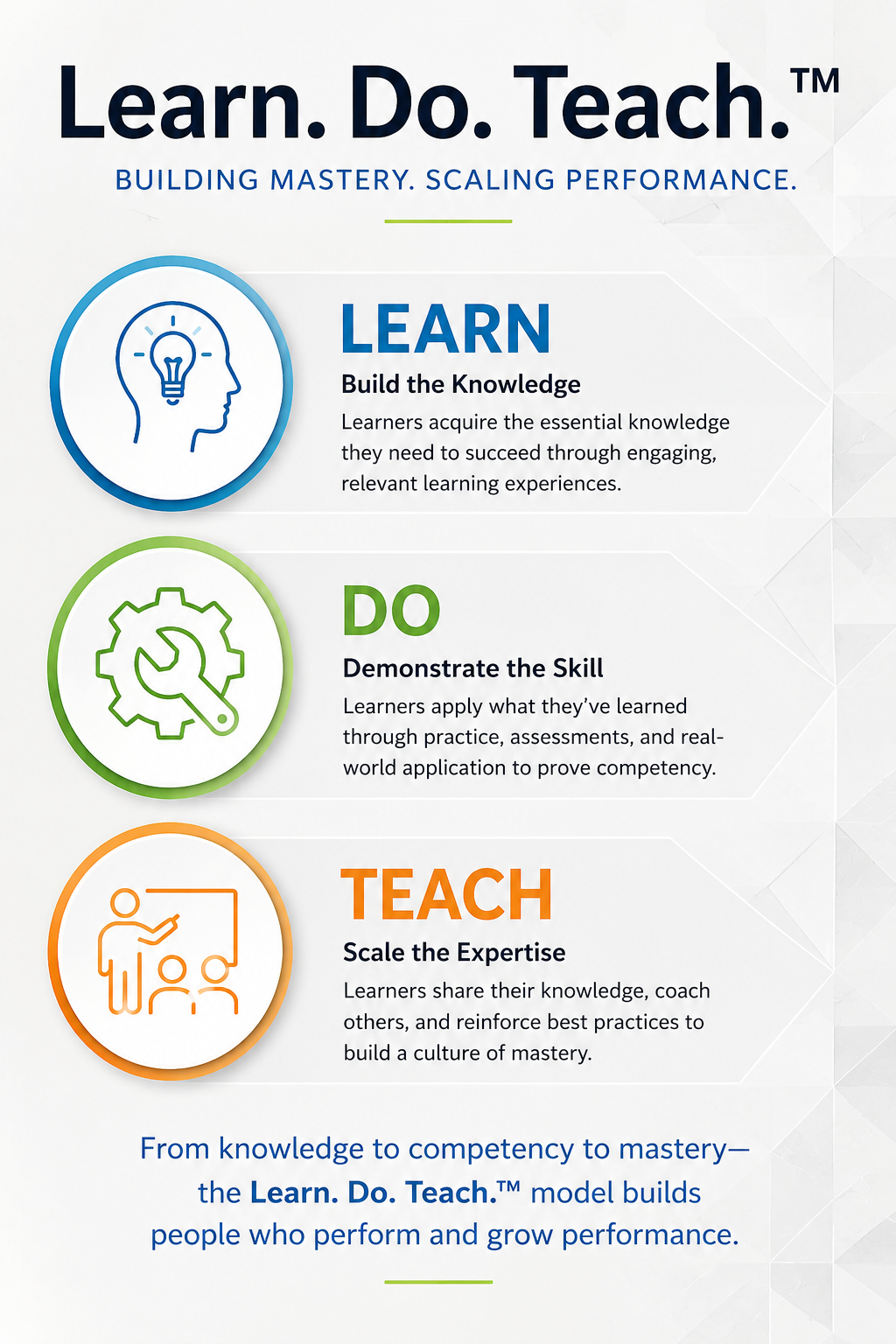
The Learn. Do. Teach.™ model provides a simple framework for building that progression across your dealer, distributor, franchise, service partner, or other distributed network.
Learn. Do. Teach.™ moves the focus beyond simply completing courses. It creates a progression from knowledge → competency → mastery, helping organizations build the capabilities their partners need to perform consistently.
When training is designed around what people must learn, do, and eventually teach, it becomes more than education. It becomes infrastructure for scaling performance across your network.
Scaling partner training across a distributed network introduces challenges that traditional employee training programs often do not face. Understanding the challenges of extended enterprise training is essential to building a scalable, effective partner training program.
With the destination defined, the right people identified, and the challenges understood, the next step is determining how your training program will get from where it is today to where it needs to be.
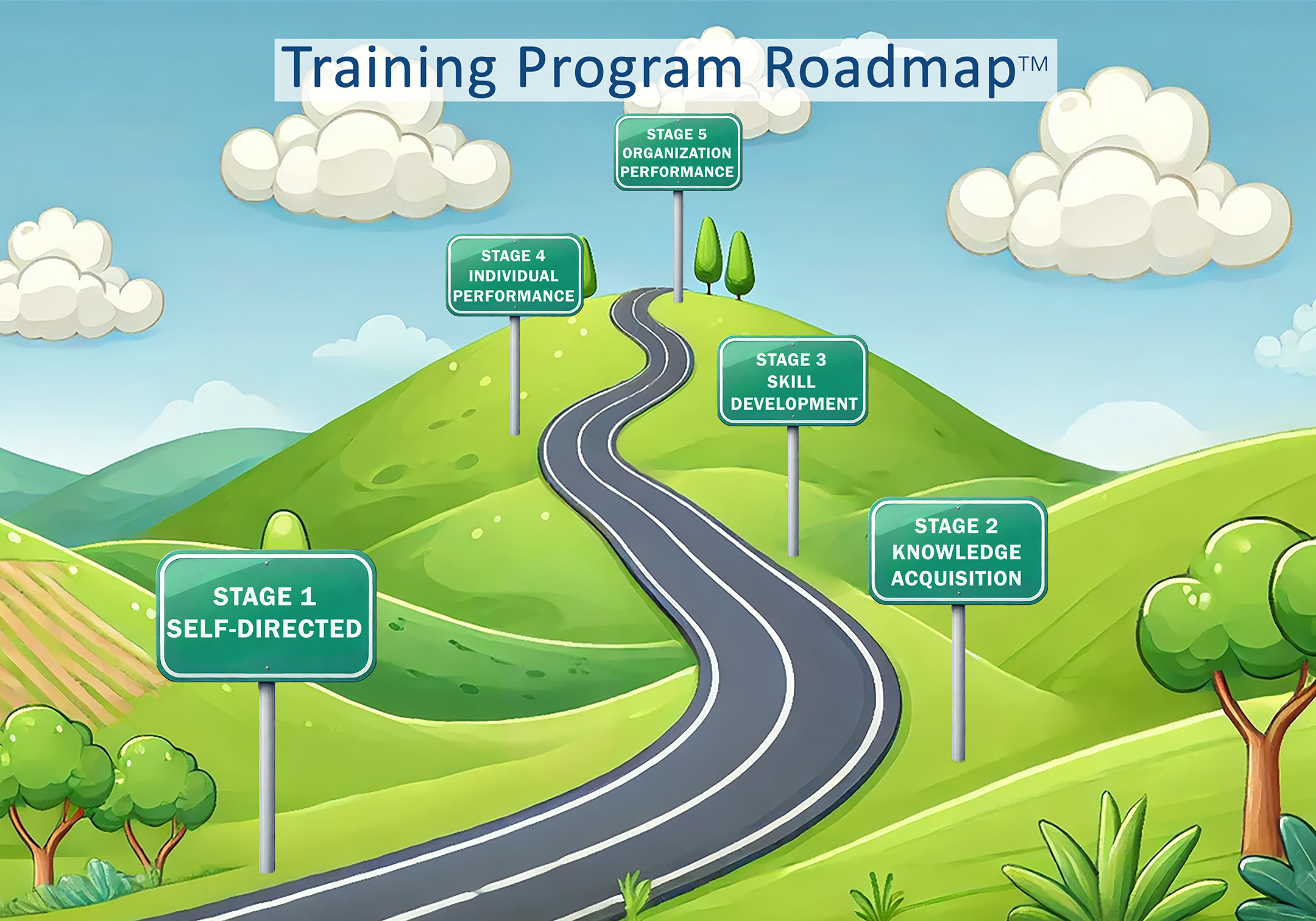
The Training Program Roadmap™ is a five-stage maturity model that helps organizations assess the current state of their partner training program, define the level of training impact they want to achieve, and identify the capabilities required to advance.
The Roadmap progresses from Self-Directed Learning to Knowledge Acquisition, Skill Development, Individual Performance, and ultimately Organization Performance. Each stage builds on the one before it, moving training beyond simply delivering content toward developing skills, improving performance, and connecting training to measurable business outcomes.
Not every organization needs to reach the final stage immediately. The goal is to understand where your program is today, determine where it needs to go based on your business objectives, and build the training infrastructure required to get there.
The Training Program Roadmap™ provides a structured path for advancing from training activity to measurable performance impact.
Once you know where your training program is today and where you want it to go, the next step is turning that strategy into execution.
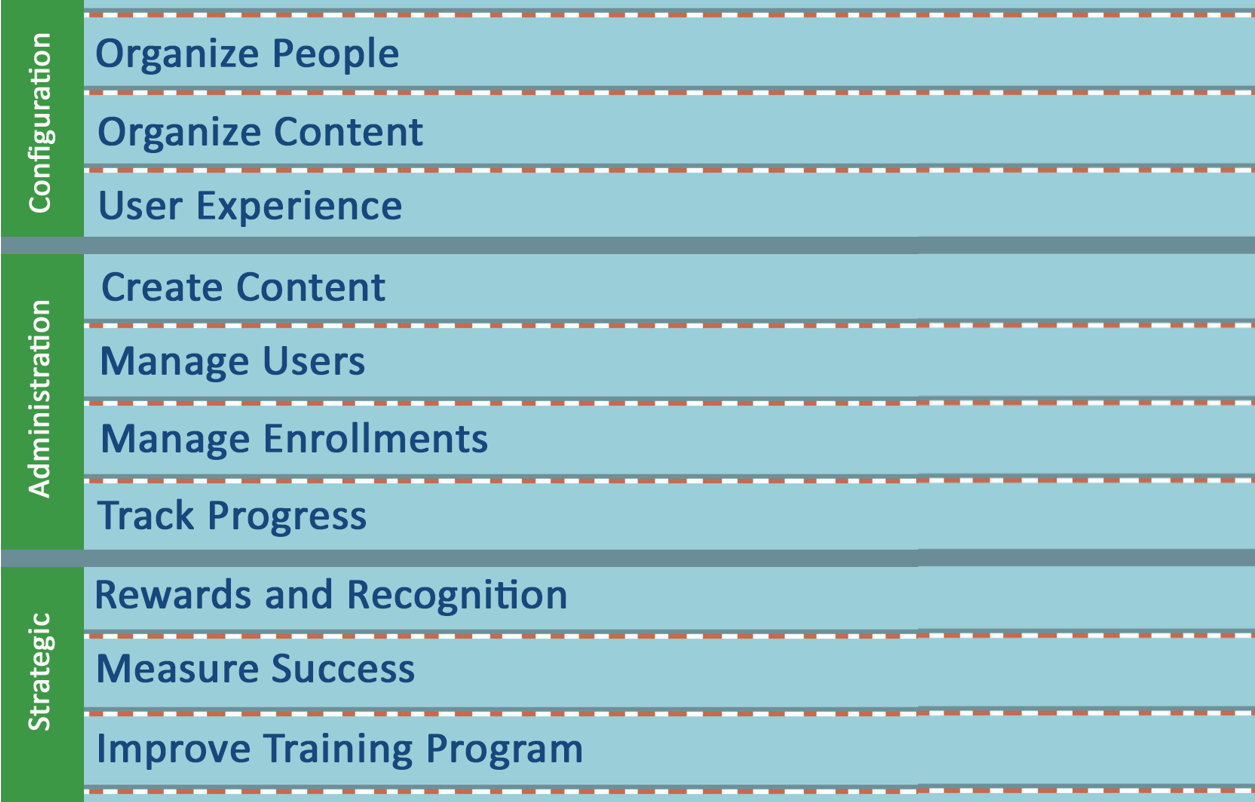
The Surefire Training Workstreams™ define the ten operational disciplines organizations must manage to build, operate, and continuously improve a scalable partner training program. Together, they provide the structure needed to put the Training Program Roadmap™ into practice and move training toward greater business impact.
The ten workstreams are organized into three areas: Configuration, Administration, and Strategic. They address everything from organizing learners and content to managing access and assignments, measuring results, motivating participation, and continuously improving the program.
As your training program advances through the Roadmap, the sophistication of each workstream should advance with it. The goal is not to implement every best practice at once, but to develop the right capabilities at the right time to support the next stage of training maturity.
The Training Program Roadmap™ shows you where to go. The Surefire Training Workstreams™ define how to get there.

The final stage is reaching the destination: realizing the business benefits of partner training. At this stage, training is producing the outcomes defined at the beginning of the process, with capable partners aligned to organizational goals and equipped to perform.
Start with the business outcomes you want to achieve, build the capabilities your partners need to perform, and create the training infrastructure to scale that performance across your network.