Employee training runs on one company, one HR feed, one clean hierarchy. Extended enterprise training doesn’t get that luxury — your partners are dealers, franchisees, distributors, and resellers, each with their own staff, their own job titles, and zero connection to your systems. There’s no single source of truth. There’s a network.
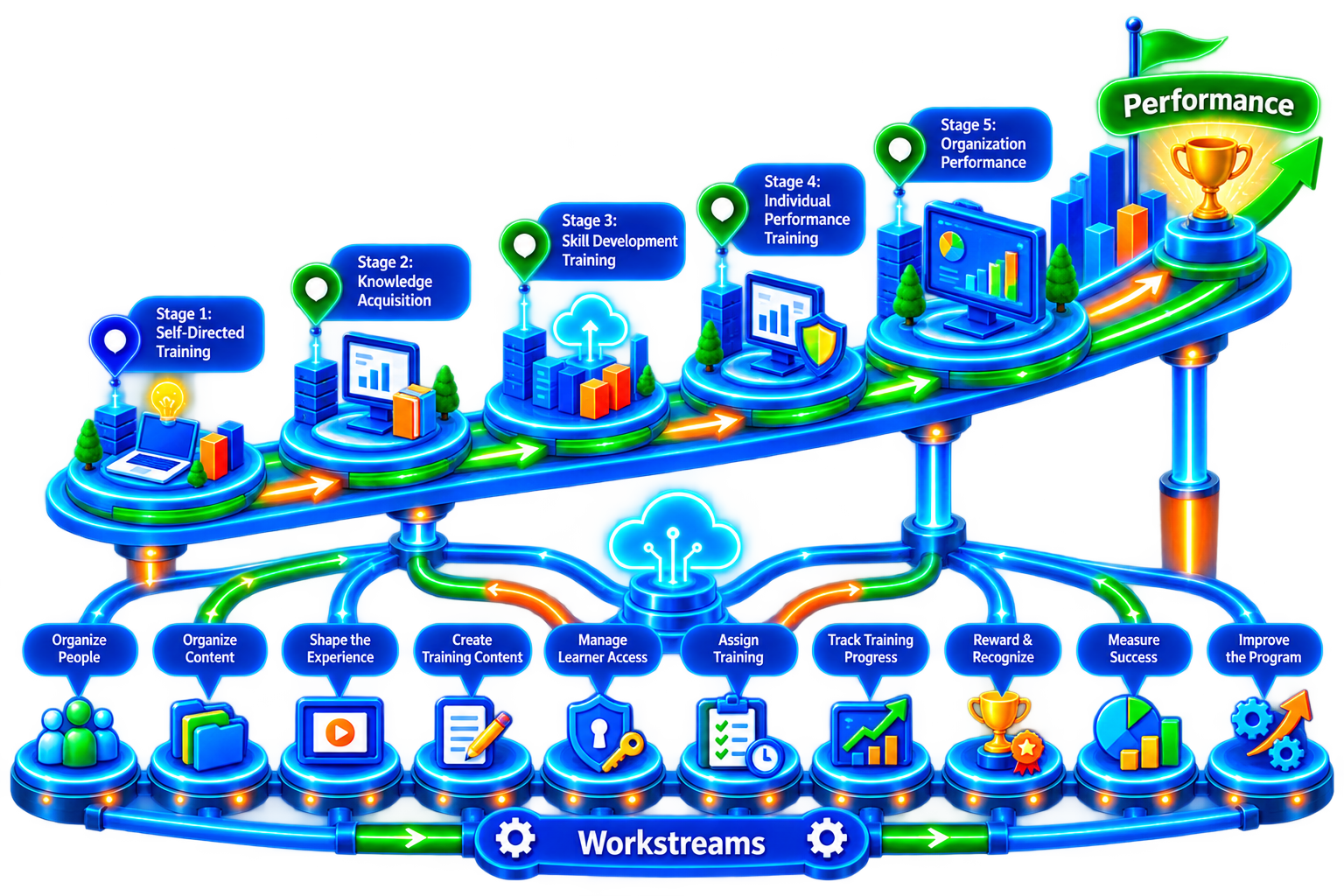
Running training for a network takes ten operational disciplines working together — the Training Program Workstreams™:
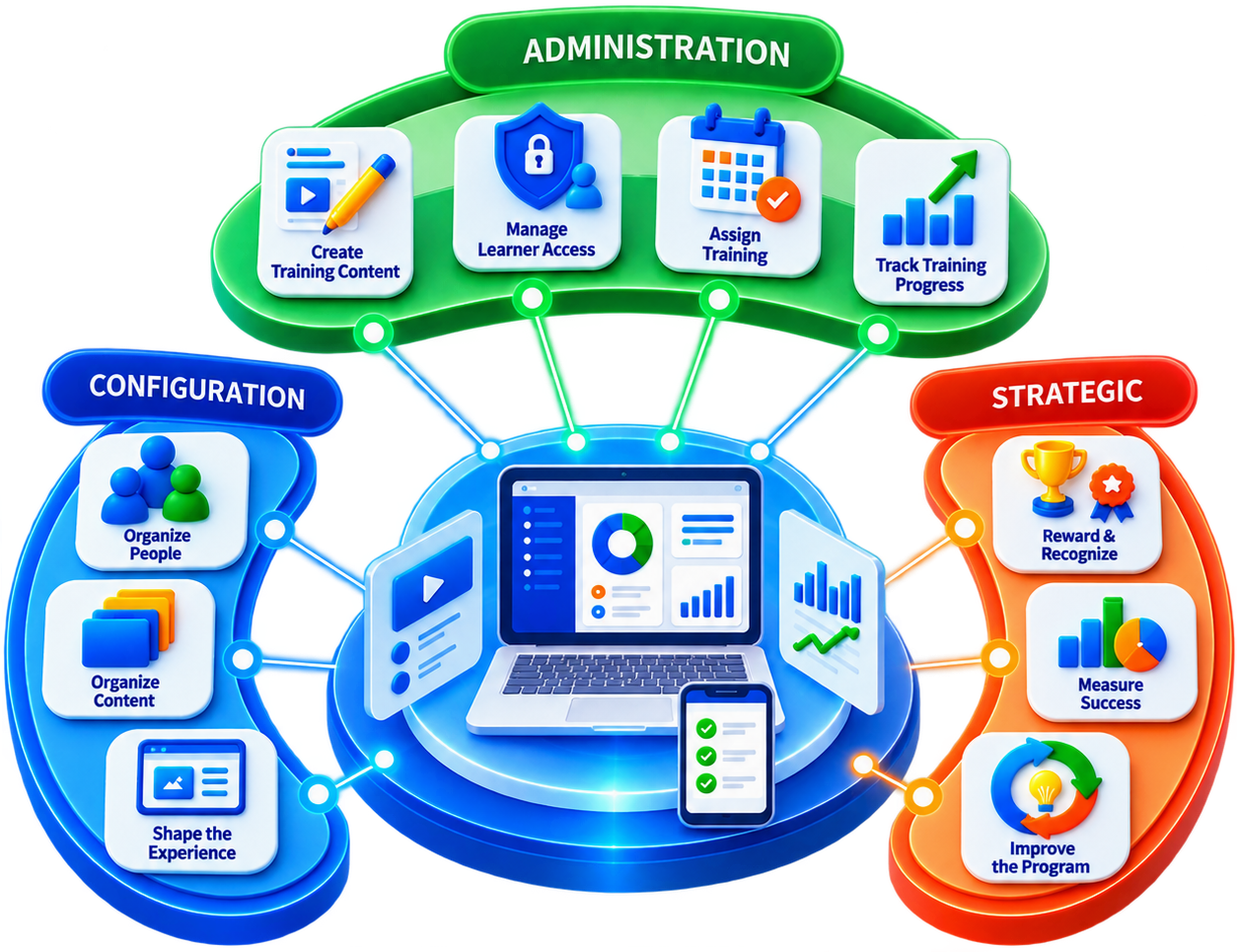
Before you assign a single course, three things need to be true: every learner needs to be in the right place, every piece of content needs to be findable, and the experience itself needs to not feel like a chore. Skip this setup and you’ll spend the life of your program firefighting instead of scaling. These three workstreams are that setup.
Goal Build a structure that reflects how your partner network actually works: learners linked to specific partner organizations and locations, with standardized roles that make sense across hundreds of different job titles.
Why It Matters A “Service Advisor” at one dealer and a “Customer Care Specialist” at another might do the exact same job. If your system treats them as unrelated roles, your reporting, certifications, and assignments all break. Get this right and every learner — no matter what their business card says — lands in the correct training path automatically.
Common Challenge Partners don’t share a naming convention, a hierarchy, or an org chart. Some rotate staff across multiple locations. Some employees hold two jobs at once (a technician who’s also the store manager). A rigid, single-hierarchy LMS can’t handle any of it.
Best Practices
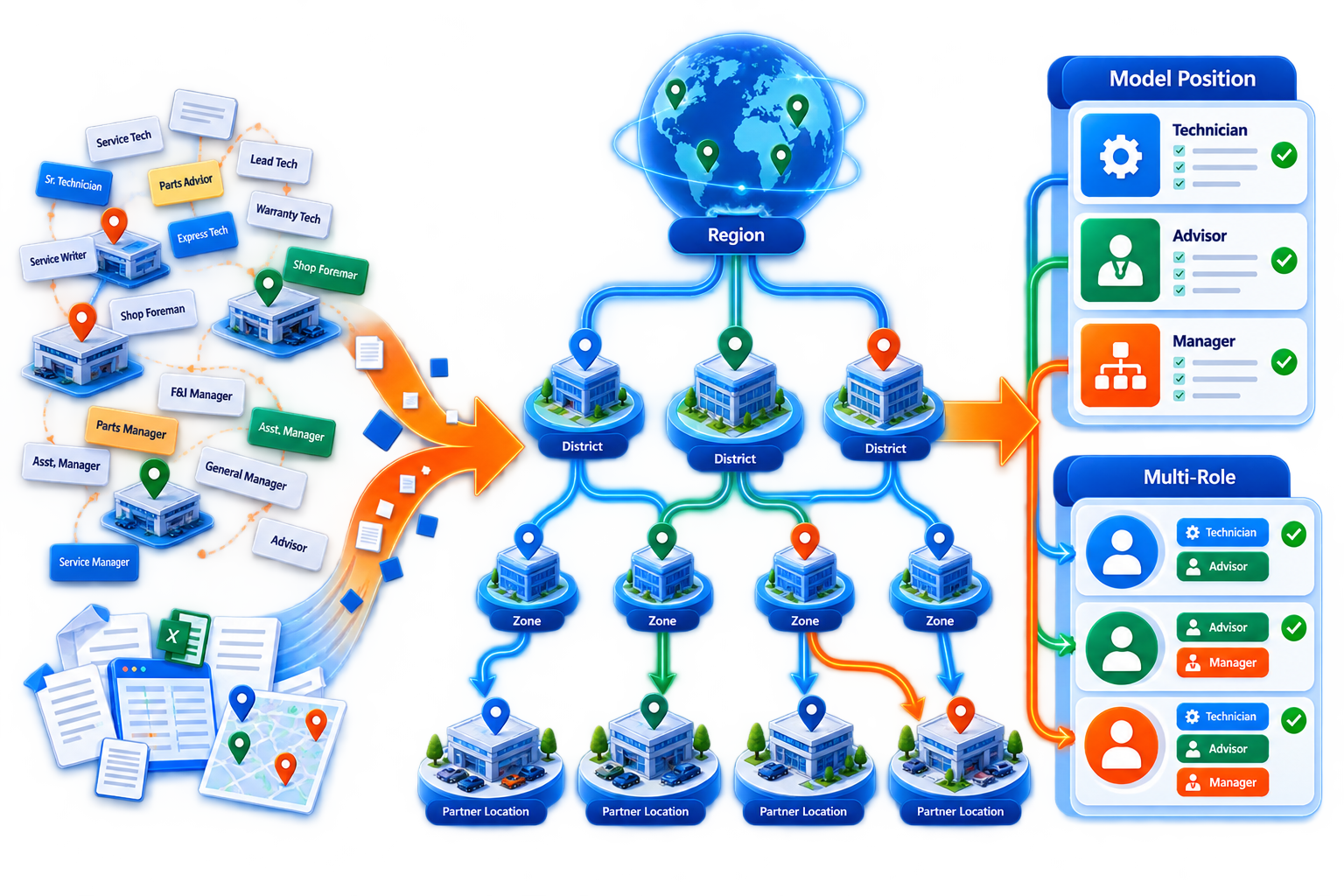
How LatitudeLearning Helps LatitudeLearning was purpose-built around the partner position model — mapping messy, real-world partner job titles to standardized roles, supporting multi-role and multi-organization learners natively, without workarounds.
Goal Structure your catalog so every learner can find exactly what applies to their role, brand, and location — and nothing that doesn’t.
Why It Matters Dealers, franchisees, and resellers aren’t paid to be power users of your LMS. If content isn’t tagged, filtered, and sequenced around how they actually think about their job, they’ll disengage. A technician served finance modules, or a Brand A dealer served Brand B training, stops trusting the system entirely.
Common Challenge Extended enterprise certifications are more complex than “required vs. elective.” A dealership might not earn “Certified Dealer” status unless it has a minimum number of certified service advisors — the requirement belongs to the organization, not just the individual.

Best Practices
How LatitudeLearning Helps LatitudeLearning supports certifications that can be assigned at the partner-organization level (not just the individual), nested learning paths, and role- and brand-based catalogs — so the content structure matches how your network actually thinks about its work.
Goal Design a portal experience that feels like a trusted extension of your brand — personalized by role, partner type, and location, and simple enough to use in three clicks or less.
Why It Matters Your learners aren’t employees whose paycheck depends on logging in. They’re partners juggling their own customers, quotas, and deadlines. If the experience feels like friction, they’ll avoid it, and the best-designed content in the world won’t matter.
Common Challenge One experience rarely fits everyone. A salesperson wants a simple, linear path. A technician wants a skill-profile dashboard. A global network needs localized language and compliance content on top of all of it.
Best Practices
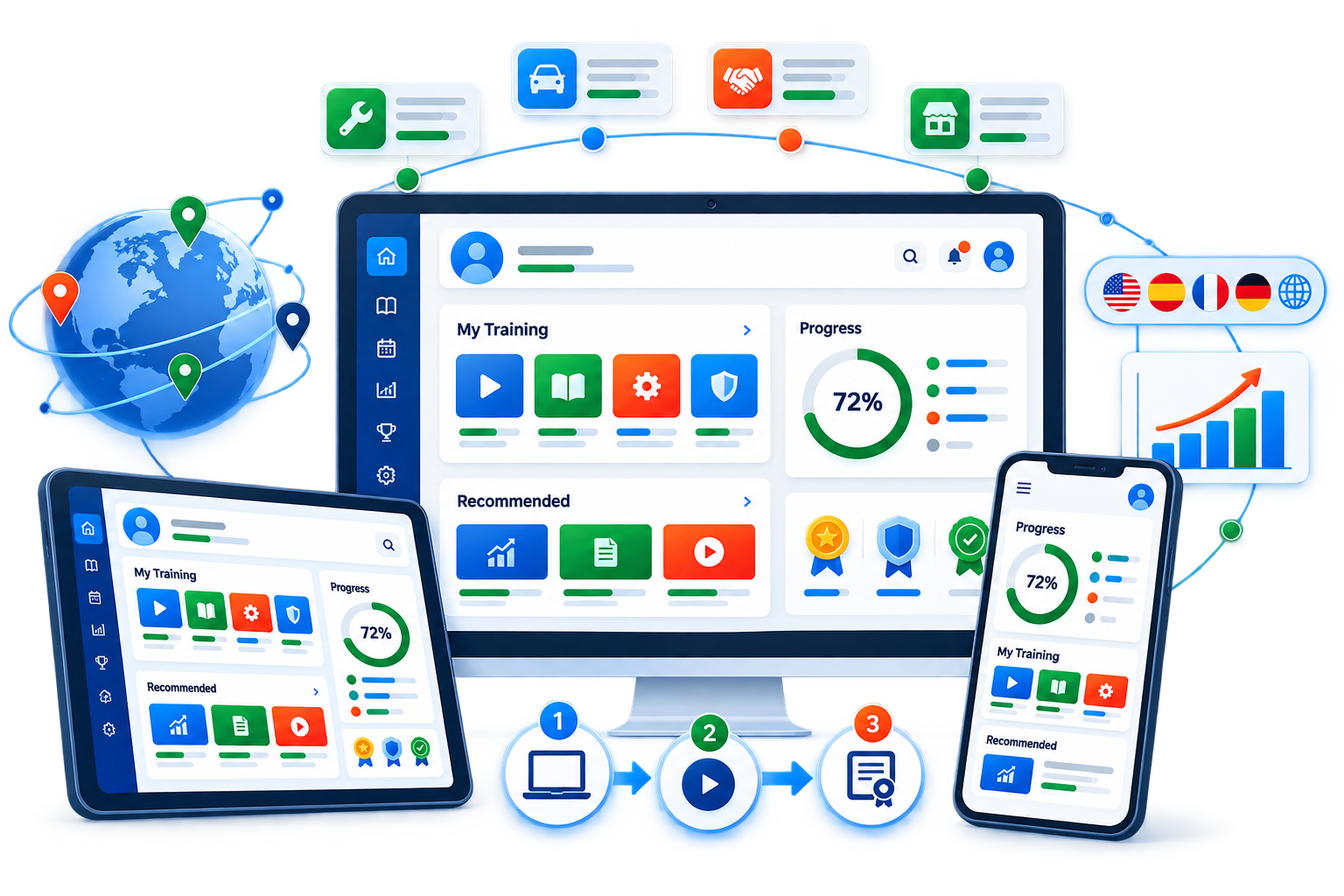
How LatitudeLearning Helps Branded, role-based partner portals with personalized dashboards are core to how LatitudeLearning is built — the platform is designed to look like your organization, not like a generic LMS bolted onto it.
Configuration gets you set up. Administration is what happens every single day after that: building content, letting people in, assigning what they need, and tracking whether any of it is working. This is where most training programs quietly break down — not because the strategy was wrong, but because the daily mechanics couldn’t keep up with a network instead of a company.
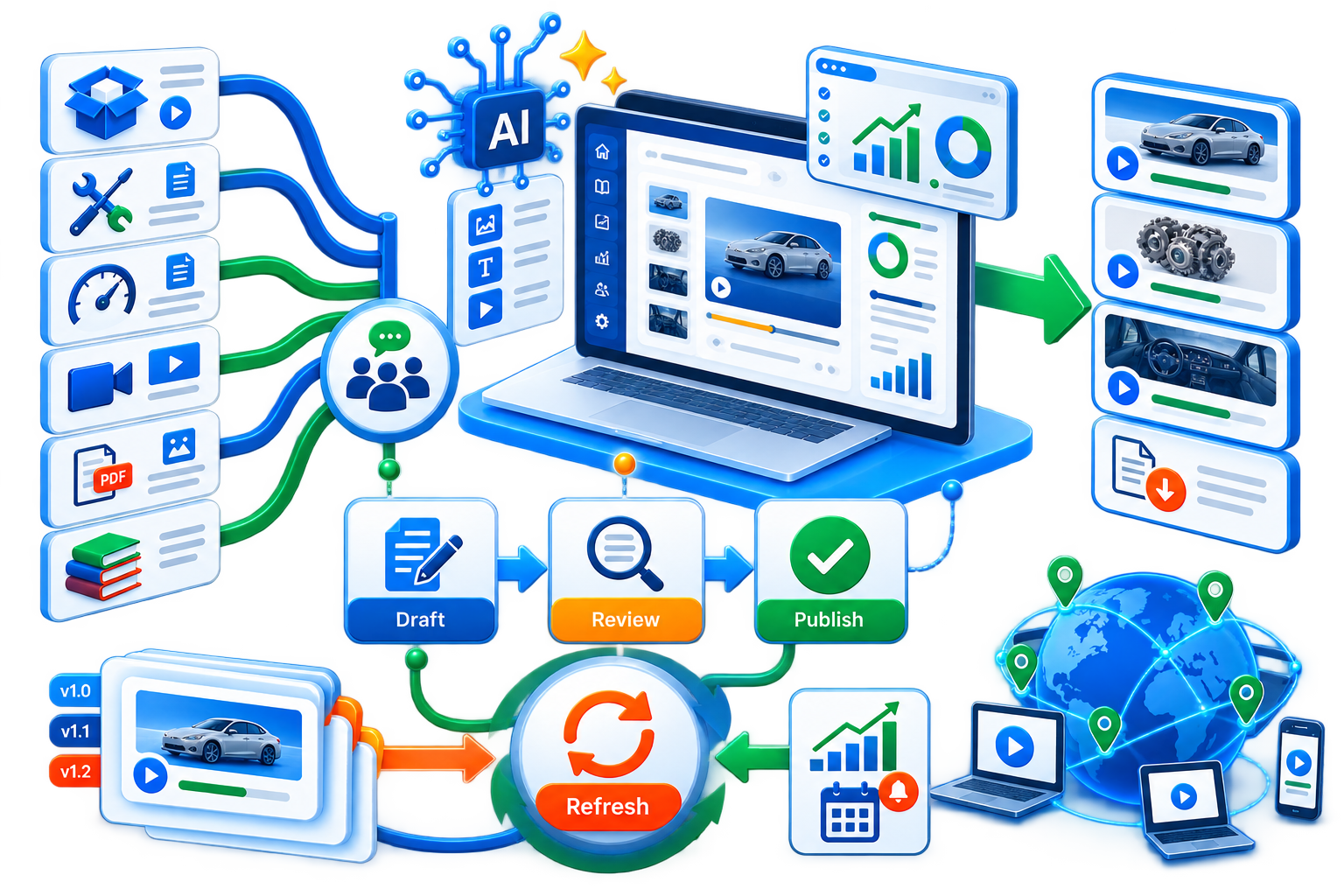
Goal Develop and continuously refresh content that reflects your actual products, processes, and standards — because a generic “time management” module won’t help a dealer close a sale or file a warranty claim correctly.
Why It Matters The core purpose of partner training isn’t general professional development — it’s helping partners sell, service, use, and supply your products, using your systems. That means the ratio flips from employee training: expect 80–90% of your catalog to be custom-built, not purchased off the shelf.
Common Challenge Products, service procedures, and supply processes change constantly. Without a living content pipeline, your catalog goes stale fast — and stale content erodes trust faster than content that’s simply missing.
Best Practices
How LatitudeLearning Helps LatitudeLearning is built to support rapid custom authoring, SME co-authoring workflows, and structured content refresh cycles — because the platform assumes your catalog is mostly custom, not purchased.
Goal Control who gets into the system, how they get added, and what they can see — without your central team drowning in manual roster management.
Why It Matters Some partners are meticulous recordkeepers. Others run their roster off a stack of sticky notes. If every new hire at every partner location has to be manually keyed in by your central team, you’ll spend your days on data entry instead of building the program.
Common Challenge Pure central control doesn’t scale. Pure self-service creates chaos, duplicate accounts, and “ghost users” you’re still paying for. The answer is a hybrid.
Best Practices
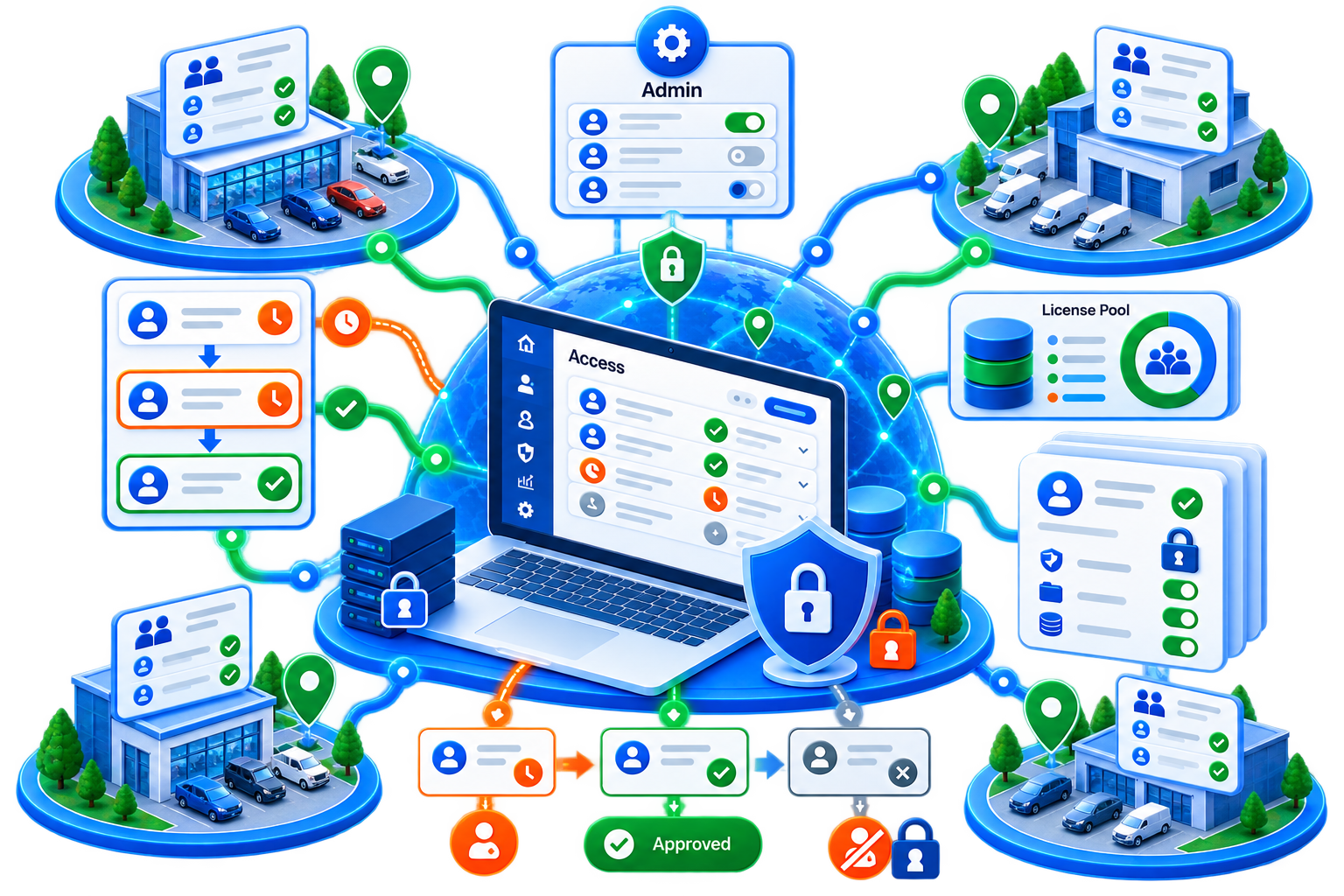
How LatitudeLearning Helps Delegated administration is one of LatitudeLearning’s foundational differentiators — partners manage their own rosters within guardrails you control, instead of every account request routing through your central team.
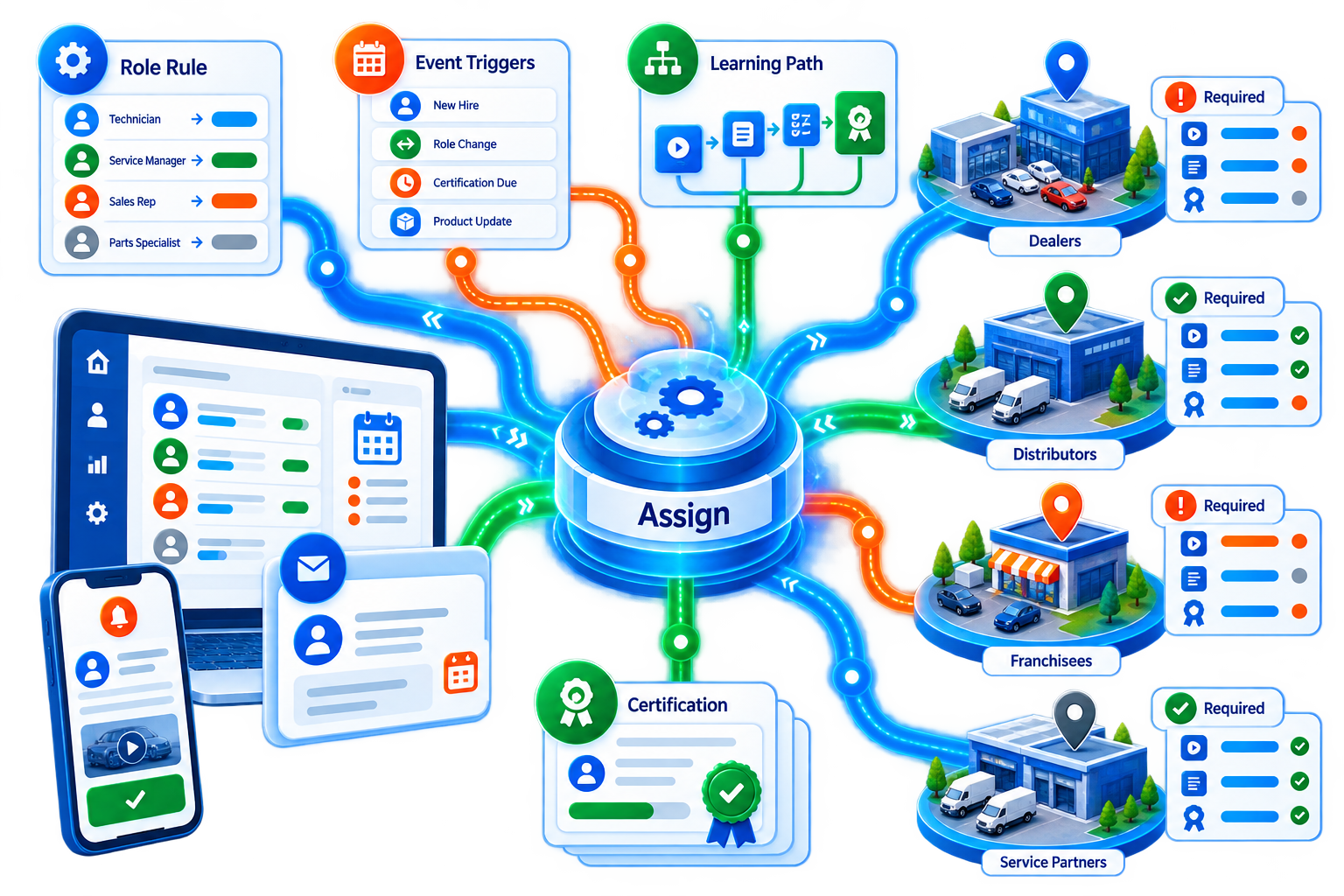
Goal Turn optional content into required, role-relevant progression — automatically, without leaning on partners to go looking for it.
Why It Matters Your learners aren’t employees whose job depends on completing what’s assigned. If training isn’t clear, relevant, and connected to something they care about, it gets ignored. Assignments are what convert “available” content into training that actually gets done.
Common Challenge A single learner’s completion doesn’t always tell the real story. A dealership might need three certified technicians on staff to be considered “ready” — that’s an organizational requirement, not an individual one.
Best Practices
How LatitudeLearning Helps LatitudeLearning supports automated, rule-based assignments driven by role, brand, product line, or geography — including staffing-level requirements assigned to the partner organization itself.
Goal Give every stakeholder — corporate, field sales, service teams, brand managers, and individual partner locations — the reporting view that matters to them.
Why It Matters A single dashboard doesn’t cut it in an extended enterprise. A dealer cares about their own store. A brand manager cares about their product line, across every region. A field rep cares about their territory. If tracking can’t be sliced by audience, none of them get what they actually need.
Common Challenge Completion data alone doesn’t prove anything. Executives and partners don’t care how many people clicked “Next” — they care whether training improved sales, reduced warranty costs, or raised satisfaction scores.
Best Practices
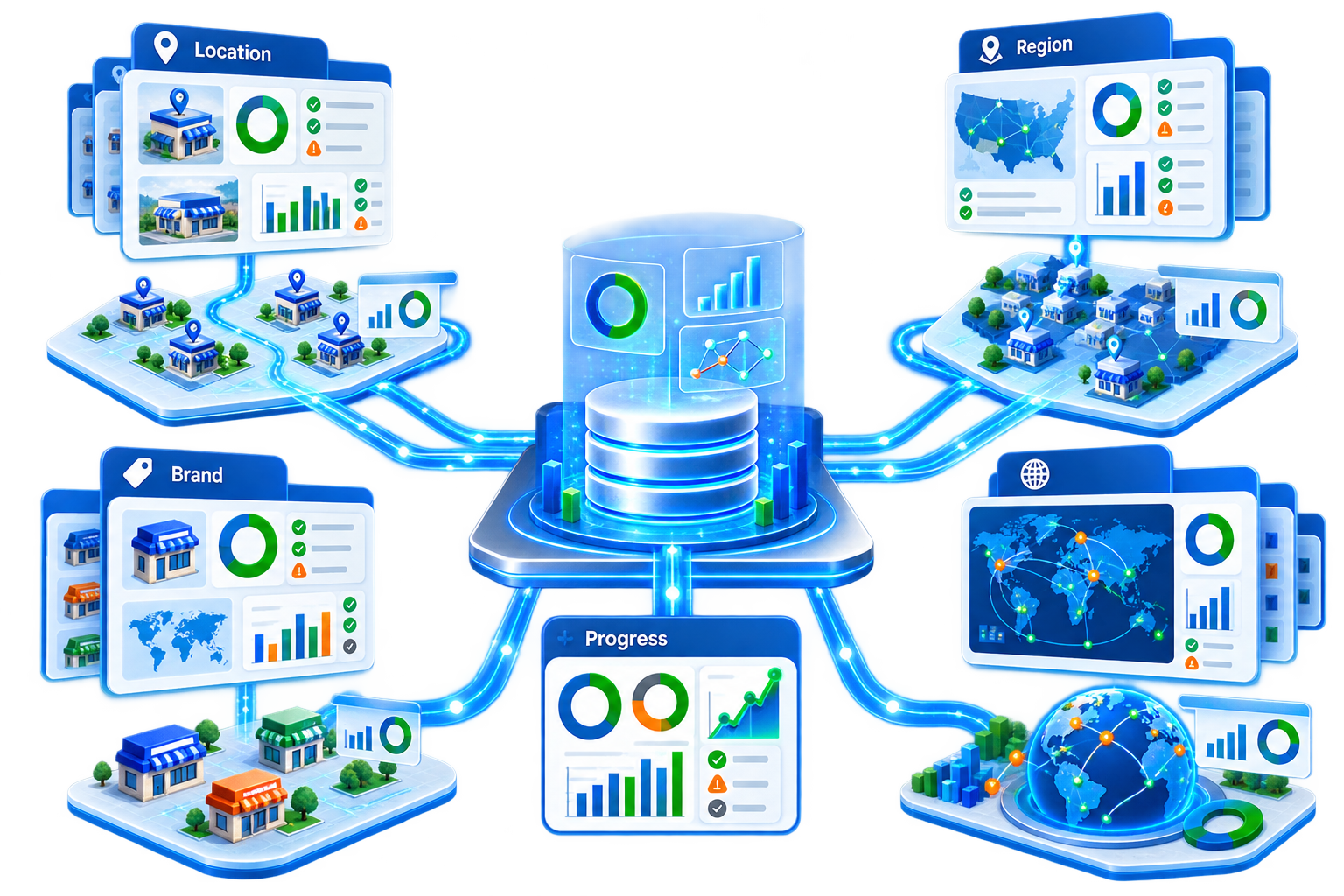
How LatitudeLearning Helps Role-specific, multi-layer reporting is built into the platform — from a single partner location’s view up to global, brand-level roll-ups — with the ability to connect training data to real business outcomes.
Once the daily mechanics are running smoothly, the highest-performing programs shift into a different gear. This is where training stops being a background function and starts being a measurable, provable driver of business results — the difference between a program that simply exists and one that becomes a competitive advantage.
Goal Motivate participation through recognition and status — because partners don’t respond to internal mandates the way employees do.
Why It Matters Knowledge and skills get learners started. Motivation is what keeps them going. Without it, even the best-designed training program quietly stalls once the initial enthusiasm wears off.
Common Challenge Recognition that doesn’t connect to something a partner actually values — better margins, exclusive access, differentiated status — feels hollow and fades fast.

Best Practices
How LatitudeLearning Helps The platform supports badges, digital credentials, leaderboards, and partner-level recognition status, so motivation isn’t left to chance — it’s built into the learner and partner experience.
Goal Prove that training is actually moving business outcomes — sales, service quality, retention — not just tracking who clicked through a course.
Why It Matters Executives and partners don’t care how many people finished a module. They care whether trained technicians have fewer callbacks, whether certified dealers outsell uncertified ones, and whether training is a defensible business investment or a line-item expense.
Common Challenge Precision requires integration. Training data sitting in the LMS, disconnected from sales, service, or CRM systems, can only ever tell half the story.
Best Practices

How LatitudeLearning Helps LatitudeLearning is designed to connect training data to real operational outcomes — supporting trained-vs-untrained comparisons and reporting that holds up in an executive conversation, not just an LMS dashboard.
Goal Build a continuous improvement cycle — reviewing feedback, refreshing content, and evolving incentives — so the program keeps climbing the Training Program Roadmap™ instead of plateauing.
Why It Matters Products change. Partner needs shift. What motivated learners in year one won’t necessarily motivate them in year three. Without a deliberate improvement cycle, even a well-built program slowly loses relevance.
Common Challenge Most organizations collect “smile sheet” feedback and stop there — satisfaction data without a real mechanism for using it to change anything.

Best Practices
How LatitudeLearning Helps Feedback loops, version control, and performance diagnostics are part of how the platform supports ongoing refinement — so improving the program is a built-in habit, not a separate project.
The Training Program Roadmap™ lays out where your training program is headed — from Self-Directed Training all the way to Organizational Performance. The Workstreams are what actually get you there. Every stage of the Roadmap depends on these same ten disciplines; they just get more sophisticated as your program matures.
A Stage 1 program might organize people with a simple spreadsheet and reward learners with a basic badge. A Stage 5 program organizes people through a fully delegated partner-position model and rewards partner organizations with certified status tied directly to sales performance. Same ten workstreams. Far more precision.
Most LMS platforms were built for employee training — one company, one hierarchy, one HR feed. They can deliver a course. They can’t organize a partner network, delegate administration to hundreds of locations, or tie training data to sales and service outcomes.
LatitudeLearning was built for the extended enterprise from the ground up — every one of these ten workstreams is a native capability, not a workaround. If your training program is ready to move from strategy to execution, we’re ready to show you how.