
As organizations scale their partner networks, maintaining consistency becomes increasingly complex. Growth introduces variability in how customers are engaged, how processes are executed, and how brand standards are upheld. In distributed systems, success is rarely determined by a single tool or individual. It emerges from alignment between people, processes, and enabling technology that can operate reliably at scale.
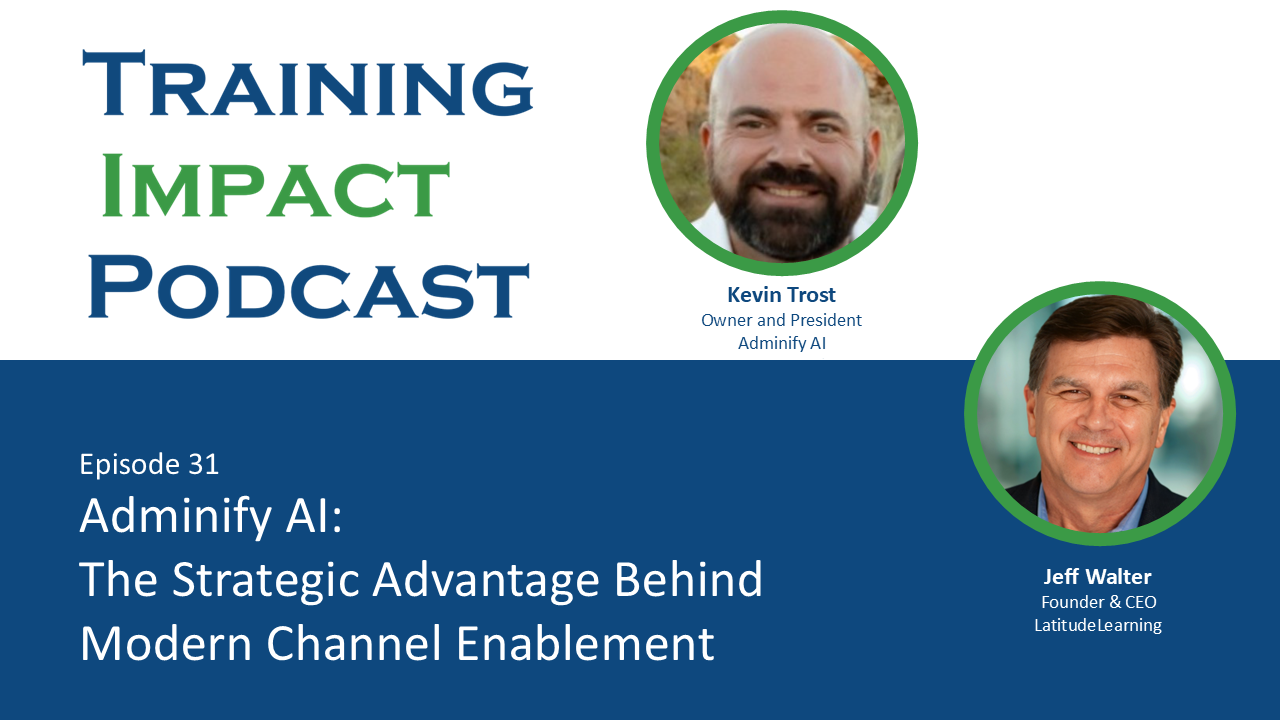
Adminify AI represents a growing class of technology designed to address this reality. Rather than functioning as a narrow automation tool, it operates as an execution layer that supports businesses where consistency, responsiveness, and scalability are critical. The central insight behind the platform is that many operational breakdowns do not occur because organizations lack intent or effort. They occur because humans are limited by time, attention, and bandwidth, especially in environments where customer interactions arrive through many channels simultaneously.
This case study examines how Adminify AI approaches these challenges and why its model is particularly relevant for franchise systems, partner networks, and other extended enterprise environments. At its core, the story is about reducing friction, improving alignment, and creating conditions where downstream training and enablement efforts can succeed rather than struggle against systemic gaps.
Adminify AI operates at the intersection of artificial intelligence, customer engagement, and distributed operations. Its founders come from a background rooted in customer acquisition and scalable system design, working alongside technology driven organizations that depended on strong execution to turn platforms into real world adoption. That experience shaped an understanding that even the most advanced tools require disciplined processes to deliver value.
The platform itself emerged from a proof of concept rooted in operational complexity rather than theory. By applying AI to a service business with a full customer lifecycle, from lead capture through fulfillment and post transaction follow up, Adminify AI demonstrated that artificial intelligence could reliably manage large portions of day-to-day operations when given clear goals and sufficient context. This realization shifted the focus from operating a single business to enabling many businesses to do the same.
The industries Adminify AI serves share a common structural pattern. They involve high volumes of inbound customer interactions, multiple communication channels, and a mix of transactional and relationship-based engagements. These conditions are common in-home services, franchising, and partner driven models, where local operators represent a broader brand and are responsible for execution at the point of service.
In these environments, the organization exists not just to provide tools, but to create a system that reduces variance. Success depends on ensuring that every location or partner can respond quickly, engage professionally, and follow through consistently, even when staffing levels, experience, and operational maturity vary widely.
One of the most persistent challenges in distributed systems is speed of response. Customers who reach out for service or information are often operating under urgency, particularly in industries tied to home services or time sensitive needs. When engagement is delayed, opportunities are lost, not because the business lacked capability, but because it failed to respond in the moment that mattered.
Another challenge lies in channel fragmentation. Customers interact through phone calls, text messages, websites, social platforms, and online listings. Each channel introduces another potential point of failure. When interactions are handled inconsistently or monitored sporadically, organizations struggle to maintain a coherent customer experience.
These issues are compounded in franchise and partner models, where operators are responsible for execution but may lack the staffing or experience to manage high volumes of interaction. The result is uneven performance across locations, inconsistent customer satisfaction, and increased pressure on corporate teams to intervene.
Training alone cannot resolve these challenges. Even well-designed onboarding programs struggle when operational realities overwhelm the learner. When new owners or partners are forced to juggle customer engagement, scheduling, billing, and reputation management simultaneously, learning becomes reactive rather than structured. Misalignment at this stage creates downstream issues that persist long after onboarding ends.
Adminify AI addresses these challenges by functioning as a unified engagement layer rather than a single purpose tool. Its approach begins with the assumption that no customer inquiry should go unanswered, regardless of timing or channel. By serving as the first line of engagement, the platform ensures that customers receive immediate acknowledgement and direction.
The system does not attempt to replace human interaction entirely. Instead, it identifies where automation adds value and where human involvement is essential. Routine inquiries, scheduling requests, follow ups, and transactional steps are handled efficiently by AI. More complex or sensitive interactions are escalated to humans with full contextual summaries, allowing staff to engage without starting from zero.
This design fundamentally changes how time is allocated within an organization. Employees are no longer spread thin across dozens of low value interactions. Instead, they are engaged where their judgment and empathy matter most. For franchise and partner systems, this creates a baseline level of execution that does not depend on individual operator capacity.
The platform integrates with existing systems that businesses already rely on, such as customer management and billing tools. This allows AI to act with awareness of inventory, schedules, and customer history, rather than functioning as a disconnected interface. The result is execution that feels coherent rather than scripted.
A key insight behind Adminify AI is that effectiveness depends on preparation. The system performs best when it is trained with a clear understanding of business goals, customer expectations, and acceptable boundaries. This mirrors the way organizations prepare human employees, through orientation, coaching, and refinement over time.
Rather than treating AI as a deterministic system that must be perfect immediately, the platform is designed to improve through guided use. Early interactions reveal gaps, ambiguities, or edge cases that can be addressed through adjustment. Over time, the AI develops a reliable understanding of how to act in alignment with the organization.
This structured approach to evaluation reduces uncertainty for both customers and operators. Customers experience consistent engagement and clear communication. Operators gain confidence that the system reflects their standards and intent. In extended enterprise environments, this readiness stage functions much like the early phases of a training pathway, where expectations are clarified and foundational behaviors are reinforced.
The discipline required at this stage pays dividends later. When systems are aligned early, training efforts become reinforcement rather than remediation. Operators are not learning how to compensate for missing processes. They are learning how to leverage a system that already works.
The themes behind Adminify AI have direct implications for how training programs are designed and delivered. In franchise and partner models, onboarding often attempts to cover every operational scenario. This approach overwhelms learners and extends ramp time. When execution support is embedded into the system itself, training can focus on understanding, oversight, and decision making.
Role specific learning paths become more effective when learners are not burdened with repetitive administrative tasks. Training can emphasize brand standards, customer experience, and local leadership rather than procedural survival. Learning management systems become more impactful when they reinforce systems that are already operationally sound.
Misalignment, by contrast, creates friction that training cannot overcome. When systems fail to support execution, training content is consumed defensively, as learners search for fixes rather than building mastery. Adminify AI reduces this risk by providing a consistent operational foundation across locations.
For organizations investing in extended enterprise LMS programs, this alignment increases return on investment. Training completion translates more directly into performance improvement because learners operate within a system designed for success.
Growth in distributed systems is constrained by more than demand. It is constrained by the availability of capable operators and the systems that support them. Adminify AI introduces a strategic shift by reducing the number of variables that depend on individual skill.
When core processes are automated and standardized, organizations can scale without requiring every new operator to master every function immediately. This changes the calculus of expansion. Instead of asking whether the organization can find enough people capable of executing perfectly, leaders can ask whether the system itself supports consistent outcomes.
This approach also influences how organizations compete for partners or franchise owners. A platform that demonstrates operational maturity reduces perceived risk. Prospective partners are more likely to commit when they see that critical functions are already built, tested, and supported.
Strategic growth becomes less about volume and more about sustainability. Systems that support execution allow organizations to grow deliberately without sacrificing quality or brand integrity.
The decisions made during early system design have long lasting consequences. In franchise and partner relationships, the tools and processes provided at the outset shape daily behavior for years. Adminify AI acknowledges this by emphasizing adaptability and long term alignment.
Rather than locking organizations into rigid workflows, the platform evolves alongside the business. As markets change, customer expectations shift, or new channels emerge, AI can be retrained and adjusted without dismantling the entire system. This flexibility supports partners throughout their lifecycle, not just during launch.
Long term success in extended enterprise environments depends on sustained support, not one time onboarding. Systems that grow with their users foster trust and engagement. Operators are more likely to invest in learning and improvement when the tools they rely on continue to add value.
Adminify AI illustrates how artificial intelligence can function as more than a convenience or novelty. When designed with intention, it becomes an execution layer that supports alignment, consistency, and scalability across distributed systems.
By addressing fundamental challenges such as responsiveness, channel fragmentation, and operational overload, the platform creates conditions where training and enablement can succeed. Its approach reinforces the idea that strong systems amplify human capability rather than replace it.
For organizations operating in franchise, partner, or extended enterprise models, the lesson is clear. Sustainable growth depends on disciplined processes, thoughtful enablement, and technology that supports execution at scale. When these elements are aligned, performance becomes predictable, training becomes effective, and the system as a whole becomes resilient.
For more about Adminify AI visit their website https://adminify.ai/