

The transition to electrified vehicles has introduced more than a new propulsion system into the automotive marketplace. It has altered the physical risk environment of service bays, reshaped technician competency requirements, and challenged long-standing assumptions about automotive repair.
For a distributed service industry built on independently operated dealerships and repair centers, technological disruption carries operational consequences. When new vehicle architectures enter the field, service networks must respond with clarity, structure, and discipline. Without that structure, variability increases. With variability comes risk.
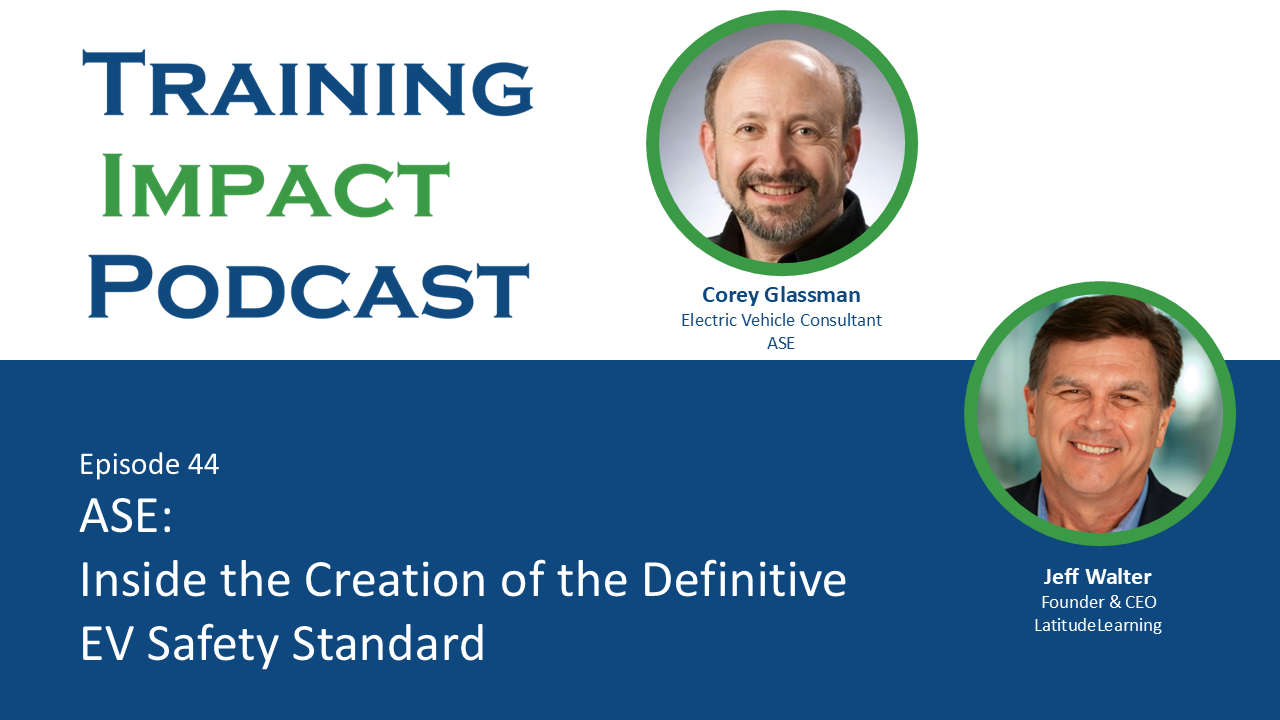
Recognizing this inflection point, the National Institute for Automotive Service Excellence stepped forward to define a unified safety framework for electrified vehicle service. Rather than allowing practices to fragment across shops and manufacturers, ASE convened the industry to establish a common language, a structured certification pathway, and a clear professional baseline for working in high-energy automotive environments.
The development of the electrified vehicle standard was not simply the addition of another certification category. It represented the creation of foundational guardrails for an industry entering a new technological era.
Automotive service is delivered through a vast, decentralized ecosystem. Dealerships operate under shared brand identities but are independently managed. Technicians vary in experience, exposure, and specialization. Service advisors, parts professionals, and shop personnel interact daily with increasingly complex vehicles.
This distributed structure creates both reach and variability. Operational consistency depends on shared standards reinforced by structured learning systems. The challenge intensifies when technological change outpaces existing training infrastructure.
Electrified vehicles introduced systems unfamiliar to many technicians trained primarily on internal combustion platforms. High-voltage battery packs, energy-dense architectures, and new safety considerations began appearing in service bays before a universal framework existed to guide engagement.
In distributed environments of this scale, clarity cannot remain informal. It must be codified.
The dynamics of coordinating learning and compliance across independently operated locations reflect broader distributed training principles frequently examined within extended enterprise environments.
Electrified vehicles differ from traditional platforms not simply in propulsion but in energy management. Battery stacks combine voltage and current in ways that significantly increase potential energy release under fault conditions.
Technicians accustomed to working with twelve-volt systems or conventional electrical subsystems suddenly encountered components capable of delivering hundreds, and in some heavy-duty applications thousands, of volts. Voltage alone does not define hazard. It is the combination of voltage and current that produces the energy capable of generating arc flash and arc blast events.
Arc flash can produce extreme heat and intense light. Arc blast introduces pressure waves and molten material. Battery packs present additional complexity. Unlike many circuits that can be safely de-energized, battery chemistry inherently stores energy. Structural compromise or internal cell failure can lead to thermal runaway events requiring specialized response protocols.
These realities expanded the safety conversation beyond technicians. Service advisors, parts handlers, and shop support personnel operating near electrified vehicles required awareness training. A damaged battery shipment, visible smoke from a vehicle on a lift, or structural flex exposing a battery casing demanded informed response.
Electrification transformed the service environment into a higher-energy workspace. Respect replaced assumption.
ASE’s board, comprised of OEM representatives, independent repair professionals, and industry leaders, recognized that electrification would not remain a niche segment. Fully electrified vehicles were entering the mainstream.
The organization faced a defining question. Would safety practices evolve inconsistently across thousands of shops, or would the industry rally around a unified framework before incidents dictated standards?
ASE chose to lead.
Drawing from existing electrical safety frameworks, including national fire protection and occupational safety guidance, the organization initiated a structured ideation process. Industry experts were convened through workshops. OEM training developers were consulted. Field professionals contributed real-world insight.
The result was not written in isolation. The industry authored the standard collectively. ASE facilitated the process, provided governance structure, and ensured rigorous validation.
The full development journey is reflected in the transcript source.
A defining feature of the electrified vehicle standard was its tiered competency model.
Level One certification addresses awareness. It recognizes that individuals working around electrified vehicles require foundational knowledge even if they do not directly service high-voltage systems. This includes understanding hazard recognition, safe vehicle movement, and proper response to visible damage or smoke conditions.
Level Two certification addresses technicians actively working on high-voltage components. It defines expectations around system isolation, personal protective equipment, and safe procedural engagement.
The framework intentionally stops short of certifying battery pack disassembly. Certain tasks remain manufacturer-controlled due to inherent chemical risk.
This tiered structure reflects disciplined training design principles. Not every role requires identical depth, but every role requires defined boundaries.
In distributed dealer networks, role clarity strengthens onboarding, evaluation, and accountability. Structured dealer training environments that coordinate role-based progression across multiple locations illustrate how such standards are operationalized at scale.
Certification establishes the professional floor. It confirms readiness without limiting growth.
Unlike many historical certification categories that evolved gradually, electrified vehicles entered service environments rapidly. Orange high-voltage cables became common sight in service bays. Customers began purchasing vehicles requiring fundamentally different safety considerations.
ASE developed the standard concurrently with this adoption curve. Workshops were conducted. Drafts were reviewed and rewritten. Psychometric validation ensured assessment accuracy. Feedback from technicians and trainers informed refinements.
This compressed timeline required disciplined project management and cross-industry collaboration. It demonstrated ASE’s ability to function not merely as a certifying body but as an institutional stabilizer during technological transition.
In dealer-based industries, proactive governance reduces downstream exposure.
Within a few years of release, certification participation for electrified vehicles reached levels consistent with other established ASE categories. Achieving parity signaled industry acceptance.
Beyond adoption metrics, effectiveness is observed in operational behavior. The absence of widespread severe arc flash incidents in automotive service environments suggests that structured awareness is influencing practice.
ASE continues to monitor exam performance data and update content through recurring workshops. Battery technology, propulsion architectures, and charging infrastructure continue to evolve. The standard evolves with them.
Structured governance ensures that certification remains relevant rather than static.
Standards achieve impact when embedded within formal learning systems. Awareness modules must be assigned. Role-based curricula must reflect competency distinctions. Certification must align with documented progression pathways.
In dealership environments operating under franchise-style agreements, lifecycle-based training architectures that coordinate compliance oversight, certification tracking, and role-based development across independently owned locations demonstrate how standards scale without dilution, particularly where governance and local autonomy must coexist.
When electrified vehicle competencies are integrated into such lifecycle frameworks, safety becomes embedded in organizational culture rather than treated as an isolated requirement.
Electrification is unlikely to represent the final propulsion shift facing the industry. Advancements in battery chemistry, hybrid optimization, hydrogen propulsion, and charging networks continue to emerge.
ASE’s methodology provides a repeatable governance model.
Dealer networks depend on consistent execution. As complexity increases, structured certification becomes more critical, not less.
Technicians do not lose their identity when technology evolves. They adapt. The electrified vehicle standard recognizes the craftsmanship and intuition inherent in the profession while introducing new guardrails for a higher-energy environment.
Safety culture develops over time. When awareness and structured competency are introduced early in a technological transition, habits form around discipline rather than improvisation.
ASE’s decision to make the standard accessible reinforces its role as shared industry infrastructure. It supports alignment across competitive boundaries and strengthens collective resilience.
The creation of the electrified vehicle safety standard represents a pivotal moment in automotive service history.
As vehicles evolved into high-capacity energy systems, ASE stepped forward to provide clarity. Through collaborative authorship, structured certification design, and disciplined validation, the organization established a professional baseline for working safely in electrified environments.
Dealer networks depend on such clarity. Technicians depend on defined guardrails. Consumers depend on consistent competence.
In a distributed industry where variability can amplify risk, structure is not optional. It is foundational.
Electrification reshaped the service landscape. ASE ensured that safety evolved with it.
For more information on ASE, visit their website – https://ase.com/