
Building a successful franchise system requires much more than a great business concept. Sustainable growth depends on creating a legal, operational, and strategic foundation that allows independent business owners to deliver a consistent customer experience while preserving the flexibility that makes franchising such a powerful business model. Every stage of franchise development, from preparing disclosure documents to expanding internationally, requires careful planning, disciplined processes, and a long-term perspective.
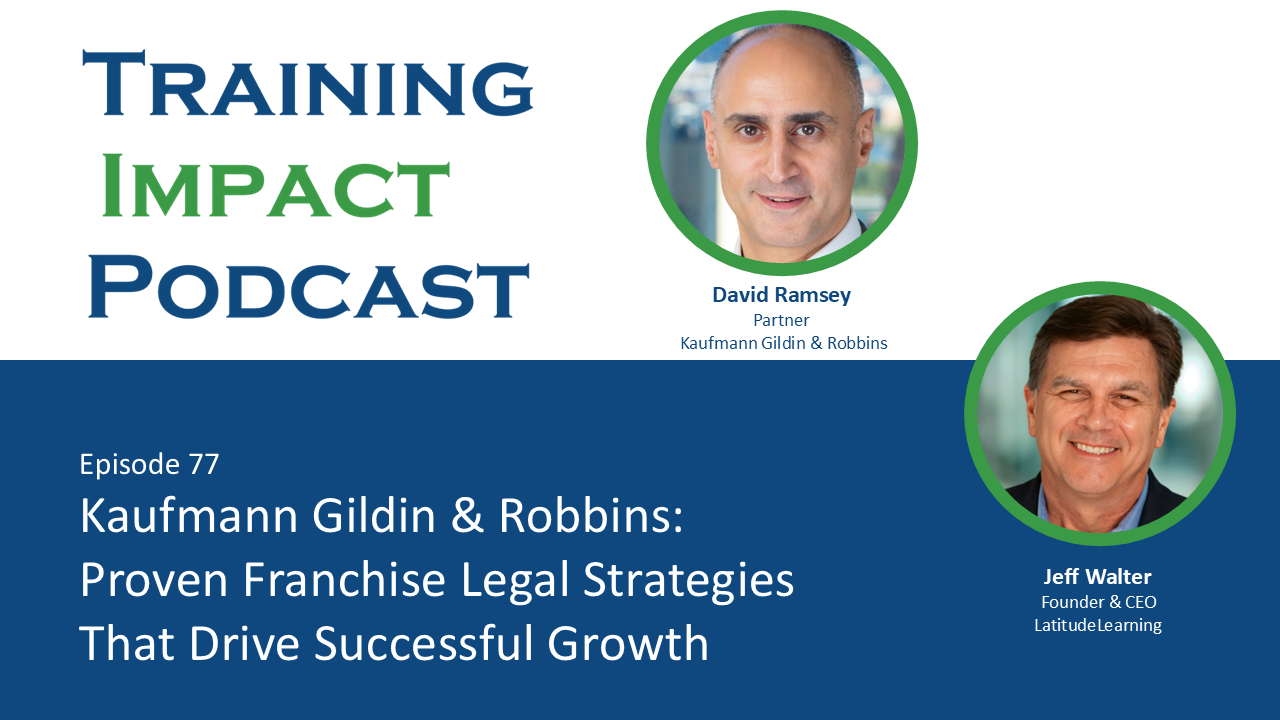
Kaufmann Gildin & Robbins has built its practice around helping franchise organizations navigate that complexity. Working with emerging franchisors, established brands, and some of the world’s largest franchise systems, the firm’s approach extends well beyond legal compliance. Their work focuses on helping organizations develop the structure necessary to scale responsibly, balancing legal requirements with practical business strategy to create franchise systems capable of long-term success.
Rather than treating legal services as isolated transactions, the firm’s philosophy recognizes that franchise law, operational consistency, business processes, and franchise enablement are deeply interconnected. Well-constructed legal agreements create the framework for growth, but documentation alone does not create successful franchise systems. Organizations must also define repeatable processes, establish clear expectations, develop operational guidance, and prepare franchisees to execute the brand consistently across every location.
This perspective is particularly relevant as franchise organizations grow beyond founder-led operations. Knowledge that once existed primarily through direct experience must be transformed into structured systems that can be transferred to independent business owners. Operations manuals, standardized onboarding, clearly documented procedures, and ongoing education become essential components of protecting both the brand and the customer experience.
Viewed through this lens, legal strategy becomes an important enabler of operational excellence rather than simply a mechanism for managing risk. By helping clients establish strong legal and operational foundations early, Kaufmann Gildin & Robbins supports franchise organizations as they build systems that remain consistent, adaptable, and scalable throughout every stage of growth.
Kaufmann Gildin & Robbins occupies a unique position within the franchise industry because its work spans organizations at every stage of development. Some clients are preparing to franchise for the first time, while others operate hundreds or even thousands of locations across multiple countries. Despite the wide variation in size, the underlying objective remains remarkably consistent: helping franchise systems grow in a way that is both commercially successful and legally sustainable.
This broad perspective allows the firm to combine legal expertise with practical business guidance. While franchise law remains the foundation of every engagement, advising clients frequently extends into broader discussions about organizational structure, growth strategy, operational consistency, and international expansion. Experience gained from working across a wide range of franchise systems enables the firm to identify patterns, anticipate challenges, and guide clients toward decisions that support long-term success rather than short-term growth alone.
One philosophy illustrates this approach particularly well. Helping franchisors “make money and keep it” reflects the firm’s emphasis on building businesses that are both profitable and compliant. Growth achieved without appropriate legal safeguards may expose organizations to significant financial and regulatory consequences. Sustainable expansion requires balancing entrepreneurial ambition with disciplined governance.
That perspective is especially valuable for emerging franchisors. Organizations entering the franchise marketplace often possess strong operational expertise but limited familiarity with the specialized legal environment governing franchise development. Unlike general commercial transactions, franchising operates within a highly regulated framework that requires careful planning before the first franchise is ever sold.
Working within this environment means helping clients understand not only what the law requires but also why those requirements ultimately strengthen the franchise system. Proper legal preparation establishes transparency, protects future franchise relationships, and creates a more stable platform for expansion. Rather than viewing regulation solely as a compliance obligation, the firm’s approach positions it as an opportunity to create stronger organizational foundations.
The same philosophy applies to larger franchise organizations pursuing continued expansion. Established brands face increasingly complex decisions involving multi-unit development, area development agreements, master franchise relationships, and international growth. Each introduces new legal considerations while requiring operational systems capable of maintaining consistency across increasingly diverse markets.
By combining legal guidance with practical business insight, Kaufmann Gildin & Robbins helps clients navigate these challenges with an emphasis on long-term organizational health. The result is an advisory relationship that supports not only regulatory compliance but also the strategic decisions that influence how franchise systems evolve over time.
One of the most consistent themes in Kaufmann Gildin & Robbins’ approach is that successful franchise growth begins long before a new location opens. Before expansion can occur responsibly, organizations must establish the legal and operational infrastructure that supports future franchisees while protecting both the brand and prospective owners.
For many emerging franchisors, this process begins with the Franchise Disclosure Document. Although often viewed primarily as a regulatory requirement, the document serves a much broader purpose. It requires organizations to clearly define how the franchise system operates, what obligations exist between the parties, how financial relationships are structured, and what prospective franchisees should understand before making an investment.
Preparing these materials is rarely a simple documentation exercise. The process forces leadership teams to answer questions that many growing businesses have never needed to formalize. Decisions surrounding technology, marketing support, operational services, advertising funds, financial reporting, territory definitions, and ongoing support all require thoughtful consideration before they can be presented consistently to future franchisees.
The same principle applies to franchise agreements and supporting documentation. While these agreements establish the legal relationship between franchisor and franchisee, they also reflect the operational philosophy of the business itself. Every provision influences how the system will function as additional franchisees join the network.
Throughout this process, specialized expertise becomes particularly important. Franchise law contains regulatory requirements and legal terminology that differ significantly from traditional commercial transactions. Advice that may be appropriate in other areas of business law may not adequately address the unique obligations associated with franchising. Working with professionals who understand the industry’s regulatory framework helps organizations avoid costly mistakes while creating documentation aligned with established franchise practices.
The firm’s guidance also extends beyond legal professionals. Building a successful franchise system frequently involves collaboration with accountants experienced in franchise financial reporting, consultants who specialize in operational development, and experts capable of helping organizations document their business systems effectively. Together, these disciplines create an integrated foundation that supports future growth while reducing uncertainty for both franchisors and franchisees.
Perhaps most importantly, this preparation creates clarity. As organizations work through the hundreds of questions required to build a franchise system, they begin transforming founder knowledge into repeatable organizational processes. Informal practices become documented standards. Individual experience becomes institutional knowledge. Operational consistency evolves from expectation into infrastructure.
That transition represents one of the defining moments in the development of a franchise organization. Businesses move beyond relying solely on entrepreneurial expertise and begin creating systems capable of supporting growth across dozens, hundreds, or eventually thousands of independently operated locations.
One of the distinguishing characteristics of Kaufmann Gildin & Robbins’ approach is the recognition that legal guidance should strengthen the business, not simply satisfy regulatory requirements. While compliance is essential, it represents only one part of building a franchise organization capable of sustainable growth. The larger objective is creating a system that can be replicated consistently while allowing franchisees to operate successful independent businesses.
That philosophy becomes especially important as franchise systems expand. Every new location introduces additional complexity, making operational consistency increasingly difficult to maintain without clearly defined processes. Franchisors must establish standards that protect the brand while avoiding unnecessary restrictions that limit franchisees’ ability to manage their businesses effectively.
This balance requires thoughtful legal and operational planning. Franchisees purchase more than a recognizable trademark. They invest in a proven method of doing business. The value of the franchise system lies in the processes, standards, and accumulated experience that allow independent owners to reproduce successful outcomes. Defining those expectations clearly helps reduce ambiguity while creating consistency across the network.
The firm’s guidance reflects this practical reality. Rather than focusing exclusively on contracts and disclosures, the conversation naturally extends into how franchise systems actually operate. Marketing standards, operational procedures, technology, customer experience, and service delivery all become part of a larger discussion about protecting the integrity of the brand while supporting franchisee success.
This broader advisory role frequently positions Kaufmann Gildin & Robbins as more than outside legal counsel. Clients benefit from experience gained across numerous franchise systems, industries, and stages of organizational growth. That perspective allows the firm to identify common challenges, recognize proven strategies, and help clients make decisions that support long-term scalability rather than simply addressing immediate legal questions.
As organizations mature, these decisions become increasingly interconnected. Legal agreements influence operational processes. Operational processes shape training programs. Training reinforces customer experience. Customer experience strengthens the brand. Each element contributes to a larger system in which consistency becomes one of the organization’s greatest competitive advantages.
Throughout the firm’s work, one principle consistently emerges: successful franchise systems are built on repeatable knowledge. Legal documentation establishes the framework for the relationship, but long-term performance depends on whether franchisees can consistently execute the business model they have invested in.
This is where operational documentation becomes particularly valuable. Franchise Disclosure Documents and franchise agreements define the legal relationship, but they cannot teach franchisees how to operate the business on a daily basis. That responsibility belongs to operations manuals, onboarding programs, documented procedures, and ongoing education that transform organizational experience into practical guidance.
The process of preparing these materials often strengthens the organization itself. As emerging franchisors answer the hundreds of questions necessary to formalize their business model, they begin identifying inconsistencies, documenting best practices, and establishing standards that may previously have existed only through founder experience. What was once informal knowledge gradually becomes structured operational guidance capable of supporting future franchisees.
This progression closely mirrors the objectives of modern franchise enablement. Organizations that invest in consistent onboarding, role-specific education, operational documentation, and continuous learning create an environment where knowledge becomes scalable alongside the business itself. As additional franchisees enter the system, they benefit from standardized guidance rather than relying solely on individual coaching or institutional memory.
Increasingly, organizations support these initiatives through platforms designed for franchise training and broader extended enterprise learning These environments provide a centralized method for delivering operational education, policy updates, compliance guidance, and role-based learning across geographically distributed networks. While technology alone cannot create operational excellence, it provides an effective mechanism for maintaining consistency as franchise systems continue to expand.
The discussion also highlights an important distinction regarding training itself. Franchisors have both the ability and the responsibility to educate franchisees on the systems that define the brand. Teaching how products are prepared, how services are delivered, how safety standards are maintained, and how customers experience the brand directly supports the franchise model. These elements represent the business system that franchisees purchased and should therefore be communicated consistently throughout the network.
Where organizations must exercise greater care is in crossing from operational guidance into managing the day-to-day employment decisions of independent businesses. Questions involving staffing levels, employee supervision, scheduling, performance management, and other human resource responsibilities generally remain within the authority of the franchisee. Understanding that distinction allows franchisors to create comprehensive learning programs while preserving the independence that defines the franchise relationship.
By approaching enablement through this lens, Kaufmann Gildin & Robbins helps clients recognize that legal compliance and operational consistency are not competing priorities. Instead, they reinforce one another, creating stronger franchise systems built upon clearly defined expectations, effective knowledge transfer, and sustainable operational practices.
As franchise systems mature, expansion opportunities increasingly extend beyond national borders. International growth presents significant opportunities for established brands, but it also introduces new legal, operational, and strategic considerations that differ substantially from domestic expansion.
Kaufmann Gildin & Robbins has developed considerable experience helping franchise organizations navigate these opportunities. Rather than treating international expansion as a simple extension of domestic franchising, the firm’s approach recognizes that every country presents its own regulatory environment, legal traditions, business customs, and market expectations.
One of the first lessons organizations encounter is that there is no universal framework governing international franchising. While the United States maintains one of the world’s most comprehensive franchise regulatory systems, other countries adopt dramatically different approaches. Some require disclosure documents but no formal government registration. Others have little franchise-specific regulation at all, while certain jurisdictions require extensive governmental review before expansion can proceed.
Successfully navigating these differences requires more than understanding franchise law. It requires coordinating with experienced local counsel, interpreting country-specific regulations, and helping clients evaluate expansion strategies based on both legal and commercial considerations. Kaufmann Gildin & Robbins frequently serves as the central advisor throughout this process, coordinating with local legal professionals while helping clients maintain consistency across their broader franchise strategy.
The firm’s guidance also extends beyond legal mechanics. Decisions surrounding international expansion involve evaluating market demand, cultural fit, supply chain capabilities, operational support, and the availability of experienced development partners. Organizations must determine not only whether expansion is legally possible but also whether their business model can be successfully replicated within a new market.
This measured approach reflects the firm’s broader philosophy regarding sustainable growth. Expansion should occur because the organization is operationally prepared, not simply because an opportunity exists. Brands that evaluate international markets thoughtfully, establish capable partnerships, and maintain consistent operational standards are generally better positioned for long-term success than organizations pursuing rapid expansion without sufficient preparation.
By combining legal expertise with strategic business guidance, Kaufmann Gildin & Robbins helps franchise organizations approach international growth with the same discipline that supports successful domestic expansion, reinforcing the principle that sustainable growth begins with careful planning rather than speed alone.
One of the defining characteristics of Kaufmann Gildin & Robbins’ approach is that legal guidance is viewed as the beginning of the relationship rather than the end. While regulatory compliance provides the framework for franchising, long-term success depends on helping clients make better strategic decisions as their systems continue to evolve.
That perspective becomes especially valuable as franchise organizations mature. Growth introduces new opportunities, but it also creates increasingly complex decisions involving operational consistency, technology investments, market expansion, franchisee support, and organizational governance. Experience gained from advising both emerging brands and internationally recognized franchise systems allows the firm to provide practical insight that extends well beyond legal documentation.
The firm’s philosophy consistently emphasizes measured, sustainable growth rather than expansion for its own sake. Franchisors are encouraged to think carefully about the readiness of their systems before pursuing additional markets, larger development agreements, or international opportunities. Questions surrounding operational capacity, financial sustainability, supply chain readiness, and franchisee support all become important indicators of whether an organization is prepared for its next stage of growth.
This disciplined approach also recognizes that no franchise system is ever truly complete. Every new franchisee, market, and operational challenge provides additional insight that can strengthen the business as a whole. Processes continue to evolve, documentation becomes more refined, and training programs mature alongside the organization. Rather than viewing these improvements as isolated initiatives, Kaufmann Gildin & Robbins approaches them as part of an ongoing process of organizational development.
This philosophy naturally aligns with lifecycle-based enablement strategies. Initial onboarding establishes the foundation, but sustained performance depends upon continuous learning, operational updates, leadership development, and the ability to communicate evolving standards throughout the franchise network. Organizations that invest in structured knowledge transfer are better positioned to maintain consistency while adapting to changing business conditions.
Whether expanding domestically or internationally, the underlying objective remains the same: creating franchise systems capable of delivering predictable, repeatable results while allowing independent business owners the flexibility to succeed within their own markets.
Kaufmann Gildin & Robbins demonstrates that building a successful franchise system requires far more than satisfying legal requirements. The firm’s work illustrates how thoughtful legal guidance, strategic planning, and operational discipline combine to create stronger organizations capable of sustained growth.
Throughout every stage of franchise development, from preparing initial disclosure documents to supporting international expansion, the emphasis remains on building systems that can be replicated consistently without sacrificing the independence that defines franchising. Legal agreements establish the framework, but long-term success depends on documented processes, operational consistency, effective onboarding, and continuous enablement that prepares franchisees to deliver the brand experience with confidence.
This broader perspective positions legal strategy as an important business enabler rather than simply a mechanism for managing risk. By helping organizations answer difficult operational questions early, define clear expectations, and establish repeatable business systems, Kaufmann Gildin & Robbins helps clients create franchise networks that are both compliant and resilient.
The lessons extend well beyond franchising. Any organization responsible for enabling independent partners, dealers, distributors, or customer-facing organizations faces similar challenges involving governance, consistency, and knowledge transfer. The principles of structured documentation, operational clarity, and ongoing education provide the infrastructure necessary for scalable performance across distributed business networks.
Ultimately, the firm’s approach reflects a simple but powerful philosophy. Sustainable franchise growth is achieved not by expanding as quickly as possible, but by building the legal, operational, and educational foundations that allow every new location to strengthen the system rather than strain it. Organizations that invest in that foundation create stronger franchise relationships, more consistent customer experiences, and businesses positioned for long-term success.
For more information on Kaufmann Gildin & Robbins, visit their website – https://www.kaufmanngildin.com/