

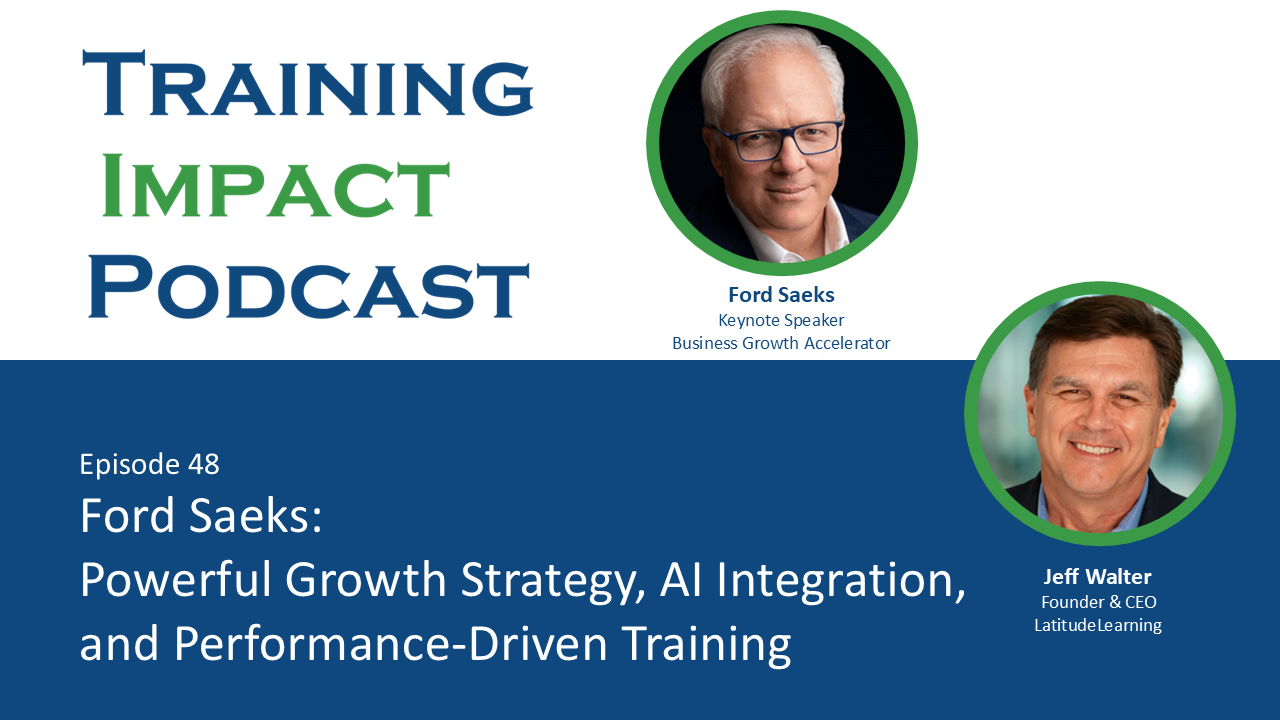
Ford Saeks has long maintained that sustainable channel growth begins with clarity, not complexity. A Hall of Fame Keynote Speaker, Business Growth Accelerator, and author of AI Mindshift and AI Alchemy, Saeks has helped generate more than $1 billion in attributed client sales by applying disciplined systems to scalable growth. In his view, organizations that expand through franchisees, resellers, or distributed service partners must first engineer structured infrastructure before accelerating expansion. Growth without structure introduces variability. Growth with clarity produces repeatable performance.
He approaches partner enablement as a strategic operating system rather than a collection of tactics. As brands move from a handful of units into multi-location or multi-partner networks, informal communication and founder-driven oversight no longer suffice. According to Saeks, the absence of documented knowledge, defined standards, and measurable expectations creates friction that multiplies as the network grows.
Ford consistently frames channel ecosystems as performance multipliers. Independent operators represent the brand in the marketplace. They drive revenue, deliver service, and shape customer perception. Yet they do so outside the direct control of the corporate center.
He explains that emerging brands often move quickly from one or two locations into the ten-to-twenty range. At that stage, the systems that worked in early growth begin to strain. Tribal knowledge does not scale. Casual coaching does not guarantee consistency. Each growth threshold requires refinement of training, expectations, and operational standards.
In distributed models, whether franchise systems, dealer networks, or authorized service providers, the execution risk is decentralized. That reality demands structured enablement. This is the core principle behind franchise training environments built for distributed operators.
He identifies knowledge capture as the first structural gap in growing partner networks. Teams solve problems daily. They refine processes. They uncover best practices. Yet those insights often remain isolated within individuals rather than captured systematically.
Saeks believes that failing to document these lessons limits scalability. Without a structured knowledge base, training remains reactive and inconsistent. As new partners enter the system, they rely on fragmented guidance instead of institutionalized expertise.
Another challenge Ford highlights is ambiguity. Early-stage brands tolerate informal standards because leadership can personally intervene. As the network expands to twenty, fifty, or one hundred units, acceptable behavior must be explicitly defined. Brand representation, sales conduct, service protocols, and operational execution require clarity.
Without defined expectations, training cannot reinforce consistent performance.
Saeks advocates a disciplined two-part approach. First, document everything. Second, institutionalize curiosity.
He views documentation not as administrative overhead but as strategic leverage. Recording best practices, capturing lessons learned, and structuring them into usable narratives create the foundation for scalable training. When documentation is intentional, onboarding accelerates. When documentation is absent, onboarding slows and inconsistency increases.
Saeks encourages organizations to involve every function in knowledge capture. Sales teams contribute objection-handling insights. Operations teams document procedural refinements. Field support records real-world scenarios. Over time, this collective intelligence forms the backbone of scalable enablement.
Second, Saeks emphasizes open-minded inquiry. Leaders must continually ask what acceptable behavior looks like at each stage of growth. As networks expand, expectations evolve. A ten-unit system requires different standards than a one-hundred-unit system. Clarity must evolve alongside scale.
Ford consistently ties execution quality to disciplined infrastructure. Clear systems reduce ambiguity, define accountability, and create alignment across independent operators.
When training programs are built on documented best practices, they translate directly into partner performance. Role plays draw from real scenarios. Skill development exercises reflect actual field conditions. Certification pathways establish measurable standards that reinforce consistency.
In extended enterprise training ecosystems, disciplined systems connect distributed organizations where centralized oversight is limited and performance depends on aligned enablement.
For Saeks, structured training is not conceptual. It functions as operational reinforcement, embedding standards directly into daily execution.
He views training as system amplification. When expectations are defined and knowledge is documented, training programs reinforce strategic alignment. When clarity is missing, training struggles to create impact.
Structured onboarding built on documented processes shortens ramp time for new partners. It reduces reliance on informal mentorship and ensures message consistency. As partners mature, role-based training paths deepen competence.
In many distributed ecosystems, customer-facing consistency is directly tied to training design. Structured customer education initiatives often reinforce this alignment, especially in networks where frontline operators represent the brand at scale. These dynamics frequently intersect with scalable customer training strategies.
Ford emphasizes that training cannot compensate for undefined standards. Strategic clarity must precede instructional design.
Saeks frequently references growth thresholds. Ten units. Twenty-five units. Fifty units. One hundred units. Each milestone introduces operational stress. Systems that were sufficient at one stage must evolve at the next.
He cautions against scaling volume without reinforcing infrastructure. Expansion amplifies both strengths and weaknesses. If documentation and standards are weak, growth accelerates inconsistency. If infrastructure is disciplined, growth multiplies performance.
As ecosystems mature, Ford anticipates increasing reliance on digital knowledge distribution, certification tracking, and structured accountability systems. However, he maintains that technology is an enabler, not a substitute for clarity. The foundation remains documented best practices and defined expectations.
He consistently returns to a deceptively simple framework when diagnosing growth challenges within partner ecosystems. He refers to it as the alignment of message, market, and method. While straightforward in structure, this framework carries significant implications for channel training and enablement.
According to Ford, organizations that struggle with growth often look outward for answers before examining internal alignment. They invest in new campaigns, new technologies, or new recruitment efforts without first clarifying whether their core message resonates, whether they are targeting the appropriate audience, and whether their delivery methods match how buyers actually engage.
In distributed partner environments, misalignment between message, market, and method is amplified. Independent operators may interpret value propositions differently. Sales conversations may drift from brand positioning. Marketing tactics may vary widely across territories. Over time, these small inconsistencies compound into strategic fragmentation.
He emphasizes that partner enablement must reinforce alignment in all three dimensions.
Message begins with clarity of benefit. Ford believes that organizations frequently default to features rather than outcomes. In channel ecosystems, partners must understand not only what the product or service does, but why it matters in practical, economic, and emotional terms. Training that reinforces benefit-driven messaging reduces ambiguity in customer conversations and strengthens brand consistency.
Market requires precision. Saeks encourages leaders to ask who the ideal customer truly is. Without clearly defined target segments, partners may pursue misaligned prospects, reducing conversion efficiency and increasing acquisition costs. Channel training must therefore embed customer qualification criteria, persona clarity, and situational awareness directly into partner onboarding and ongoing development.
Method addresses delivery. How is the message reaching the market? Ford notes that methods evolve continuously. Digital channels, social engagement, referral networks, and direct outreach strategies shift over time. Partners must be equipped not only with messaging but with adaptive methods that reflect current buying behavior.
When any of these three elements fall out of alignment, performance declines. He argues that training programs often attempt to compensate for strategic misalignment rather than correcting it. Additional sales training cannot overcome a weak value proposition. Technical certification cannot compensate for targeting the wrong audience.
For Saeks, the message, market, and method framework becomes a diagnostic tool. It allows leaders to evaluate whether training initiatives are reinforcing clarity or simply adding volume.
This framework also connects directly to partner accountability. When expectations around messaging, targeting, and engagement are explicit, performance becomes measurable. Partners can evaluate their execution against defined standards rather than subjective impressions.
In scalable channel ecosystems, this alignment becomes foundational. It shapes onboarding curricula, role-based learning pathways, certification requirements, and performance reviews. It also reduces variability across independent operators, reinforcing the disciplined infrastructure he considers essential for sustainable growth.
Beyond alignment, Ford introduces another dimension of channel growth that directly impacts training strategy. Organizations must focus not only on acquiring clients, but on acquiring high-value clients.
In distributed partner networks, volume can mask inefficiency. Partners may generate revenue while simultaneously increasing operational strain through low-margin engagements or misaligned customer relationships. Saeks believes that training must reinforce client qualification discipline. Partners should understand how to identify ideal clients, how to increase value delivered per relationship, and how to encourage repeat and referral behavior.
This perspective reframes enablement from transactional selling to strategic relationship building. Training programs that incorporate client lifetime value thinking, customer journey awareness, and referral strategy reinforce sustainable revenue models rather than short-term wins.
He also emphasizes operational performance as the fourth lever in growth. Channel ecosystems must examine gaps across marketing, sales, operations, finance, and customer experience. Training becomes the mechanism through which these gaps are addressed systematically.
In distributed environments, this integration is particularly critical. Sales training cannot operate independently of operational standards. Customer experience initiatives cannot succeed without service consistency. Certification programs must reflect measurable outcomes rather than symbolic completion.
By connecting message alignment, client value strategy, and operational performance, Saeks positions training as an integrative force. It does not function in isolation. It reinforces strategic clarity across the ecosystem.
When this integration is present, partner enablement becomes performance architecture rather than content distribution.
He views partner relationships as long-term performance investments. Early clarity compounds over time. Partners who understand expectations operate with confidence. Confidence produces consistency. Consistency produces measurable outcomes.
Lifecycle enablement requires continual refinement. As partners evolve, documentation must evolve. As markets shift, standards must adjust. Ford believes that ongoing knowledge capture prevents stagnation and ensures training remains aligned with real-world execution.
When enablement systems mature alongside the network, partner performance becomes more predictable. Retention strengthens. Brand integrity stabilizes. Growth becomes engineered rather than accidental.
Saeks maintains that clarity is the architecture of scalable performance. Documentation creates leverage. Defined standards create alignment. Structured training reinforces consistency.
In distributed partner ecosystems, complexity is inevitable. But according to him, complexity does not need to create chaos. With disciplined infrastructure and intentional knowledge capture, organizations can scale with confidence.
For Ford, scalable channel performance is not a byproduct of ambition. It is the result of deliberate system design.
For more information on Ford Saeks, visit his website at https://profitrichresults.com/