

Overview and Primary Focus
AC Inc. was founded to address one of the most persistent and least examined challenges in franchising. Despite meaningful advances in onboarding, learning platforms, operational documentation, and standardized systems, many franchise organizations continue to experience uneven performance once franchisees are fully operational. Some owners scale confidently. Others plateau. Some remain technically compliant while gradually disengaging.
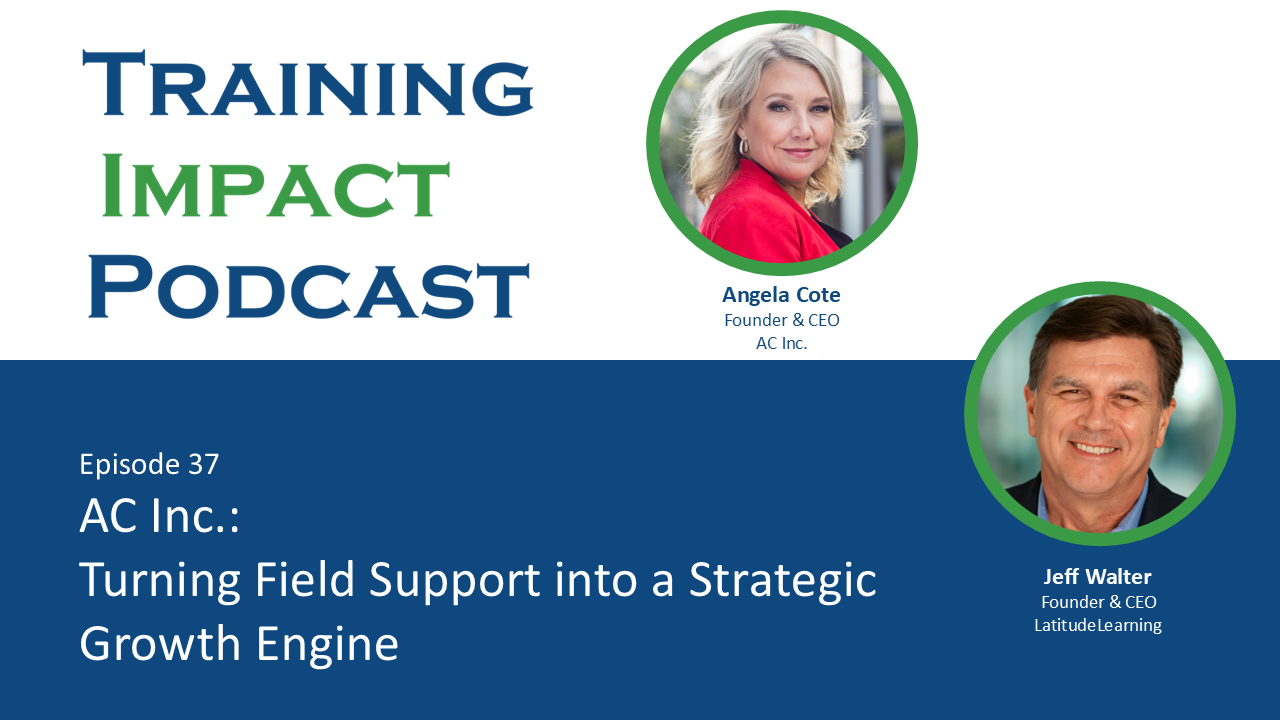
In most cases, this divergence is not the result of insufficient training content or weak systems. Franchisors have already invested heavily in onboarding programs, learning management systems, playbooks, and brand standards. These investments are often aligned with well-established approaches to franchise training that succeed in transferring knowledge and standardizing execution. The breakdown occurs after those programs conclude, when franchisees are left to navigate the realities of ownership under real economic and operational pressure.
AC Inc. focuses on what happens next.
The firm specializes in the deliberate development of field support professionals and the transformation of their role within the franchise ecosystem. Rather than positioning field support as a compliance or inspection function, AC Inc. reframes it as a strategic growth coaching capability that directly influences franchisee engagement, accountability, and long-term performance.
Most franchise training programs are designed to accelerate time to competence during the launch phase. They teach the system effectively. They are not designed to sustain ownership mindset, judgment, or decision quality once the business is operating independently. That responsibility shifts to the people who show up after onboarding ends.
AC Inc. operates at the intersection of training infrastructure and human behavior. Field support professionals are the individuals tasked with reinforcing learning in unpredictable, high-stakes environments where franchisees balance staffing challenges, cash flow constraints, local competition, and personal financial risk. In this context, field support becomes the mechanism that activates every other investment a franchisor has already made, including customer-facing enablement programs that rely on consistent execution at the unit level.
A core belief underpins AC Inc.’s work. Coaching is not a personality trait or an informal expectation. It is a trainable, certifiable discipline. When field support teams are equipped to coach business owners rather than manage employees, franchise systems become more resilient, more aligned, and more profitable.
AC Inc. was built from direct exposure to the full franchise lifecycle. Its methodology is grounded in experience across system growth, field execution, and unit-level ownership.
Early exposure to franchise expansion revealed the tension between brand consistency and local autonomy. Time spent supporting operators in the field exposed the realities franchisees face once initial training ends. Years of operating franchise locations clarified the difference between being evaluated for compliance and being supported through complex growth decisions.
Across these environments, a consistent pattern emerged. Checklist-driven field visits often failed to address the real pressures of ownership. Thoughtful, strategic coaching changed confidence, priorities, and outcomes. As franchise systems matured and invested more heavily in technology, the field support role remained largely informal and inconsistently defined as a professional capability.
AC Inc. was created to address that gap. Its mission is to elevate field support from an operational necessity into a strategic capability that drives franchisee success and long-term system health.
AC Inc. works with franchisors that already value structure and learning. These organizations are not lacking in documentation, platforms, or access to corporate resources. Many operate sophisticated onboarding environments, maintain learning systems, host conferences, and provide extensive operational guidance across their networks.
Yet performance still varies widely.
Engagement often declines after the first year. Some franchisees struggle to transition from following instructions to running a business. Others meet minimum standards without achieving meaningful growth. In these environments, success depends on people the organization does not directly employ.
Franchisees are independent business owners. Authority is limited. Influence matters more than enforcement.
This places field support squarely within the domain of extended enterprise training, where organizations must enable consistent outcomes across decentralized, independently operated entities rather than manage employees directly. The same dynamics apply in dealer networks, partner ecosystems, and customer education environments where performance depends on enablement rather than control.
AC Inc. addresses a blind spot common across these models. Field support professionals are rarely treated as a formal learning audience with defined competencies, structured development paths, and clear expectations. As a result, outcomes depend heavily on individual style rather than system design.
Franchisors typically engage AC Inc. after exhausting traditional explanations for uneven performance. Leadership teams can clearly articulate what they already provide. Onboarding programs. Learning platforms. Playbooks. Conferences. Access to corporate support.
The real objective is not to demonstrate that support exists. It is to build a network of engaged, profitable franchisees who take ownership of their results. Franchisors want operators who think strategically, manage proactively, and remain aligned with brand standards without constant enforcement.
There is also a human dimension to these goals. Founders and executives often feel a deep responsibility for franchisee success. Even in investment-driven systems where financial returns are paramount, performance still depends on franchisees making money. When they do not, disengagement spreads quickly and system health deteriorates.
AC Inc. positions field support development as the connective tissue between franchisor intent and franchisee reality. The goal is not to add more tools, but to improve the quality of the conversations that shape daily execution and reinforce learning long after formal training concludes.
The primary learners in the AC Inc. model are field support professionals. They often enter the role with strong operational knowledge and deep familiarity with the brand. Many are former franchisees or long-tenured team members.
What they typically lack is formal preparation for coaching independent business owners.
Field support is one of the most complex roles in franchising. Professionals must care deeply without enabling dependency. They must enforce standards without eroding trust. They must adapt their approach across a wide spectrum of performance, experience, and mindset.
Some franchisees are struggling and defensive. Others are engaged but overwhelmed. Some comply without initiative. Others are top performers who no longer need tactical advice but still benefit from strategic perspective.
AC Inc. trains field support professionals to recognize these distinctions and adjust accordingly. Coaching is treated as a situational capability grounded in awareness, judgment, and relationship management rather than scripted instruction.
Several challenges consistently emerge across franchise systems.
One is the tendency for field support to default to compliance when coaching skills are underdeveloped. Standards matter. However, when compliance becomes the primary value delivered during visits, support loses relevance, particularly with experienced operators.
Another challenge is the assumption that more tools equal more support. Learning systems and documentation provide access, but access does not guarantee application. Without reinforcement in real operating conditions, training remains theoretical.
Trust is another critical variable. Accountability is easier when trust exists. Franchisees are more receptive to feedback when they believe the person delivering it understands their reality and respects their autonomy as business owners.
Finally, there is role ambiguity. Franchisees are not employees. They cannot be managed through authority. Coaching language matters because it reinforces accountability while preserving ownership.
At this point, field support stops being a soft function and becomes an economic lever.
Franchise systems are economic models. Unit-level profitability drives royalty health. Royalty health supports corporate investment. Corporate investment sustains brand value, supports infrastructure, and long-term growth.
When franchisees disengage, the impact compounds. Underperforming units generate lower royalties. Struggling owners resist reinvestment. Closures, resales, and disputes increase. Field support becomes reactive, consuming more resources while producing fewer results.
AC Inc. reframes field support as a cost of prevention rather than a cost of enforcement. Effective coaching encourages earlier problem-solving, better decision-making, and sustained engagement.
Coaching reduces hidden costs. It shortens periods of underperformance. It stabilizes mid-tier operators who often represent the largest portion of the network. It preserves top performers who might otherwise disengage quietly.
There is also a valuation effect. Systems with stable, profitable franchisees are more attractive to investors. Predictable royalty streams, lower risk, and consistent execution contribute directly to enterprise value.
From an economic perspective, AC Inc.’s work is about leverage. Field support coaching multiplies the return on existing investments in franchise enablement, customer education, and learning systems that support customer training across the brand. It does not replace those investments. It ensures they translate into sustained performance at the unit level.
AC Inc.’s approach aligns closely with how effective adult learning functions in complex, real-world environments.
Relevance comes first. Field support professionals learn in the context of actual franchisee conversations and real performance pressure.
Application follows. Coaching is treated as a performance skill. Practice and reflection are embedded because behavior change, not content completion, is the objective.
Alignment is the final layer. Field support operates within a broader ecosystem of training, systems, and expectations. When those elements are reinforced through capable coaching, the entire system performs better.
AC Inc.’s certification model formalizes these principles, moving field support from improvisation to intentional capability development.
The impact of AC Inc.’s work appears not as a single metric, but as a shift in behavior across the system.
Field conversations become strategic rather than transactional. Engagement improves as trust builds. Strong performers remain invested. Franchisors gain clearer insight into systemic issues and emerging risks.
Most importantly, AC Inc. helps franchisors unlock the return on investments they have already made by ensuring those investments are reinforced where performance actually happens.
AC Inc. represents a shift in how franchising approaches learning, support, and performance.
Sustainable franchise success is not created by tools alone. It is created by the quality of the relationships that reinforce those tools.
By reframing field support as a coachable, certifiable discipline, AC Inc. strengthens engagement, accountability, and system economics. Learning does not end at onboarding. It lives in the conversations that follow.
To learn more about AC Inc. visit their website https://fieldcoachexperts.com/