

Restaurant franchising operates in an environment where execution is public, immediate, and unforgiving. Decisions made in seconds affect guest experience, team morale, food quality, and throughput. In this context, long-term franchise success depends on alignment between how a brand is designed to operate and how leaders show up inside the restaurant.
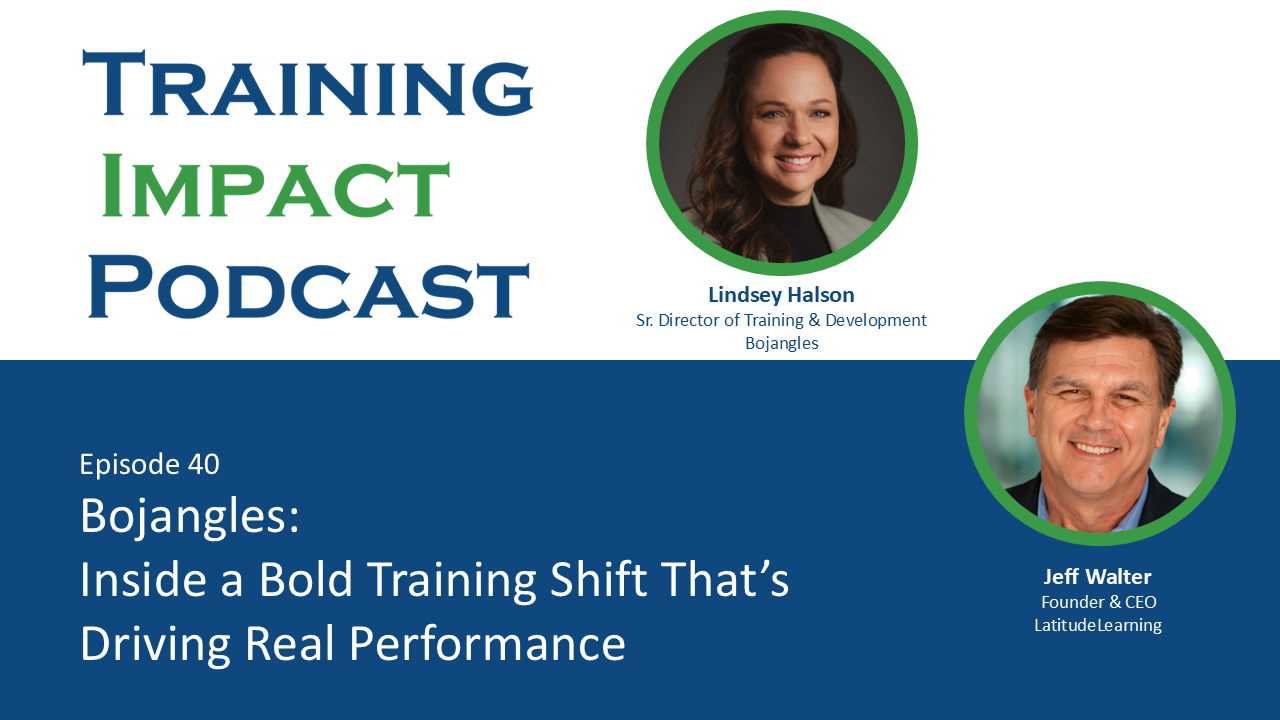
Within large quick-service systems like Bojangles, performance variation often appears not between markets but between locations operating under the same playbook. The difference is rarely access to information. It is how leaders interpret priorities, model behaviors, and reinforce standards during the most demanding parts of the day.
This case study examines how Bojangles approaches franchise leadership alignment through clearly defined behaviors, operational focus, and training that occurs in the flow of restaurant work. Rather than emphasizing abstract leadership traits or theoretical instruction, the system concentrates on teaching and measuring leadership behaviors with a focus on what leaders do during peak periods and how those actions influence team performance.
The central premise are simple and consistently reinforced. Restaurants perform better when leadership expectations are observable, repeatable, and reinforced where the work actually happens.
This philosophy reframes franchise leadership from a personality-driven model to a performance-driven one. Success is not fully dependent on charisma or tenure, but by disciplined attention to operational priorities during the moments that define the guest experience. By narrowing leadership expectations to behaviors that directly influence throughput, quality, and team stability, Bojangles reduces ambiguity and increases repeatability. In a system where seconds matter, clarity becomes a competitive advantage.
Bojangles operates a high-volume restaurant model where speed, hospitality, and product execution must coexist during intense operating windows. The operating environment includes breakfast and lunch rushes, drive-thru demand, staffing variability, and the constant need to balance food quality with throughput.
As the system scaled, Bojangles leadership recognized that consistency could not be maintained solely through standards documentation or initial onboarding. Operators and managers needed shared clarity around what good leadership looked like inside a live restaurant.
The franchise model preserves local independence while operating within clearly defined expectations. Leaders are expected to optimize both leader ship and execution during the moments that matter most, particularly during peak service periods.
The leadership philosophy centers on focus and intentionality. Rather than attempting to correct every performance gap simultaneously, leaders are encouraged to direct their energy toward the behaviors and people that most directly influence outcomes.
This approach reinforces the idea that franchising at Bojangles is not just a business opportunity but a shared operating identity. Leaders are expected to act in ways that support the system, the team, and the guest experience in real time.
One of the persistent challenges in restaurant franchising is identifying and developing leaders who can operate effectively under pressure. Financial capability and prior experience alone do not guarantee success in a high-tempo environment.
At Bojangles, peak periods force leaders to make rapid tradeoffs. Where they choose to spend time and attention directly shapes team behavior and service outcomes.
A common leadership pitfall is attempting to address all performance issues equally. In practice, this diffuses focus and limits impact. Bojangles identified the need to concentrate leadership effort where it produces the greatest operational return.
Three dimensions of leadership fit emerge within Bojangles restaurants:
Operational readiness, reflected in a leader’s ability to prioritize service execution during high-volume periods.
Cultural alignment, demonstrated through how leaders interact with team members under stress and reinforce expectations without escalating tension.
Engagement with learning, shown by a willingness to observe, adjust, and refine behaviors based on operational realities rather than personal preference.
The challenge was not a lack of standards. It was ensuring leaders consistently translated expectations into action on the floor.
Rather than relying on abstract leadership models, Bojangles defines leadership through specific, observable behaviors tied directly to restaurant performance.
Leadership expectations emphasize presence and prioritization. During peak periods, leaders are expected to be visible, engaged, and focused on the areas of the operation that most affect throughput and guest experience.
A recurring operational principle is selective investment of leadership energy. Leaders are encouraged to identify friction points and root causes, and then to focus their energy on high-impact behaviors rather than attempting to remediate every issue simultaneously. This approach reflects the realities of restaurant operations, where time and attention are limited.
Clarity is prioritized over volume. Instead of expanding leadership responsibilities, Bojangles teaches and encourages leaders’ autonomy to identify key actions that consistently produce results.
Technology and structured training infrastructure reinforce this clarity by providing a shared reference point for operators across locations. Franchise training systems and extended enterprise learning models support consistency while keeping execution at the center of development.
Alignment begins early. Leaders are introduced to expectations with a focus on how objective behaviors appear and can be effectively measured during real service.
Defining leadership through execution-based behaviors also strengthens accountability. When expectations are visible and specific, feedback becomes objective rather than personal. This allows coaching conversations to focus on operational outcomes instead of individual style. Over time, this approach builds a leadership culture grounded in measurable performance rather than subjective interpretation.
At Bojangles, training functions as an operational mechanism rather than a standalone activity. Leadership development is embedded into daily restaurant rhythms, especially during high-impact service windows.
Onboarding introduces leaders to behavioral expectations tied to peak operations. Continuing development reinforces those expectations through observation, feedback, and repetition.
Learning occurs through a blend of structured resources and live application. Leaders practice prioritization, presence, and communication while managing real service demands. Training supports execution rather than competing with it.
The operational model aligns with structured training methodologies that organize people, organize content, shape the user experience, manage access, and track progress. These elements support consistency without removing the autonomy required for local execution.
Clear leadership focus and behavioral alignment produce meaningful operational benefits across Bojangles restaurants.
Locations benefit from leaders who understand where to be during critical moments and how to direct their energy effectively. Teams respond more predictably when leadership behaviors are consistent and visible.
Operational consistency improves when expectations are reinforced through action rather than explanation. Leaders who model prioritization during peak periods create environments where teams understand what matters most.
System feedback reflects reduced friction, clearer expectations, and stronger alignment between leadership behavior and operational needs. This approach supports scale by reducing variability in how leadership is expressed across locations.
Representative feedback reflects this shift:
“When leaders focus on the moments that matter most, the operation feels more stable, even under pressure.”
Sustainable scale requires repeatable leadership. By defining performance through observable behaviors tied to service execution, Bojangles reduces dependence on individual leadership style and increases system resilience. Restaurants no longer rely on exceptional personalities to deliver strong outcomes. Instead, the operating model itself guides behavior. This structural consistency supports franchise growth by making operational success less dependent on variance and more dependent on alignment.
Several clear insights emerge from the Bojangles experience.
Franchise systems perform best when leadership expectations are defined through observable restaurant behaviors rather than abstract traits.
Training is impactful when it supports live execution.
Root cause thinking is a leadership skill. Concentrating effort on high-impact behaviors and performers produces more consistent outcomes than attempting universal correction.
Alignment reduces friction. When leaders, teams, and systems share a clear understanding of priorities, restaurants operate with greater confidence and consistency.
As Bojangles continues to scale, embedding leadership development into restaurant operations positions the brand to maintain performance under pressure. The future of franchise growth belongs to systems that design alignment into the way work actually happens.
For more information on Bojangles, visit their website – www.bojangles.com