
The learning and development industry has spent the better part of two decades solving a problem that once seemed insurmountable. Organizations can now distribute information at a scale that would have been unimaginable just a generation ago. Employees can access training from anywhere in the world. Customers can learn about products on demand. Partners, franchisees, and distributed teams can complete certifications without ever entering a classroom. The technologies that support modern learning have become increasingly sophisticated, giving organizations unprecedented reach and efficiency.
Yet despite these advances, a familiar challenge remains.
Information is more accessible than ever, but understanding remains difficult to achieve. Organizations continue to invest heavily in training programs, content libraries, learning platforms, and educational resources, only to discover that access to information does not automatically translate into knowledge, competence, or performance. Learners still struggle to apply concepts, connect ideas, and develop confidence in new skills. Training leaders continue searching for ways to move beyond content consumption and create learning experiences that genuinely influence behavior and results.
This challenge exists across virtually every learning environment. A new employee joining an organization may have access to hundreds of hours of onboarding content but still feel uncertain about how to perform effectively. A customer may complete product training yet struggle to apply what they have learned in a real-world situation. A franchise operator may understand operational standards conceptually while continuing to encounter difficulties in execution. In each case, the issue is rarely access to information. The issue is often the absence of guidance.
The most effective learning experiences have always involved some form of mentorship. Whether that guidance comes from a teacher, manager, coach, instructor, or experienced colleague, learners tend to progress more quickly when someone helps them navigate confusion, answer questions, and adapt instruction to their unique needs. Mentorship creates context. It provides feedback. It helps learners connect new information to existing knowledge and experiences.
The challenge, of course, is that mentorship does not scale easily.
This reality sits at the center of Virtuoso, an emerging artificial intelligence platform founded by Jared Shaw. While much of the current AI conversation focuses on automation, content generation, and productivity gains, Shaw is pursuing a different objective. His vision is rooted in a deceptively simple question: what if artificial intelligence could help organizations scale mentorship?
Shaw’s path into learning technology was anything but traditional. Unlike many founders who emerge from enterprise software, instructional design, or educational publishing, his professional background began in music. As a drummer, he spent years developing technical skills through instruction, practice, repetition, and performance. Alongside his work as a musician, he also built expertise in video production and content creation, developing a deep appreciation for both the creative and technical aspects of communication.
These experiences eventually converged in an unexpected way.
During the pandemic, like countless other professionals and learners around the world, Shaw increasingly relied on digital learning experiences to continue developing his skills. Online learning platforms offered access to extraordinary expertise. Instructors who might once have been inaccessible could now teach learners across the globe through professionally produced educational content. The experience demonstrated the incredible power of technology to democratize access to knowledge.
At the same time, it exposed a limitation that many learners instinctively recognize.
No matter how polished the videos became, the learning experience remained fundamentally passive. Learners could watch demonstrations repeatedly. They could study techniques and absorb information from accomplished experts. What they could not do was engage in a meaningful conversation. Questions that naturally emerged during learning often went unanswered. Areas of confusion lingered. The instruction itself remained static, regardless of who the learner was or how they processed information.
For Shaw, that gap became increasingly difficult to ignore. The more he reflected on his own experiences as both a learner and a performer, the more he became convinced that the missing ingredient was not content. It was interaction.
What learners needed was not necessarily another course, another video, or another content library. What they needed was something much closer to a mentor.
That realization became the foundation upon which Virtuoso was built.
Mentorship occupies a unique place within learning. Organizations have become highly effective at scaling information. They have become reasonably effective at scaling assessments and certifications. What remains difficult is scaling individualized guidance.
The reason is straightforward. Effective mentors do far more than transfer knowledge. They observe learners. They identify misunderstandings. They adapt explanations. They recognize when a learner is struggling and provide alternative perspectives that make complex ideas easier to understand. The most effective mentors rarely deliver identical explanations to every learner because they understand that people learn differently.
This adaptability is precisely what makes mentorship so valuable.
It is also what makes it difficult to replicate.
Historically, organizations have attempted to address this challenge through various forms of technology. Learning management systems created structure and scalability. Digital content expanded access. Knowledge bases improved information availability. More recently, adaptive learning platforms have introduced new ways of tailoring content to individual learners.
Each of these innovations has contributed value, but none fully replicates the experience of working with an experienced mentor.
Shaw’s vision for Virtuoso emerged from this reality. Rather than focusing exclusively on content delivery, he began exploring how artificial intelligence might create a more interactive learning relationship. The goal was not simply to provide answers. It was to create an experience capable of responding to learners in ways that felt more personal, more adaptive, and more supportive.
This shift in perspective is significant because it changes the role artificial intelligence plays within learning. Instead of functioning as a content engine, the technology becomes a guide. Instead of merely delivering information, it participates in the learning process itself.
For organizations facing growing demands for workforce readiness, customer education, partner enablement, and continuous learning, the implications are substantial.
Artificial intelligence has generated enormous excitement within learning and development, but much of the discussion has centered on efficiency. Organizations are understandably interested in reducing content development time, automating administrative processes, and accelerating course creation. These capabilities offer meaningful operational benefits.
However, they do not necessarily address the deeper learning challenge.
A course created in five minutes is not inherently more effective than a course created in five weeks. Faster content development does not guarantee better understanding. More information does not automatically create competence.
Shaw’s perspective introduces a different conversation. Rather than asking how AI can help organizations produce more content, he asks how AI can help learners engage with content more effectively.
This distinction becomes particularly important when examining the current generation of conversational AI tools. Many systems are capable of answering questions, generating explanations, and participating in sophisticated dialogue. These capabilities are impressive, but they do not automatically create instructional experiences.
Learning requires more than conversation. It requires progression. It requires reinforcement. It requires intentional design.
Without structure, even the most sophisticated conversational systems risk becoming educationally unfocused. Learners may spend considerable time interacting with an AI system without necessarily progressing toward meaningful learning objectives. Conversations can wander. Critical concepts may be overlooked. The experience may feel engaging while producing limited educational value.
Virtuoso attempts to address this challenge by combining conversational interaction with instructional structure.
One of the most distinctive aspects of their approach is its emphasis on curriculum.
While many AI platforms focus primarily on conversation, they incorporates a curriculum engine designed to guide learners through structured educational experiences. This framework helps ensure that learning remains aligned with defined objectives while preserving the flexibility and responsiveness that make conversational AI compelling.
The importance of this approach cannot be overstated.
Effective learning has always relied on structure. Instructional designers spend considerable time organizing information, sequencing concepts, creating reinforcement opportunities, and developing assessments that validate understanding. These principles remain important regardless of how instruction is delivered.
They apply those same principles within an AI-driven environment. Learners interact with the system conversationally, but the experience remains grounded in intentional instructional design. Progression occurs within a framework designed to support comprehension, retention, and readiness.
For learning leaders, this represents an important reminder that technology alone is rarely the answer. The most effective learning experiences emerge when technology and instructional design work together. Artificial intelligence may transform how learning is delivered, but sound educational principles remain essential.
This connection between structure and flexibility ultimately becomes one of the platform’s defining characteristics.
The most compelling aspect of their approach emerges when the conversation shifts from adaptive learning to personalized instruction.
For years, learning technology providers have discussed personalization. In most cases, personalization refers to adjusting learning paths based on a learner’s knowledge level. Systems identify strengths and weaknesses, recommend content, and adapt learning experiences accordingly.
They takes a different approach.
The platform is designed not only to understand what a learner knows, but also who that learner is.
This distinction may represent the platform’s most significant innovation.
Rather than delivering identical explanations to every learner, the system can incorporate information about interests, experiences, learning preferences, and previous interactions into the instructional experience itself. A learner with a passion for music may encounter examples rooted in performance and rhythm. Another learner with an athletic background may receive explanations framed through sports and competition. Different learners may arrive at the same understanding through entirely different pathways.
Importantly, the curriculum does not change.
The standards do not change.
The learning objectives do not change.
What changes is the instructional experience.
This mirrors the behavior of exceptional mentors and educators. Great teachers instinctively adapt their explanations based on the individual sitting in front of them. They understand that learning is deeply personal and that different learners often require different approaches.
Virtuoso is attempting to scale that dynamic.
For many learning professionals, this concept represents a meaningful evolution beyond traditional adaptive learning. It suggests a future in which personalization extends beyond content recommendations and begins influencing instruction itself.
The implications of Virtuoso extend well beyond education.
Organizations across industries are grappling with increasingly complex learning challenges. Employees require faster onboarding. Customers need more effective product education. Partners and franchisees must maintain consistent standards while operating independently. Technical workers face rapidly evolving skill requirements. Leaders are searching for ways to improve learning effectiveness without dramatically increasing support costs.
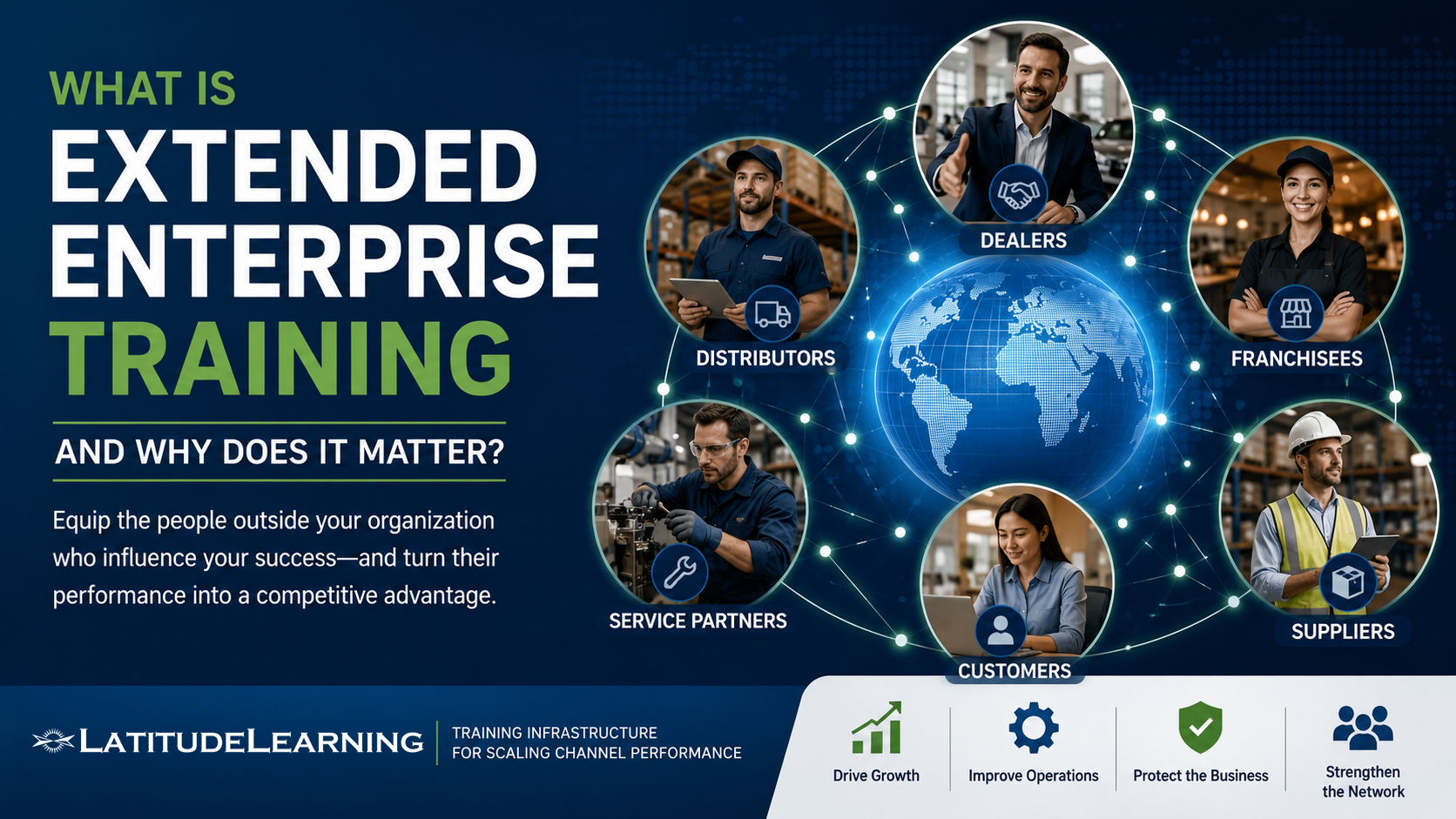
These challenges are particularly relevant within distributed learning ecosystems. Organizations responsible for customer education, franchise operations, and broader extended enterprise training environments often struggle to balance consistency with personalization. They need scalable systems that maintain standards while supporting diverse learner populations. Concepts explored within customer training, franchise training, and extended enterprise learning increasingly depend upon solving this balance effectively.
Virtuoso offers an intriguing perspective on how artificial intelligence may contribute to that effort. By combining structured instruction, personalized guidance, and mentorship-oriented interaction, the platform introduces a model that could help organizations deliver more meaningful learning experiences at scale.
While the technology continues to evolve, the underlying challenge remains highly relevant to virtually every learning leader.
Artificial intelligence is often discussed as a disruptive force, but many of its most significant contributions may emerge through enhancement rather than replacement. The future of learning is unlikely to be defined by eliminating instructors, mentors, or coaches. Instead, it may be defined by extending their reach.
Virtuoso reflects this possibility. Its approach suggests that artificial intelligence can help preserve many of the characteristics that make mentorship effective while making those experiences more accessible to larger populations of learners. In doing so, it points toward a future where learning technology becomes more personal, more responsive, and more closely aligned with the way people naturally learn.
For organizations seeking to improve workforce readiness, accelerate skill development, and create more engaging learning experiences, that future is worth watching closely.
For readers interested in exploring these concepts in greater depth, the companion case study, Virtuoso: Reimagining Mentorship Through Artificial Intelligence, provides a deeper examination of the platform’s instructional framework, learner personalization model, alignment with the LatitudeLearning Training Program Roadmap, and its broader implications for workforce development, customer education, and organizational performance.
The conversation surrounding artificial intelligence in learning often focuses on automation, efficiency, and content creation. Jared Shaw’s vision for Virtuoso introduces a different perspective. By focusing on mentorship rather than content production, the company is exploring one of the most important and enduring challenges in learning and development: how to help people truly understand, apply, and retain what they learn.
Whether that vision ultimately reshapes education, workforce development, or professional learning remains to be seen. What is already clear is that the future of learning will depend on more than information delivery alone. It will depend on creating experiences that feel personal, adaptive, and meaningful to individual learners. In that respect, Virtuoso offers a compelling glimpse into what the next generation of learning technology may become.
🎧 To explore the full conversation, listen to the Training Impact Podcast episode featuring Jared Shaw of Virtuoso.
📄 Download the companion case study: Virtuoso Case Study: Reimagining Mentorship Through Artificial Intelligence
🌐 Learn more about Virtuoso on their website: https://virtuvision.app/