
Organizations have never had more access to information. Customer relationship management systems track interactions in extraordinary detail. Learning management systems record training activity. Business intelligence platforms generate dashboards filled with performance metrics. Surveys capture customer sentiment. Operational systems produce endless streams of data about products, transactions, and outcomes.
Yet despite this abundance of information, many organizations continue to struggle with a surprisingly fundamental challenge.
They do not fully understand what the people closest to their business are thinking.
Customers experience products in ways internal teams never anticipated. Franchisees develop operational workarounds that improve performance. Dealers discover obstacles that limit growth. Employees identify process inefficiencies that never appear in management reports. Partners uncover emerging market trends long before they become visible in quarterly business reviews.
In many cases, the most valuable intelligence within an organization exists outside traditional reporting systems. It lives in conversations, experiences, observations, and lessons learned by people working at the front lines of the business every day.
The challenge is not whether this intelligence exists. The challenge is capturing it, understanding it, and transforming it into knowledge that can benefit the broader organization.
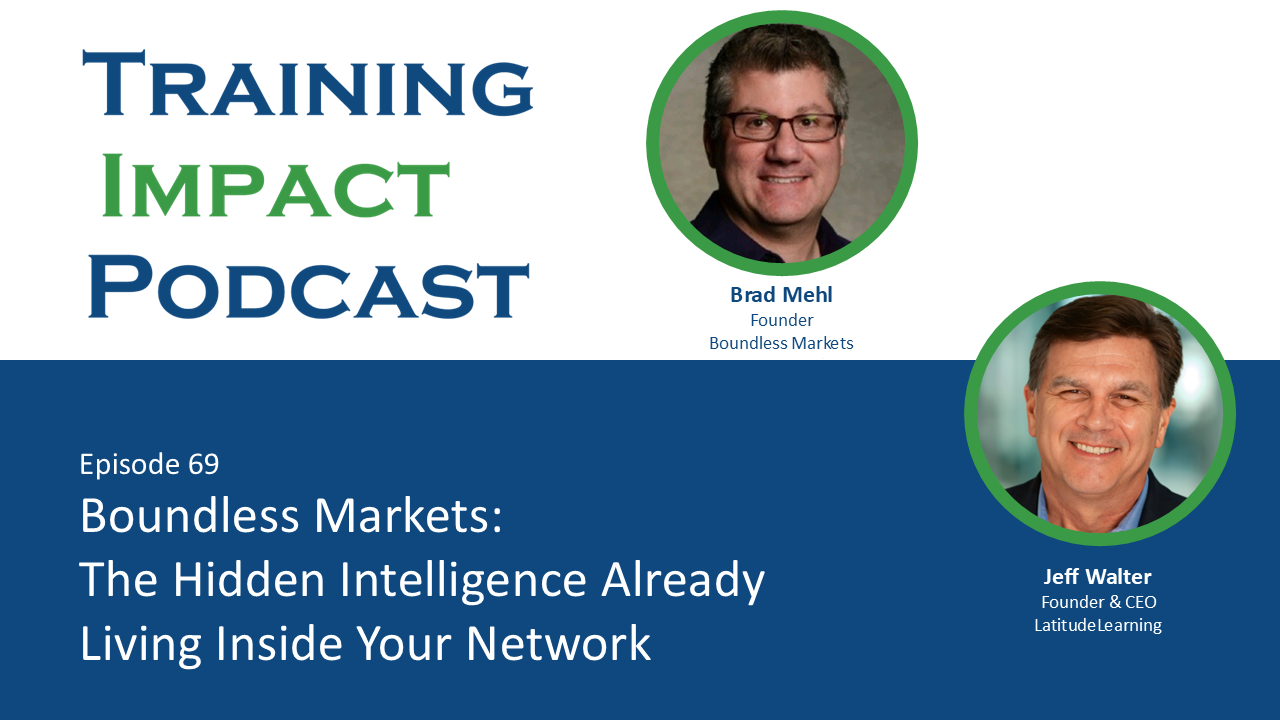
Boundless Markets was created to address this challenge. By combining conversational research methods, artificial intelligence, and knowledge activation technologies, the company has developed an approach that helps organizations uncover what their networks know, identify hidden opportunities, and transform distributed expertise into actionable intelligence.
The result is a model that sits at the intersection of audience research, knowledge management, organizational learning, partner enablement, and business performance.
Boundless Markets emerged from a simple observation. Organizations often make important decisions based on incomplete information.
Throughout his career in growth leadership, marketing, digital products, and research, founder Brad Mehl repeatedly encountered situations where companies believed they understood their audiences only to discover later that important assumptions were incorrect. Leadership teams relied on surveys, performance reports, customer data, and anecdotal feedback, yet significant blind spots remained. Important perspectives were missing. Critical insights never surfaced. Opportunities were overlooked because the organization lacked mechanisms capable of uncovering them.
These challenges become especially pronounced in organizations that operate through networks.
Manufacturers rely on dealer networks. Franchise systems depend on franchisees. Technology companies work through channel partners. Service organizations coordinate across distributed locations. Customer education teams support users operating in vastly different environments.
In each case, the organization depends on people who possess valuable knowledge but who often remain disconnected from traditional decision-making processes.
Boundless Markets was founded on the belief that these individuals collectively represent an enormous source of untapped intelligence. The company’s mission is not simply to gather feedback. It is to help organizations understand what their networks know and use those insights to improve decision making, innovation, learning, and growth.
For decades, organizations have relied on a relatively small set of tools to understand their audiences.
Surveys provide quantitative data. Focus groups generate discussion. One-on-one interviews uncover deeper perspectives. Customer advisory boards create structured feedback opportunities. These approaches remain valuable, but each comes with limitations.
Surveys are scalable but often lack depth. They reveal what people think but frequently fail to explain why. Response rates can be inconsistent, and written comments rarely provide the level of context necessary to fully understand complex issues.
Interviews offer richer insights but are difficult to scale. Conducting meaningful conversations with hundreds or thousands of participants quickly becomes impractical in terms of time and cost.
Focus groups create opportunities for discussion, but the small number of participants raises questions about representativeness. Organizations may gain valuable insights while still wondering whether those insights accurately reflect broader audience perspectives.
As organizations grow, these limitations become more pronounced. A manufacturer with hundreds of dealers, a franchise system with thousands of locations, or a software company serving multiple customer segments faces an increasingly difficult challenge. They need both scale and depth. Traditional approaches typically force them to choose one or the other.
The result is often a fragmented understanding of reality. Leaders see metrics. They hear selected stories. They review survey responses. Yet they still struggle to assemble a complete picture of what is actually happening across the network.
Boundless Markets addresses this challenge through a concept that can best be described as network intelligence.
Rather than treating feedback as a collection of isolated responses, the company views every audience as a source of collective knowledge. Customers, employees, franchisees, distributors, and partners each possess pieces of a larger story. The goal is to capture those perspectives at scale and identify the patterns, themes, opportunities, and tensions that emerge across the network.
At the center of this approach is the self-guided interview.
The concept combines elements of traditional interviews and surveys into a single experience. Participants receive a link and engage in a conversational process that feels more like an interview than a questionnaire. They respond to questions verbally or through text, while AI-generated follow-up questions adapt based on the participant’s responses and the organization’s learning objectives.
This approach allows organizations to gather the type of rich qualitative insights traditionally associated with interviews while maintaining the scalability associated with surveys.
The difference is significant.
Instead of receiving a collection of isolated survey responses, organizations gain access to detailed explanations, contextual observations, personal experiences, and nuanced perspectives. Participants explain not only what they think but why they think it.
As these conversations accumulate, a higher-resolution picture of the audience begins to emerge. Organizations gain visibility into motivations, concerns, opportunities, challenges, and emerging trends that might otherwise remain hidden.
One of the most compelling implications of the Boundless Markets approach is its relevance to organizational learning.
Most organizations invest heavily in training their networks. Franchise systems train franchisees. Manufacturers train dealers. Technology companies train partners. Customer education programs help users adopt products and services. Learning and development teams build programs designed to transfer knowledge and improve performance.
Yet comparatively little attention is devoted to learning from those same networks.
This creates an imbalance.
Training represents the flow of knowledge outward from the organization. Learning requires knowledge to flow inward as well.
Every franchisee, distributor, dealer, customer, and employee accumulates experiences that can benefit others. Some discover more effective ways of performing tasks. Others identify barriers that limit performance. Still others recognize emerging opportunities before corporate leadership becomes aware of them.
Organizations operating within complex partner ecosystems face exactly the type of challenge described in extended enterprise learning environments. Success depends not only on educating the network but also on continuously learning from it. This dynamic sits at the heart of modern extended enterprise training initiatives, where information must move in multiple directions to support performance and growth.
Boundless Markets provides a mechanism for capturing these insights systematically.
Instead of relying on occasional meetings, anecdotal conversations, or periodic surveys, organizations can establish ongoing learning loops that continuously gather intelligence from the people closest to customers, products, and operational realities.
Knowledge management professionals have long struggled with the challenge of tribal knowledge.
Within every organization, valuable expertise exists primarily in people’s heads. Employees know things that have never been documented. Partners understand nuances that are not reflected in training materials. Experienced professionals develop instincts and insights that rarely make their way into formal knowledge repositories.
This knowledge creates value while it remains accessible. The problem is that it often disappears when people leave, change roles, retire, or simply fail to communicate what they know.
The Boundless Markets approach addresses this challenge by transforming conversations into structured organizational intelligence.
When participants engage in self-guided interviews, they are effectively converting tacit knowledge into explicit knowledge. Experiences become documented. Observations become searchable. Insights become accessible to others.
The implications extend beyond research.
Captured knowledge can be analyzed, organized, synthesized, and eventually incorporated into broader organizational learning systems. What begins as a conversation can ultimately become part of the institutional memory of the organization.
This process aligns closely with the objectives of modern knowledge acquisition strategies and the early stages of the Training Program Roadmap where organizations seek to identify, organize, and distribute critical knowledge before it can be effectively taught, reinforced, and applied.
Perhaps the most powerful concept associated with network intelligence is the idea that innovation frequently originates at the edges of an organization rather than at its center.
Organizations often focus on majority opinions. Consensus provides confidence and helps leaders understand prevailing perspectives. Yet transformative ideas frequently emerge from a much smaller group of individuals who are experimenting with new approaches, solving problems differently, or adapting to changing conditions before others recognize the need.
Boundless Markets refers to these opportunities as seeds of innovation.
Like seeds beneath the soil, they are difficult to see. Most remain hidden from leadership. Some never take root. A few ultimately reshape the future of an organization.
The challenge is finding them.
Within any network, there may be individuals who have already solved problems others continue to struggle with. A franchisee may have discovered a more effective operational process. A dealer may have identified a successful sales strategy. A customer may have developed an innovative use case. A frontline employee may understand emerging market shifts before executives recognize them.
Without mechanisms for surfacing these insights, organizations risk losing opportunities that already exist within their own networks.
Network intelligence provides a way to identify these signals early and create pathways for innovation to spread.
Capturing insights is only one part of the equation.
Organizations must also make those insights accessible, actionable, and relevant to different audiences.
This challenge led Boundless Markets to develop Actify, a platform designed to transform static content into interactive knowledge experiences. Reports, transcripts, webinars, recordings, and documents become structured environments where users can quickly identify information relevant to their specific interests and needs.
The significance of this approach becomes clear when viewed through the lens of modern workplace learning.
Most organizations do not suffer from a shortage of information. They suffer from an inability to help people find the right information at the right time.
Employees are overwhelmed by reports, presentations, documents, recordings, and training materials. Valuable ideas often disappear because they are buried inside content that few people have time to fully consume.
Actify addresses this challenge by breaking content into actionable knowledge components. Users can explore key insights, focus on areas relevant to their roles, save important information, share findings with colleagues, and identify actions worth pursuing.
The result is not merely content consumption. It is knowledge activation.
Ideas become easier to discover, easier to understand, and easier to act upon.
Although Boundless Markets is not a traditional learning platform, its methodology aligns with several important learning and performance principles.
First, the approach recognizes that learning begins with relevance. Adults are most engaged when information connects directly to real challenges, real decisions, and real experiences. The conversational nature of self-guided interviews captures precisely these types of insights.
Second, the model supports contextual learning. Rather than presenting abstract information, it surfaces knowledge generated through practical application. Participants share experiences grounded in authentic business situations.
Third, the system reinforces social learning principles. Knowledge is not created solely by experts or headquarters. It emerges through the collective experiences of a community. Network intelligence allows organizations to benefit from that collective wisdom.
Finally, the Actify model supports performance support and continuous learning by helping individuals access information when needed rather than requiring them to remember everything from formal training events.
These principles complement many of the goals associated with customer education, partner enablement, and franchise learning initiatives. Organizations investing in customer training and franchise training increasingly recognize that learning is most effective when it is connected directly to performance, decision making, and real-world application.
The value of network intelligence extends beyond learning.
Organizations that understand their networks more effectively are better positioned to make decisions, identify opportunities, and respond to change.
By capturing qualitative insights at scale, leaders gain access to perspectives that would otherwise remain invisible. They can identify emerging trends earlier. They can understand barriers to performance more clearly. They can uncover opportunities for innovation that may not appear in traditional reports.
The ability to conduct pulse studies further enhances organizational agility. New developments, changing regulations, competitive actions, or market disruptions can be explored quickly through targeted conversations with relevant audiences. Instead of waiting months for traditional research cycles, organizations can gather intelligence and respond more rapidly.
This responsiveness is becoming increasingly important in environments characterized by continuous change. Competitive advantage often depends on learning faster than competitors and translating insights into action before opportunities disappear.
For learning leaders, the Boundless Markets model offers an important reminder.
The future of learning is not simply about delivering content more efficiently. It is also about creating systems capable of capturing, organizing, and distributing knowledge generated throughout the organization.
Historically, learning departments focused primarily on content creation and delivery. Increasingly, they are becoming stewards of organizational knowledge.
This shift requires new approaches.
Learning leaders must think not only about what people need to know but also about how knowledge is discovered, captured, validated, and shared. They must consider how learning systems can support both knowledge distribution and knowledge acquisition.
Boundless Markets illustrates what this future may look like. The organization demonstrates how conversational AI, network intelligence, and knowledge activation technologies can help organizations create continuous learning ecosystems that evolve alongside the business itself.
Artificial intelligence is reshaping how organizations capture, organize, and use information.
While much of the discussion surrounding AI focuses on automation, another equally important opportunity is emerging: listening at scale.
The ability to engage thousands of people in meaningful conversations, identify patterns across those conversations, and transform the results into actionable knowledge represents a significant shift in organizational capability.
As these technologies continue to mature, the distinction between research, knowledge management, learning, and performance support is likely to become increasingly blurred. Organizations will move toward systems that continuously capture intelligence, transform it into knowledge, and distribute it to the people who need it most.
In this environment, organizational success may depend less on access to information and more on the ability to learn from information effectively.
Boundless Markets represents an evolution in how organizations think about intelligence, learning, and knowledge management. By combining conversational research methods, AI-powered analysis, knowledge activation tools, and dynamic knowledge experiences, the company helps organizations uncover insights that might otherwise remain hidden within their networks.
The broader lesson extends well beyond any individual platform. Every organization is surrounded by valuable knowledge. Customers, employees, partners, franchisees, dealers, and distributors continuously generate insights through their daily experiences. The challenge is not creating more information. The challenge is identifying what matters, capturing it before it disappears, and transforming it into organizational capability.
Organizations that master this process will be better positioned to innovate, adapt, and compete. In a business environment increasingly defined by change, the ability to learn from the network may become just as important as the ability to train it.
For more information on Boundless Markets visit – https://www.boundlessmarkets.com/
For more information on Actify visit – https://actifythis.com/