Organizations spend billions of dollars every year on recruiting, onboarding, training, leadership development, and employee engagement. They invest in learning platforms, performance management systems, mentorship programs, and workforce planning initiatives. Yet despite these investments, many continue to struggle with the same persistent challenges.
Employee turnover remains high. Critical roles remain difficult to fill. Internal mobility often falls short of expectations. Employees frequently report feeling disconnected from long-term opportunities within their organizations. Leaders find themselves replacing valuable talent rather than developing it.
The problem is not always a lack of training.
In many cases, organizations focus heavily on helping people perform their current jobs while investing far less attention in helping them manage their careers. The distinction may appear subtle, but the consequences are significant.
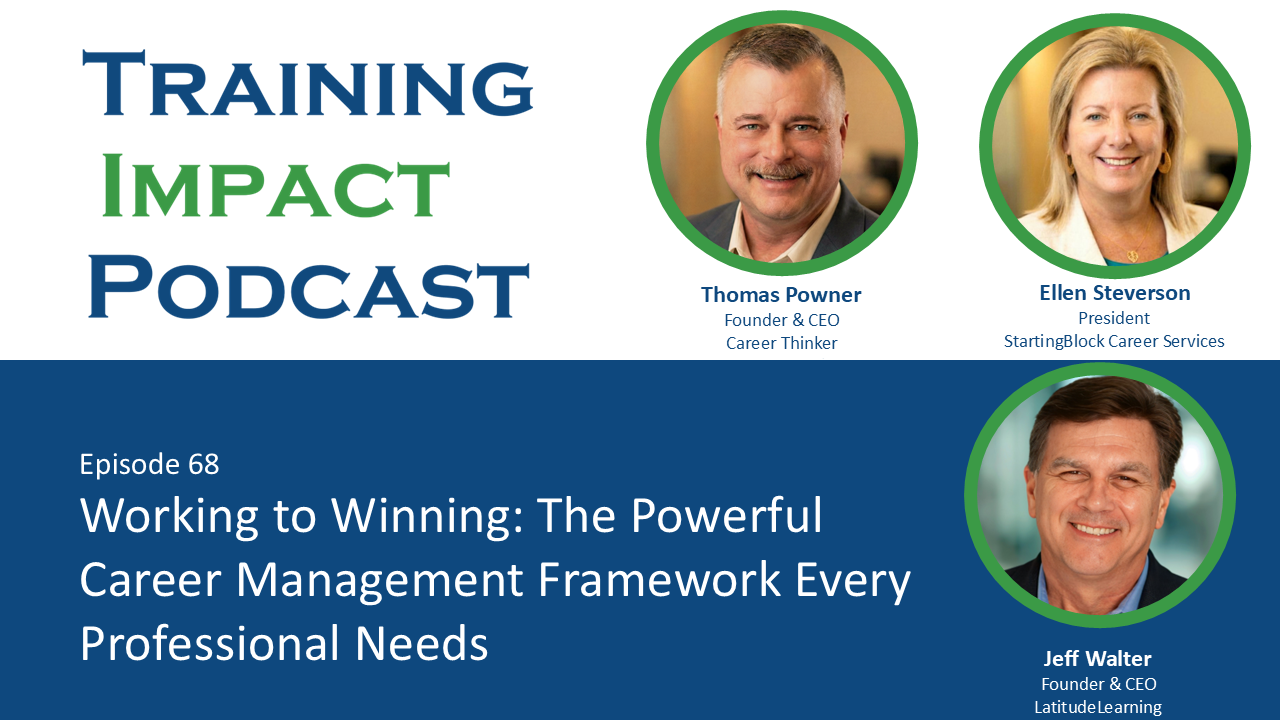
At the center of Working to Winning: The Power of Knowing What Matters, authored by Ellen Steverson and Thomas Powner, is a simple but powerful idea: people have One Life, One Career™. While they may hold one or multiple jobs throughout that journey, their career is a continuous progression shaped by learning, skills, experiences, relationships, decisions, and opportunities. Developed over decades of experience in career management, workforce development, recruiting, and professional coaching, the book presents a framework to help employees and employers approach career growth differently.
Rather than treating career management as a personal responsibility disconnected from organizational objectives, Working to Winning positions it as a shared responsibility that strengthens employee retention, improves workforce readiness, enhances learning outcomes, and creates stronger long-term organizational performance.
For franchise organizations, dealer networks, channel partners, service providers, and other distributed business models, the implications are particularly important. Success depends on people. The ability to develop, retain, and engage those people often determines whether training investments deliver meaningful business results.
Many organizations discuss professional development. Others focus on leadership development, succession planning, employee engagement, or workforce readiness. Working to Winning argues that these initiatives often represent individual pieces of a much larger picture.
Career management serves as the framework that connects them all.
Rather than viewing careers as a series of disconnected jobs, the philosophy presented in Working to Winning encourages individuals to see their professional journey as an ongoing process of growth and increasing value to their organization. Every role contributes to new skills, individual growth, and business growth, too. Every experience creates additional value. Every challenge provides learning opportunities that can influence future success.
This perspective challenges traditional assumptions about career progression.
Many employees still view advancement primarily as climbing a ladder. Organizations often reinforce this belief by emphasizing promotions as the primary measure of growth. Yet real career management rarely follows a straight line.
Professionals frequently move laterally, acquire new capabilities, develop cross-functional expertise, and build experience across multiple disciplines. These experiences often become more valuable than a simple upward progression through organizational levels.
Working to Winning describes this process as skill stacking. Individuals continually accumulate knowledge, experiences, and capabilities that increase their overall value to employers. Rather than abandoning one career for another, they build upon existing strengths and apply them in new ways. Working to Winning supports internal opportunities, business fluency, and the delivery of business wins for the organization.
This broader view of career management creates opportunities for both employees and employers.
One of the most significant barriers to workforce development is a lack of communication.
Organizations often assume employees understand how the business operates. Leaders assume workers recognize the importance of their roles. Employees assume managers know their aspirations and career goals.
In reality, these assumptions frequently prove incorrect.
One of the key observations in Working to Winning is that communication breakdowns remain among the most common obstacles to effective career management. Employees often leave organizations because they believe opportunities do not exist, even when they actually do. Managers may incorrectly assume employees are satisfied with their current responsibilities. Leadership may struggle to understand why valuable talent leaves despite offering competitive compensation and benefits.
The result is a career management gap.
Employees become focused on their immediate responsibilities without understanding broader opportunities. Organizations become focused on operational requirements without understanding employee ambitions.
Neither side fully understands the other.
This disconnect creates unnecessary turnover, limits employee engagement, and reduces the effectiveness of workforce development initiatives.
Effective career management begins by closing this gap.
One of the most important concepts introduced in Working to Winning is business fluency.
Business fluency refers to an employee’s understanding of how their work contributes to broader organizational outcomes. It extends beyond technical expertise and job-specific knowledge.
Many employees understand how to perform their tasks. Far fewer understand how those tasks create value for customers, support organizational objectives, generate revenue, reduce risk, or contribute to long-term success.
This lack of understanding creates limitations for career management.
When individuals fail to see the bigger picture, they struggle to identify future opportunities. They may underestimate the importance of their contributions. They may fail to recognize how their existing skills can transfer into new roles.
Business fluency strengthens career management by helping employees connect daily responsibilities with organizational outcomes.
A technician is not simply repairing equipment. A customer service representative is not simply answering questions. A project manager is not merely tracking tasks.
Each role contributes to customer satisfaction, operational efficiency, revenue generation, brand reputation, and organizational growth.
When employees understand these connections, career management becomes more meaningful because they gain a clearer picture of how their work creates value.
Employee retention still remains one of the most significant challenges facing organizations today.
Replacing experienced employees requires recruiting, onboarding, training, and knowledge transfer. Productivity often declines during transitions. Customer relationships may suffer. Institutional knowledge disappears.
Working to Winning argues that career management can significantly reduce these challenges.
Many employees begin searching for external opportunities because they cannot see future opportunities internally. They assume growth requires leaving the organization. They believe advancement is unavailable. They become frustrated by a lack of visibility into potential career paths.
Career management helps address these issues by creating ongoing conversations about growth, development, and future possibilities.
When organizations actively discuss career management, employees gain greater awareness of opportunities. Managers gain insight into workforce aspirations. Development efforts become more targeted and effective.
The result is stronger employee retention.
Career management does not guarantee that employees will remain forever. Rather, it increases the likelihood that they will see a future within the organization and continue investing their talents there.
Many organizations rely heavily on annual performance reviews as their primary vehicle for development conversations.
Working to Winning suggests that this approach is insufficient.
Performance reviews typically focus on past performance. Career management focuses on future possibilities.
The difference matters.
Employees benefit from regular discussions about skills, interests, aspirations, emerging opportunities, and industry changes. Managers benefit from understanding workforce ambitions before retention issues arise.
Career management, therefore, becomes an ongoing dialogue rather than an annual event.
Organizations that embrace career management create more opportunities for informal discussions, mentoring relationships, leadership visibility, and cross-functional exposure. These interactions help employees develop broader perspectives while strengthening organizational culture.
This approach creates stronger alignment between individual growth and organizational needs.
Traditional career models often assume that advancement occurs through promotion.
The framework presented in Working to Winning offers a different view. This is precisely what the Forge4ward Career Management Model was built to do. The model gives employees and organizations a structured, repeatable system built around four components: Discover Yourself, Expand Horizons, Forge Relations, and Drive Strategy. Rather than treating career growth as a vague aspiration, the Forge4ward model breaks it into concrete components and actions that individuals can apply consistently, whether they are just starting out or navigating a significant transition. It is the structural backbone behind the Working to Winning philosophy.
Modern career management involves continuously building capabilities across multiple disciplines. Employees become more resilient and valuable by combining technical expertise, communication skills, leadership capabilities, decision-making, business knowledge, and industry experience.
This process of skill stacking creates flexibility.
An employee may start in operations and later contribute to sales. A technician may transition into customer-facing roles. A project manager may develop financial expertise. Each experience adds value rather than replacing prior knowledge.
Skill stacking also strengthens workforce resilience.
Organizations benefit when employees possess diverse capabilities. Individuals benefit when they can adapt to changing business conditions.
Career management provides the framework for making these transitions intentional rather than accidental.
One of the most practical applications of career management involves cross-training.
Organizations often compartmentalize work. Employees become specialists within narrow areas of responsibility. While specialization creates efficiency, it can also limit development.
Working to Winning advocates creating opportunities for employees to learn from one another, observe different functions, and develop broader organizational awareness.
Cross-training supports career management by expanding understanding.
Employees gain exposure to new skills. They discover previously unseen opportunities. They develop a stronger appreciation for how different functions contribute to organizational success.
For organizations, cross-training improves flexibility while strengthening workforce capability.
For employees, cross-training enhances career management by expanding their skill portfolio and increasing future opportunities.
The principles of career management are even more important in distributed organizations.
Franchise systems, dealer networks, channel organizations, and partner ecosystems often operate across hundreds or thousands of locations. Employees may work for individual owners rather than corporate headquarters. Career paths may appear less visible than in centralized organizations.
Yet career management remains essential. The Forge4ward Career Management Model addresses this directly. Its four-component structure works in centralized and distributed environments alike because it is built around individual action and organizational awareness, not a single career ladder or a single location. For franchise systems where career paths may feel less visible, the model creates a common language and a common framework that every employee, regardless of location, can use to navigate growth.
Successful organizations create consistent development experiences that help individuals understand opportunities, build skills, and progress throughout their professional journey.
This is one reason many organizations invest in structured franchise training programs. Effective franchise training helps employees understand not only how to perform their current roles but also how they can grow within the broader system.
The same principle applies to extended-enterprise training environments, where organizations support employees, partners, dealers, distributors, and other external stakeholders through coordinated learning initiatives.
Career management strengthens these efforts because people engage more deeply when they understand how learning connects to future opportunities.
The rise of artificial intelligence has intensified the importance of career management.
Technology continues to reshape how work is performed. Tasks that once required specialized expertise are becoming increasingly automated. New skills are emerging, while others are declining in importance.
Working to Winning argues that organizations cannot wait until disruption occurs before addressing workforce development. Instead, career management should be embedded into organizational culture long before significant change arrives.
Employees need opportunities to learn new technologies, develop new capabilities, and prepare for changing responsibilities.
Organizations need workforces capable of adapting.
Career management creates the framework for navigating this transition.
Rather than viewing technological change as a threat, individuals can view it as an opportunity to expand capabilities and strengthen long-term career prospects.
One of the most compelling concepts emerging from Working to Winning is the relationship between learning and earning.
Employees want compensation. Organizations want productivity.
Career management connects these objectives through continuous development.
When individuals continue learning, they become more valuable. As they become more valuable, they often gain access to greater opportunities and increased compensation. Organizations benefit through improved performance, stronger innovation, and enhanced adaptability.
Learning, therefore, becomes an essential component of career management rather than a separate activity.
This philosophy aligns naturally with structured customer training and workforce development programs that help learners continuously build capabilities over time.
Organizations that support ongoing learning create stronger foundations for long-term success.
Ultimately, the central message of Working to Winning is cultural rather than procedural.
Career management cannot exist as an isolated HR initiative.
It must become part of how organizations communicate, develop people, share opportunities, and support growth.
Leaders, managers, and employees all play a critical role. Career management succeeds when all participants recognize that employee growth is a shared responsibility.
Organizations should actively discuss opportunities, encourage learning, promote cross-functional exposure, and help employees understand how their work contributes to broader objectives.
Employees should take ownership of their growth, seek new experiences, build skills, and remain actively engaged in their professional development.
When both sides participate, career management becomes a powerful force for retention, engagement, learning, and performance.
The most successful organizations understand that people are not simply filling jobs. They are building careers.
Working to Winning: The Power of Knowing What Matters challenges employers and employees alike to rethink their approach to workforce development. Rather than treating career management as a personal activity disconnected from organizational objectives, the book presents career management as a shared framework that benefits everyone involved.
Strong career management improves communication. It strengthens employee retention. It increases business fluency. It supports workforce adaptability. It enhances learning outcomes. It creates more engaged employees and more resilient organizations.
For franchise networks, channel ecosystems, customer education programs, and extended enterprise learning environments, these benefits become even more significant. Distributed systems depend on alignment, consistency, communication, and ongoing development.
Career management provides a foundation for all four.
As organizations continue to navigate technological change, workforce evolution, and increasing competitive pressure, the lessons in Working to Winning provide a practical framework for developing talent, retaining knowledge, strengthening performance, and creating lasting success.
For more information, visit https://workingtowinning.com/
Connect
Ellen: https://www.linkedin.com/in/ellensteverson/
StartingBlock Career Services, visit https://startingblockcs.com/
Thomas: https://www.linkedin.com/in/tompowner/
Career Thinker, visit: https://www.careerthinker.com/