Franchise growth is often measured by visible milestones: locations opened, territories awarded, markets entered, and systemwide expansion. Those numbers matter, but they tell only part of the story. A franchise system can add locations quickly without necessarily building the organizational strength required to support them over time.
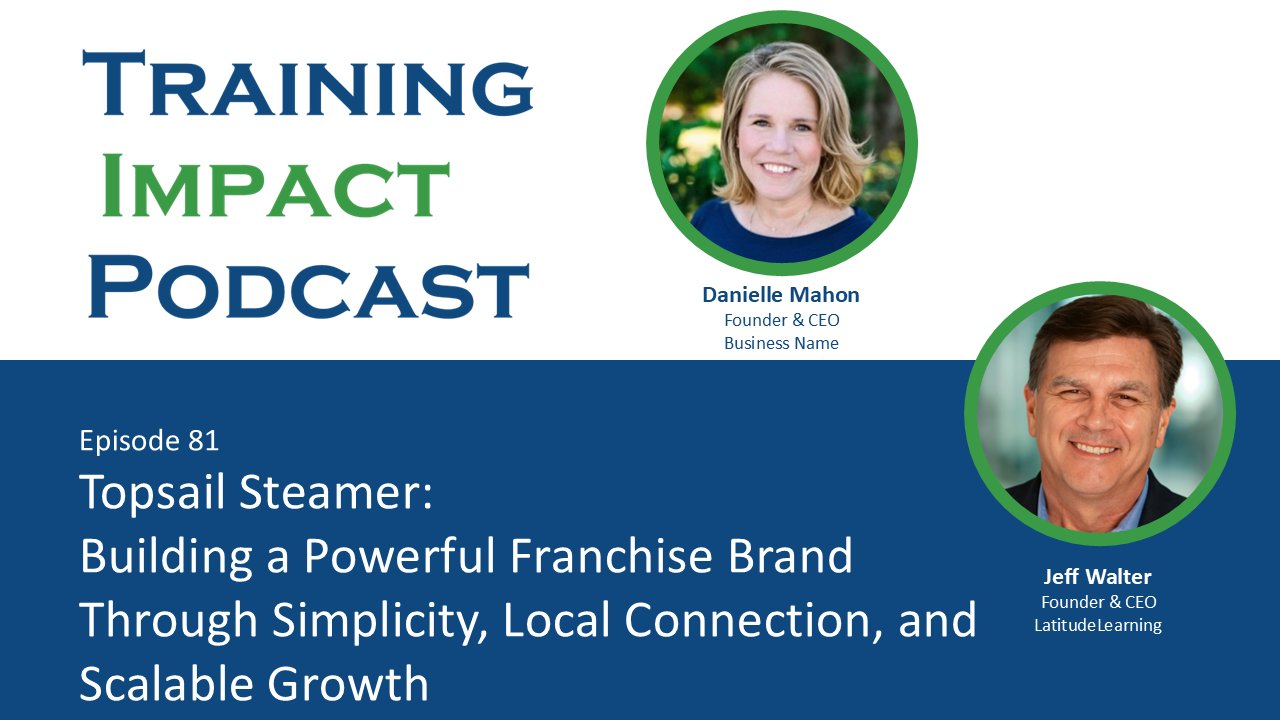
Sustainable franchising depends on alignment between the brand and the people responsible for bringing it to life.
Franchisees need to understand what the business requires, where standards are non-negotiable, where local judgment is valuable, and what responsibilities come with representing the brand in their communities. Franchisors, meanwhile, must provide enough structure to create consistency without eliminating the entrepreneurial initiative that makes local ownership valuable.
Topsail Steamer provides a compelling example of that balance because the company is scaling a customer experience that does not fit neatly into a conventional restaurant category. Its ready-to-cook seafood steampots combine convenience with the communal tradition of gathering around seafood. Customers select their meal, watch it being assembled, take it home, add water or beer, cook it on the stovetop, and gather around the table. There is no traditional dining room and no cooking inside the store.
The customer experience is deliberately simple. Scaling the organization behind that simplicity is considerably more complex.
As Topsail Steamer has expanded, it has had to balance product specifications with regional preferences, individual supplier relationships with the economics of collective purchasing, centralized brand support with local marketing, and franchise growth with the infrastructure required to support owners.
At the center of those decisions is franchisee fit. Topsail Steamer needs more than investors capable of opening locations. It needs owners prepared to build markets, engage with their communities, operate within brand standards, and participate in a franchise system that continues to evolve.
That makes Topsail Steamer an instructive example of what effective franchising ultimately requires: the right people operating within a clear system, with enough structure to protect the brand and enough flexibility to create local success.
Topsail Steamer began with a familiar consumer frustration.
Seafood gatherings can create memorable experiences, but recreating them at home requires work. Families may need to visit multiple stores, source seafood and accompaniments separately, determine quantities, and prepare everything before the meal even begins.
The concept behind Topsail Steamer emerged after seeing customers in the Outer Banks pick up seafood steampots from a restaurant and take them home to cook. The idea connected naturally with family traditions built around seafood and summers near the Jersey Shore while revealing an opportunity to make those gatherings easier.
Research followed into seafood sourcing, shelf life, food costs, preparation, space requirements, and the process required to assemble the pots. Relationships with docks, fishermen, distributors, and others familiar with seafood helped shape the operating model before the first Topsail Steamer opened in Surf City, North Carolina, in March 2017.
The resulting model removed much of the operational complexity associated with conventional restaurants.
Stores do not cook the seafood. Employees portion ingredients and assemble the steampots while customers can watch. The customer takes the meal home and completes the cooking process. The operation also works with a comparatively focused set of core ingredients rather than managing the extensive inventory associated with many traditional restaurants.
That simplicity became an important foundation for replication.
For franchise organizations, operational design and training are closely connected. Every unnecessary variation creates another process that must be documented, communicated, learned, supported, and executed consistently. When the operating model is intentionally focused, franchise training can concentrate on the activities that have the greatest influence on product quality and customer experience.
In that sense, Topsail Steamer’s franchise enablement begins with the design of the business itself. The operation creates a relatively clear set of behaviors that can be transferred from one location to another without requiring every store to reproduce the complexity of a full-service restaurant.
Franchising introduced a different challenge. Topsail Steamer had to determine how much of its system should be standardized and how much discretion local owners should retain.
Seafood sourcing makes that tension especially visible.
The brand establishes specifications for core products, including requirements related to seafood type, size, and quality. Those standards help protect the experience customers associate with Topsail Steamer.
But seafood is also inherently regional.
Customers in different markets may have strong preferences for particular products. In Gulf Shores, Alabama, for example, local customers expected Conecuh sausage, a regional product that could fit naturally within the Topsail Steamer experience. As the company considers growth in Long Island, local expectations around clams create another opportunity to adapt while remaining within the brand’s broader standards.
This is controlled flexibility rather than unrestricted local variation.
The distinction is important for franchise systems. Consistency does not necessarily require every location to be identical. It requires the franchisor to identify what defines the brand strongly enough that franchisees understand where adaptation is appropriate.
Topsail Steamer can protect seafood specifications and the core steampot experience while recognizing that local franchisees may understand regional products and preferences better than a centralized corporate team.
That local knowledge can become an advantage when it operates within clearly understood boundaries.
The result is a franchise model that preserves entrepreneurial judgment without allowing local independence to dilute the brand. Franchisees can contribute knowledge of their markets, but the fundamental experience remains recognizable as Topsail Steamer.
Topsail Steamer initially grew through company-owned locations before choosing franchising as a path toward broader expansion. Continuing to open corporate stores would have required significant capital, while franchising offered an opportunity to grow through local owners investing in their own businesses.
The shift also changed what the company needed from the people operating its locations.
A franchisee joining an emerging brand is entering a very different environment from someone buying into a mature national chain. Brand awareness is still developing. Support systems are still becoming more sophisticated. Processes that work today may need to evolve as the organization grows.
Topsail Steamer therefore places significant importance on culture fit, grit, determination, and realistic expectations about what ownership requires.
Operational readiness is part of that fit. Owners need the capacity and resilience to execute the business rather than viewing the franchise simply as a passive investment.
Cultural alignment matters because franchisees represent the brand within their communities. Their willingness to participate locally, communicate the concept effectively, and contribute constructively to an evolving system influences more than the performance of a single store.
Learning engagement is equally important. Emerging franchise systems change as they discover what works at greater scale. Owners must be capable of adopting new practices when the needs of the broader organization evolve.
The ideal franchisee is therefore not simply someone willing to follow instructions. Topsail Steamer needs owners capable of operating within a system while helping build the market around it.
Supply-chain development demonstrates why adaptability becomes increasingly important as a franchise network grows.
Individual locations may establish strong relationships with local suppliers during the early stages of expansion. Those arrangements can work extremely well when purchasing volumes are relatively small.
Growth changes the economics.
As Topsail Steamer adds locations, consolidating purchases through larger distributors can create opportunities to leverage volume, negotiate better pricing, improve availability, and strengthen franchisee economics. The collective purchasing power of the network begins to offer advantages that individual locations cannot achieve independently.
The transition can still create friction.
A franchisee may have worked successfully with the same supplier for years and see little reason to change. From the owner’s perspective, the existing relationship works. From the system’s perspective, however, coordinating purchasing may produce advantages that become possible only because the network has grown.
This is where strong franchisors need more than rules. They need clarity.
Franchisees are more likely to understand an evolving standard when they understand the business logic behind it. A change in distribution is not simply a corporate preference when it can improve purchasing leverage and potentially strengthen unit economics.
That principle extends beyond sourcing. As franchise systems mature, yesterday’s successful practice may not always be tomorrow’s scalable practice.
Topsail Steamer’s development illustrates why franchise enablement must continue after opening. Owners need the knowledge required to operate today’s system while remaining prepared for the systems the organization will need at its next stage.
For Topsail Steamer, opening the location does not automatically create the market.
The concept itself requires explanation. It is not a traditional seafood restaurant, quick-service operation, or conventional meal kit. Customers purchase a communal meal they complete at home, making the experience part retail, part preparation, and part gathering.
Franchisees therefore have to help customers understand what they are buying and when Topsail Steamer fits into their lives.
Digital marketing and social media contribute to that awareness, but local community engagement plays an equally important role. Franchisees can participate in farmers markets, school fundraisers, shopping-center activities, tailgates, and other events that put the product directly in front of potential customers.
Brewery partnerships provide a particularly useful example. A franchisee can bring steampots to a local brewery, prepare them on-site, generate immediate sales, and introduce the experience to customers who may never have encountered the brand otherwise.
That makes the franchisee more than a store operator.
The owner becomes a local brand builder.
Topsail Steamer can provide marketing assets, campaigns, social support, and examples of tactics that have worked elsewhere. Franchisees contribute something equally valuable: knowledge of the organizations, events, partnerships, and relationships that matter within their communities.
The strength of the franchise model comes from combining those capabilities.
Centralized knowledge creates consistency. Local knowledge creates relevance. Strong franchise enablement helps owners understand how to use both.
As Topsail Steamer grows, one of its most valuable resources is the experience being accumulated across the franchise network.
Every new market creates another opportunity to understand how customers respond to the concept, which community partnerships generate awareness, where regional preferences matter, and which operating practices become more effective as the organization gains scale. The challenge is making those lessons useful beyond the location where they originated.
This is where ongoing franchise training becomes more important than simply teaching an owner how to operate a store.
Franchisees need foundational knowledge about product specifications, preparation, sourcing, customer experience, and brand expectations. As the organization evolves, they also need continued communication about changing practices and the reasoning behind them. At the same time, successful ideas emerging from local markets can become valuable knowledge for the broader franchise network.
This creates a two-way learning environment. The franchisor establishes the standards and operating framework, while franchisees contribute practical experience from individual markets.
That relationship is particularly important for an emerging franchise because the operating model is still maturing. A process that works well across a small group of locations may need to change when the organization becomes significantly larger. The ability to capture, communicate, and reinforce those changes becomes part of the infrastructure required for scale.
Rather than treating training as something that ends when a franchisee opens the doors, Topsail Steamer’s growth illustrates the value of viewing enablement as an ongoing relationship between the brand and its owners.
The company’s geographic expansion strategy reflects a similar emphasis on disciplined growth.
Rather than attempting to create a national footprint through widely scattered locations, Topsail Steamer has primarily expanded along the eastern United States and into adjacent inland markets. Its footprint has extended from New Jersey to Alabama and Florida, with locations in markets such as Charlotte, North Carolina. Long Island represents another area of interest because of the region’s strong seafood culture.
This hub-and-spoke approach is closely connected to the realities of franchise support.
Opening locations across the country may create impressive geographic reach, but dispersion also makes it harder for an emerging franchisor to provide consistent operational support. Concentrated growth allows the organization to build infrastructure alongside the network rather than allowing development to outrun its ability to serve franchisees.
That distinction is critical.
Selling a franchise and supporting a franchise are different capabilities. Sustainable growth depends not simply on how many prospective owners want to join the system, but on whether the franchisor has the supply chain, marketing resources, operating knowledge, training, and support capacity required to help those owners succeed.
Topsail Steamer’s longer-term ambition is to become a recognizable national seafood brand. The path toward that goal, however, is being approached incrementally rather than by pursuing geographic reach for its own sake.
For franchise leaders, the strategy provides an important reminder that growth should be evaluated against support capacity. Every new franchisee expands the network, but every new franchisee also expands the franchisor’s responsibility.
Some of the strongest evidence of alignment within Topsail Steamer can be found in how franchisees have discovered the opportunity.
Many began as customers.
They experienced Topsail Steamer firsthand and recognized something distinctive enough about the concept to consider becoming part of the business themselves. Franchise interest also increased following the company’s 2024 appearance on Shark Tank, while more targeted franchise-development marketing is now being used in selected markets.
The customer-to-franchisee path is significant because it begins with familiarity with the experience itself.
A candidate who has purchased a steampot, prepared it at home, and gathered around it with family or friends has already encountered the business from the perspective that ultimately matters most: the customer.
That does not eliminate the need to evaluate whether someone is prepared for franchise ownership. It does, however, illustrate why franchisee selection extends beyond financial qualification.
The right owner needs to understand what customers value about the concept and be willing to protect that experience while doing the work necessary to establish the brand locally.
For an emerging franchisor, that combination of belief and realism is especially valuable. Enthusiasm for the product can create motivation, but sustainable ownership also requires resilience, operational discipline, community engagement, and a willingness to work within an evolving system.
The impact of Topsail Steamer’s approach can be seen in the way the business has evolved from one Surf City location into a growing network of corporate and franchised stores.
Its supply strategy is becoming more coordinated as purchasing volume creates opportunities for greater leverage. Regional preferences can be accommodated when they remain consistent with established product standards. Franchisees are using local events and partnerships to introduce an unfamiliar concept to new customers. The organization is also developing the infrastructure required to support a larger system.
Yet one of the most meaningful indications of success occurs at the customer level.
Customers have begun incorporating Topsail Steamer into birthdays, vacations, gatherings, and family traditions. Some develop their own recurring Topsail Steamer nights.
That outcome brings the franchise strategy back to the experience that inspired the business in the first place.
Seafood boils, crab feasts, and similar meals are inherently communal. The food matters, but so does the gathering around it. Topsail Steamer removes much of the sourcing and preparation work without removing the experience of cooking and sharing the meal.
Everything happening behind the scenes, from product specifications and supplier relationships to franchisee training and local marketing, ultimately exists to make that experience repeatable.
For a franchise system, consistency is meaningful only when it protects something customers actually value.
Topsail Steamer’s development offers several useful lessons for franchise executives and training leaders.
Great franchisors cultivate partners, not simply operators. Financial capability may determine whether someone can purchase a franchise, but it does not establish whether that person has the resilience, cultural fit, local commitment, and adaptability required to succeed within the system.
Training bridges that alignment with execution. Franchisees need to understand how the business operates, but strong enablement also gives them enough context to understand why standards exist and why those standards may evolve as the network grows.
Cultural clarity reduces friction because owners enter the system with more realistic expectations. An emerging franchise cannot promise the infrastructure or brand awareness of a mature national chain. It can be clear about the opportunity, the responsibilities of ownership, and the role franchisees will play in building the brand.
Local entrepreneurship can also strengthen rather than weaken consistency when boundaries are clearly defined. Topsail Steamer’s approach to regional products and community marketing demonstrates how franchisees can respond to their markets without abandoning the operating principles that define the system.
Finally, sustainable growth requires the organization behind the franchise to mature alongside the number of locations. Expansion creates opportunities for purchasing leverage, shared knowledge, and stronger brand awareness, but it also increases the need for coordinated training, communication, supply infrastructure, and franchisee support.
Topsail Steamer began by making a complicated meal easier for customers. The franchise challenge is making that simple experience repeatable without underestimating the systems required to support it.
As the network grows, the organization must continue balancing standards with regional preferences, local entrepreneurship with systemwide economics, and franchise development with support capacity.
Those tensions are not obstacles separate from franchising. Managing them is a fundamental part of becoming a stronger franchisor.
The larger lesson is that effective franchise systems are built through alignment. The brand needs owners who fit the opportunity, understand the expectations, and are prepared to contribute to the organization as it evolves. Franchisees need standards they can execute, support they can use, and enough flexibility to apply their knowledge of local customers and communities.
When those pieces reinforce one another, training becomes more than the transfer of procedures. It becomes part of the infrastructure connecting independent owners to a shared customer experience.
For Topsail Steamer, that infrastructure will become increasingly important as the company works toward its long-term ambition of becoming a nationally recognized seafood brand. The challenge is not simply to open more stores. It is to preserve the experience that made the concept worth scaling in the first place.
For more information on Topsail Steamer, visit their website – https://topsailsteamer.com/