
- Our LMS
- Lumina AI
- Resources
- Company
- Pricing
- Contact Us
- Demo
The National Institute of Automotive Service Excellence (ASE) is recognized throughout the transportation and repair industries as a primary driver of technician competence and service quality. Its training and certification programs help technicians learn the skills required to maintain modern vehicles safely and accurately. While many in the public associate the organization with its well-known exams, its broader influence comes from the standards, task lists, and learning frameworks that shape how training programs operate and how employers evaluate their teams.
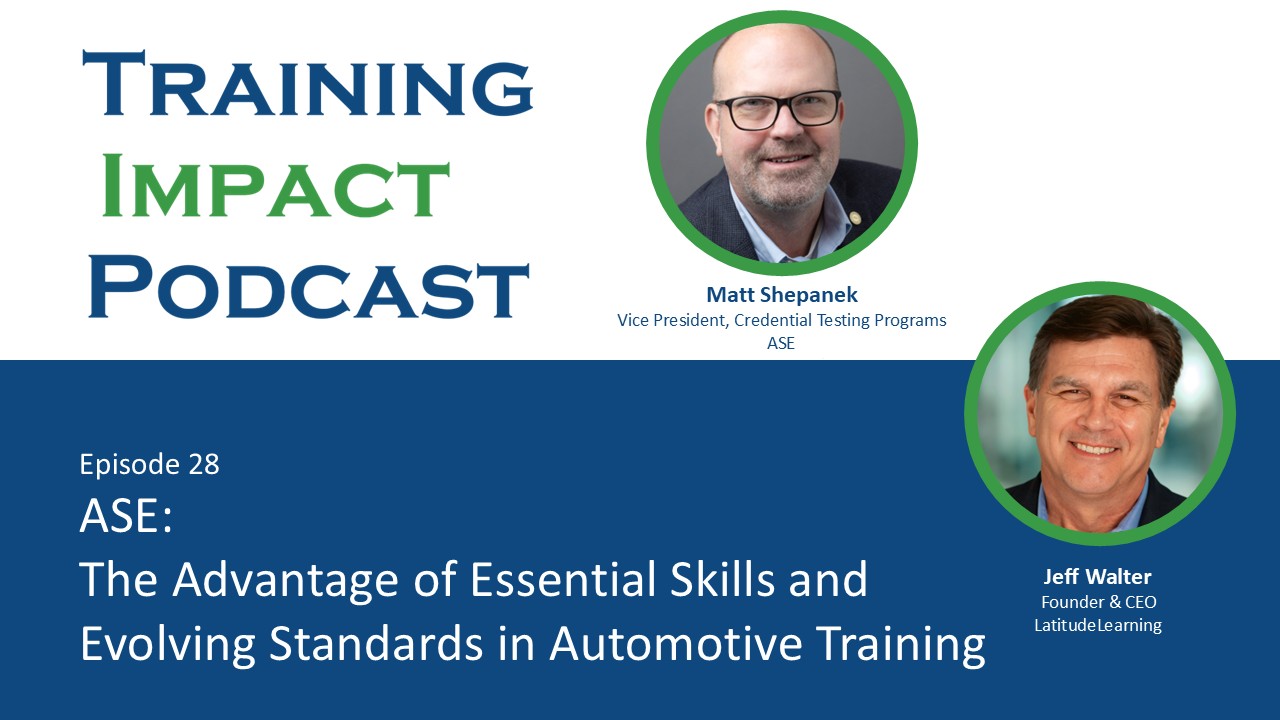
The institute’s core philosophy is centered on clarity and continuous improvement. It gathers insights from working technicians, educators, manufacturers, and service managers to define the competencies needed for effective vehicle service. This approach ensures that training reflects real world demands rather than theoretical knowledge. The system benefits technicians by giving them a clear understanding of expectations, and it benefits employers by supporting consistent performance across their teams. Consumers also benefit from this structure because it helps strengthen trust in the repair process.
The organization was founded in 1972 in response to frustration about the inconsistency of automotive repair. Consumers struggled to find reliable service. Shops found it difficult to recruit technicians who could demonstrate verifiable skill. Training programs lacked a shared structure. Industry leaders believed that a neutral, independent body could solve these problems by defining and evaluating technician competence.
The institute launched its first certification exams the following year. Over time, the program expanded to cover multiple specialties, including automotive repair, truck systems, collision work, refinishing, and service consulting. Advisory groups made up of practitioners and industry experts help keep exam content aligned with current technology. As electronic systems, driver assistance technologies, and alternative powertrains have become common, the training framework has evolved to reflect those systems. This process ensures that credential technicians possess job relevant knowledge in a rapidly changing field.
A wide range of organizations rely on the institute’s training and certification resources. These include:
Employers use certification to validate technician skills, guide hiring decisions, and structure internal advancement. Educators use the task lists and competencies to align curriculum with industry needs. Fleet operators and government agencies often require certification for technicians servicing public vehicles. Consumers look for the institute’s Blue Seal designation as a sign that a business invests in quality.
Organizations that use this training program often share similar objectives. Many want to improve diagnostic accuracy, reduce repair variability, and strengthen overall shop performance. By adopting a nationally recognized standard, employers gain a reliable method for evaluating competence and identifying skill gaps among their teams.
Training and retention are also important goals. Employers use the certification pathway to motivate technicians, support career advancement, and create a professional culture built around learning. Many service centers report that technicians who participate in the program show stronger engagement and greater interest in ongoing development.
Finally, shops and dealerships want to build trust with customers. A technician who has completed a well-recognized training program provides reassurance to consumers making decisions about complex and expensive repairs.
The certification system serves a diverse population of learners. Entry level technicians rely on it to establish credibility. For individuals entering the field, certification demonstrates readiness for professional work and helps differentiate them from other candidates.
Experienced technicians use the program to stay current with new technologies and validate their knowledge. Many rely on recertification to ensure their skills remain aligned with industry expectations. For seasoned workers, the process reinforces professionalism and provides structure for continuous improvement.
Parts specialists, service consultants, and collision technicians also gain value from the program. It deepens their technical understanding and improves communication with customers. Educators and training program administrators integrate the institute’s standards into courses, so students graduate with the skills that employers expect.
Across all learner groups, the motivation to participate in training stems from a desire for growth, job stability, and the ability to deliver accurate and safe work.
Although the training system is widely used, the institute and its clients face several challenges that influence how instruction is delivered and how skills are assessed.
Vehicle technology is evolving faster than ever before. Electric systems, advanced driver assistance features, and digitally controlled components require technicians to master new skills. Training materials and assessments must adapt quickly to these developments.
The industry continues to face a technician shortage. While certification provides a reliable method for identifying capable workers, employers still struggle to recruit enough new entrants into the field. This shortage increases the pressure on shops to invest in training and retention.
Differences in instructional quality across schools also present challenges. Although the institute provides clear standards, training programs vary in resources and depth. This creates inconsistencies in how well students are prepared for real world environments.
Technicians themselves face time constraints. Many work full time while preparing for exams. Employers must find ways to support learning without disrupting operations. As diagnostic tasks become more complex, assessments must evaluate higher levels of reasoning and problem solving.
The design of the institute’s training system reflects strong alignment with adult learning principles and with Stage 1 and Stage 2 of the LatitudeLearning Training Program Roadmap.
Stage 1 emphasizes foundational understanding. The institute supports this stage through detailed task lists that describe the competencies required in each specialty area. These documents guide learners and help instructors design lessons that match workplace realities. By providing a clear definition of success, the training system reduces ambiguity and helps beginners focus on essential concepts.
Stage 2 focuses on knowledge acquisition. Certification exams require candidates to interpret realistic scenarios and make decisions based on how systems function. This reflects several learning theories.
Adult learning principles play an important role. Since learners bring experience into the process, assessments are structured to reward reasoning that reflects real shop conditions.
Experiential learning is reinforced because most technicians acquire skills through practice. The exam questions and competency standards reflect the activities technicians encounter daily.
Clear scoring thresholds give learners a sense of control and direction. Knowing exactly what is required to pass encourages consistent effort.
These features make the institute’s certification program a strong model for developing technical professionals.
The impact of this certification system can be seen across the industry. Technicians who complete certification often enjoy stronger career opportunities. Employers frequently consider certification a prerequisite for advanced diagnostic roles, leadership positions, and specialized repair work. Many technicians also experience higher earnings due to their demonstrated competence.
From the employer perspective, the benefits include improved accuracy, fewer return visits, and more efficient diagnostic processes. Service centers that invest in technician development often report increased customer satisfaction and greater internal consistency. Many also pursue the Blue Seal recognition to showcase their commitment to quality.
Educational institutions that align their programs with the institute’s standards often see improved placement rates and stronger relationships with employers. Students who earn credentials before graduation are usually able to find work more quickly and progress faster in their careers.
Consumers benefit through greater confidence and transparency. When technicians complete nationally recognized training, customers feel more secure about the quality of the repair process. This helps strengthen the reputation of the industry as a whole.
Most importantly, the certification framework has encouraged a culture of continual learning. Technicians regularly return to update their skills, ensuring the workforce adapts as vehicle technology evolves.
The certification programs provided by the National Institute of Automotive Service Excellence have become essential to the modern automotive service landscape. By establishing clear standards, maintaining an independent evaluation process, and encouraging lifelong learning, the institute supports technicians, employers, educators, and consumers. Its training structure adapts to technological change and reinforces the professional expectations that guide the industry.
Technicians rely on this certification to validate their skills and pursue career advancement. Employers adopt it to strengthen service quality and maintain consistency. Educators use it to prepare students for real world work. Consumers benefit from knowing that certified professionals follow recognized standards.
As the automotive sector continues to evolve, the institute’s role in shaping technician readiness remains vital. Its contributions to safety, reliability, and workforce development make it a foundational part of the service and repair ecosystem.
For more information about ASE visit their website https://ase.com/