

Introduction
In complex partner ecosystems, growth does not fail because of product weakness alone. It fails when independent organizations cannot consistently represent, implement, and support what the brand promises. Channel partners, franchisees, resellers, distributors, and customers collectively form the operational edge of the enterprise. Their readiness determines whether strategy translates into execution.
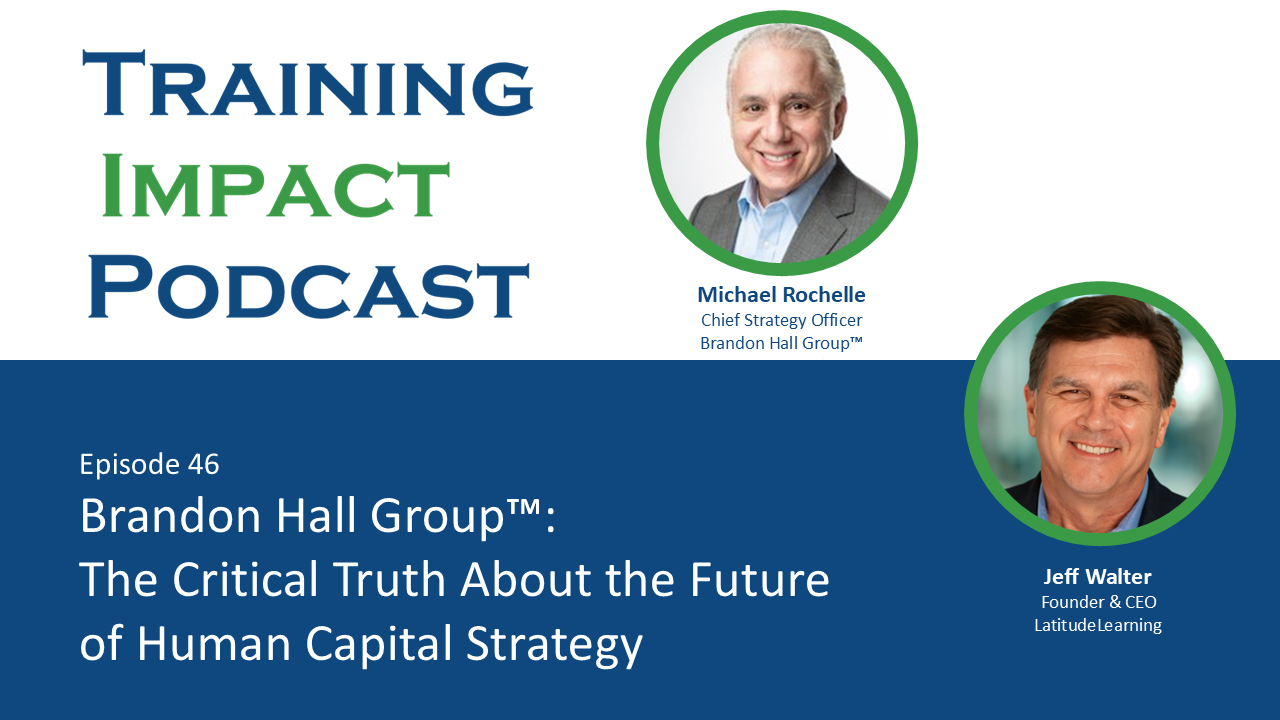
This dynamic is central to modern channel partner training and extended enterprise learning strategy. Brandon Hall Group™ discussions emphasized that partner enablement strategy must evolve beyond traditional internal learning models to sustain channel readiness.
Recent executive dialogue at Brandon Hall Group’s Human Capital Management Excellence Conference reinforced a critical shift taking place across learning and talent functions. Artificial intelligence dominated the surface conversation, but the deeper theme was structural. Organizations are beginning to recognize that training employees and enabling non-employees are not variations of the same discipline. They are fundamentally different design challenges.
For leaders responsible for channel strategy and extended enterprise performance, this distinction carries profound implications. Authority does not drive adoption in indirect ecosystems. Relevance does. Structure does. Experience does. And increasingly, personalization at scale does.
Internal learning programs benefit from structural leverage. Employees must complete required training to remain compliant, productive, or promotable. Channel partners operate under no such mandate. They are independent businesses with competing priorities, limited time, and financial pressure.
That difference reshapes everything.
Effective channel partner training requires a deliberate partner enablement strategy that treats independent operators as revenue stakeholders rather than compliance audiences.
When enablement programs treat partners as if they were employees, engagement falters. Completion rates decline. Knowledge gaps persist. Customer experience suffers. Downstream metrics such as customer satisfaction and net promoter scores begin to erode. Product usage slows. Attachment revenue declines. The effects compound quickly.
Organizations that operate in franchise, dealer, reseller, or customer ecosystems must therefore design training with an entirely different premise. The question is not “How do we deliver required content?” It is “How do we create an experience so relevant and efficient that partners choose to engage?”
Extended enterprise learning environments require a dedicated infrastructure that reflects this reality. Approaches described in the broader conversation around emphasize that indirect audiences demand marketing-minded learning strategies, integrated analytics, and frictionless delivery models.
The channel is not an extension of HR. It is an extension of revenue.
One of the most revealing insights from executive discussions centers on a simple but pervasive misconception. Many organizations believe they already possess sufficient “content” because they have documentation. Operating manuals, product guides, implementation instructions, and marketing collateral fill shared drives and intranet portals.
But information is not the same as learning.
Handing a partner a 200-page manual does not create knowledge. It does not produce application. It does not translate into behavior. The cognitive work required to convert raw documentation into actionable understanding is substantial, and most channel partners do not have the time or incentive to perform it independently.
The result is a pattern seen repeatedly across partner ecosystems. Education feels heavy, formal, and academic. It mirrors the structure of the documentation rather than the lived experience of the partner. Even when broken into smaller modules, the substance remains unchanged. Smaller bites of the same material do not solve the underlying issue if the approach itself fails to resonate.
The opportunity lies in reformation rather than reduction.
Artificial intelligence is emerging as a catalyst for transforming this dynamic. Yet executive discussions revealed a striking duality. Some organizations are aggressively advancing into AI-driven enablement, experimenting with content generation, sentiment analysis, and learner personalization. Others remain at early stages, uncertain about governance, integration, and readiness.
Brandon Hall Group leaders noted that AI in learning is particularly transformative within extended enterprise learning environments, where scale and variability define the channel partner training challenge.
Within extended enterprise environments, AI presents three particularly consequential applications.
The first is content transformation. AI can ingest operating manuals and documentation and reorganize them into modular, scenario-driven learning experiences. It can generate study guides, simulations, knowledge checks, and role-specific variations at a pace that traditional authoring models cannot match. For franchise systems managing complex onboarding processes, this ability has significant implications. Structured enablement models such as those seen in franchise environments at depend on speed and consistency. AI accelerates both.
The second application lies in analytics and sentiment. Channel leaders cannot wait for lagging indicators such as declining product adoption or increased support tickets. AI-driven analysis can surface early signals of disengagement, confusion, or resistance. It can detect patterns across partner cohorts and highlight emerging friction before revenue impact becomes visible.
The third and most strategically powerful application involves personalization of the learner experience itself. Not merely recommending different courses but adapting how the same knowledge is presented depending on context.
Traditional profiling often stops at demographics. Age, tenure, geography, and role form the baseline. While useful, these data points provide limited insight into how a partner actually behaves.
Behavior matters.
A 27-year-old reseller in a high-growth market may have a radically different learning posture than a 45-year-old franchise operator balancing family obligations and staffing constraints. Attention span, motivational drivers, blockers, and environmental pressures shape how training is consumed.
Artificial intelligence can synthesize these nuances, but only when organizations deliberately provide behavioral and situational context. Demographics tell AI who the learner is. Behavioral descriptors tell AI how that learner operates. Circumstances explain why certain content resonates and other content falls flat.
Consider two dealerships launching identical products. One operates in a mature metropolitan market with strong brand recognition. The other launches in a developing rural territory with limited exposure. The educational emphasis required in each scenario differs substantially. AI makes contextual adaptation feasible at scale, allowing enablement to reflect local realities without sacrificing structural consistency.
This shift reframes replication. Replication does not mean identical experiences. It means consistently effective experiences, adapted intelligently to circumstance.
A recurring theme in executive conversation centers on the role of narrative. Traditional channel training often defaults to procedural instruction. Features. Specifications. Steps. While necessary, these elements rarely inspire engagement.
High-impact enablement resembles storytelling.
Case studies, testimonials, and real-world scenarios anchor knowledge in experience. They connect product functionality to partner outcomes. They affirm that choosing the brand was a wise decision. In a world where brand affinity shapes identity, this emotional reinforcement matters.
AI enhances the ability to integrate narrative at scale. Recorded partner interviews, success transcripts, and customer stories can be synthesized into scenario-based modules that feel alive rather than sterile. This approach mirrors strategies seen in sophisticated customer education ecosystems such as those explored at, where contextualized learning strengthens adoption and loyalty.
When partners see themselves reflected in the education, engagement deepens.
Another structural insight involves collapsing the artificial boundary between sales and learning. In many organizations, sales cycles unfold separately from enablement. Prospects evaluate features and pricing first. Training appears only after purchase.
Forward-thinking channel leaders are beginning to invert that model.
Demonstrating ease of use through learning artifacts during the sales process signals operational maturity. Interactive walkthroughs, scenario simulations, and modular onboarding previews can become part of the selling narrative. Instead of promising simplicity, organizations show it.
This integration transforms the learning platform into a strategic asset. It becomes the workspace where prospects experience value before commitment and partners continue development afterward. The separation between acquisition and enablement dissolves. Replication strengthens because the same infrastructure supports every stage of the relationship.
No onboarding design is perfect at first release. Market conditions evolve. Products change. Partner feedback surfaces unanticipated friction. Historically, revising structured programs required extensive time and cost.
AI fundamentally alters this equation.
If a partner signals the need for adaptation, additional examples, language localization, or contextual refinement, AI can generate revisions rapidly. This agility protects momentum. Revenue timelines remain intact. Independent operators do not stall waiting for revised materials.
In franchise and dealer environments where initial performance trajectory influences long-term viability, this responsiveness becomes critical. The capacity to iterate in real time differentiates organizations that scale sustainably from those that struggle with uneven adoption.
Despite enthusiasm for AI, executive leaders consistently returned to a complementary truth. Technology does not replace human intelligence. It amplifies it.
Governance decisions, ethical boundaries, and strategic judgment require deliberate human oversight. AI can process data and generate output, but humans define direction.
Moreover, as digital tools become more sophisticated, in-person collaboration regains importance. Collective problem-solving, spontaneous insight, and relational trust cannot be fully replicated in virtual environments. The interplay between AI-enabled efficiency and human connection creates the strongest foundation for channel growth.
Organizations that cultivate human intelligence while deploying artificial intelligence thoughtfully will outperform those that treat AI as a substitute rather than a complement.
Several implications emerge for senior executives overseeing partner ecosystems.
First, growth amplifies whatever system is in place. Without structured, contextualized enablement, expansion increases variability. Consistency erodes. Investing in disciplined partner readiness safeguards brand integrity as networks expand.
Second, personalization at scale is no longer aspirational. AI makes it achievable. Leaders must move beyond one-size-fits-all training and design enablement that adapts to behavior and circumstance without sacrificing structural clarity.
Third, education must reflect product philosophy. If products promise simplicity, onboarding must feel simple. If services emphasize agility, learning must embody agility. Misalignment undermines credibility.
Fourth, enablement is lifecycle-driven. Onboarding represents the starting line, not the finish. Continuous adjustment, sentiment monitoring, and narrative reinforcement sustain performance over time.
Finally, channel learning should be viewed as strategic infrastructure. It is not a compliance mechanism. It is a revenue lever.
The evolving dialogue at Brandon Hall Group’s 2025 gathering underscores a decisive turning point in channel enablement strategy. Artificial intelligence is reshaping how organizations transform documentation into knowledge, personalize experiences, and iterate rapidly in response to partner needs. Yet the most powerful outcomes emerge when AI operates in concert with disciplined human judgment and intentional design.
Channel ecosystems thrive when partners feel understood, supported, and empowered. Structured yet adaptive learning environments create that foundation. When education affirms identity, reduces friction, and mirrors the product promise, engagement becomes voluntary and enthusiastic rather than obligatory.
For leaders charged with scaling indirect routes to market, the mandate is clear. Invest in contextualized, agile, narrative-driven enablement. Integrate learning into the revenue lifecycle. Balance artificial intelligence with human intelligence.
Brandon Hall Group dialogue makes clear that organizations investing in AI in learning, structured channel partner training, and disciplined extended enterprise learning infrastructure significantly improve channel readiness and long-term partner performance.
In doing so, channel training ceases to be an operational afterthought. It becomes the strategic engine that sustains growth, protects brand integrity, and transforms independent partners into confident advocates.
For more information on Brandon Hall Group, visit their website – https://brandonhall.com/