
- Our LMS
- Lumina AI
- Resources
- Company
- Pricing
- Contact Us
- Demo
In franchising, rapid expansion often steals the spotlight. New units, new markets, new milestones. But sustainable success rarely belongs to the brands that grow the fastest. It belongs to the ones that grow with intention, carefully aligning their mission, systems, and people. Nowhere is this more evident than in Burn Boot Camp, a boutique fitness franchise that has grown from a parking-lot workout in North Carolina to more than 380 locations across the United States.
The story of Burn Boot Camp illustrates a deeper truth about franchising: profitability and longevity are not just byproducts of operational excellence. They are the result of selecting the right franchise partners, aligning them to the brand’s DNA, and empowering them through clear systems, structured training, and cultural clarity. When franchisors match the right people to the right model, and support them with the right training, the relationship becomes less transactional and more transformational.
The question franchisors across industries continue to ask is simple: what truly defines a great franchisor? Is it operations, culture, training, or leadership? Or is it the ability to combine all of these into a coherent ecosystem that helps the franchisee win?
This case study explores how Burn Boot Camp does exactly that. It examines how the brand attracts franchisees who are deeply connected to its mission, how it uses structure and clarity to guide onboarding, and how it builds a training system that converts passion into competence. Most importantly, it demonstrates how alignment between franchisor and franchisee leads to the outcomes every brand desire: better member experiences, stronger unit performance, and long-term franchise stability.
Burn Boot Camp’s growth story begins with an idea that was surprisingly simple: to make high-quality fitness accessible to the people who need it most. Founder Devan Klein began hosting free workouts in a parking lot in Huntersville, North Carolina. Members didn’t just show up for exercise, they showed up for belonging. The model grew because the community grew. Families brought their friends, mothers brought their daughters, and soon the demand for a full-time dedicated space became undeniable.
Co-founders Devan and Morgan Klein recognized that women, in particular, lacked access to a training environment that was both expert-led and emotionally supportive. Traditional gyms were often crowded, impersonal, or inaccessible to parents with young children. Burn Boot Camp flipped the script by building a boutique fitness environment with personal training quality delivered in a group setting, supported by free childcare at every location. That simple operational detail fundamentally shaped the brand’s identity. It signaled inclusion. It lowered the barrier to participation. It strengthened the community.
Over time, the brand’s mission evolved into a clear and compelling purpose: empower, inspire, and transform through health and wellness. These values became embedded into every part of the organization, from camp programming and trainer expectations to leadership messaging and franchisee selection.
The company also invested in systems that reflect its culture. The Burn Operating System, a franchise-hardened version of Gino Wickman’s EOS framework, provides franchise partners with a playbook for running the business. Camp programming is standardized nationally. The terminology, rituals, and member experience are intentionally curated. Everything feels consistent, predictable, and supportive.
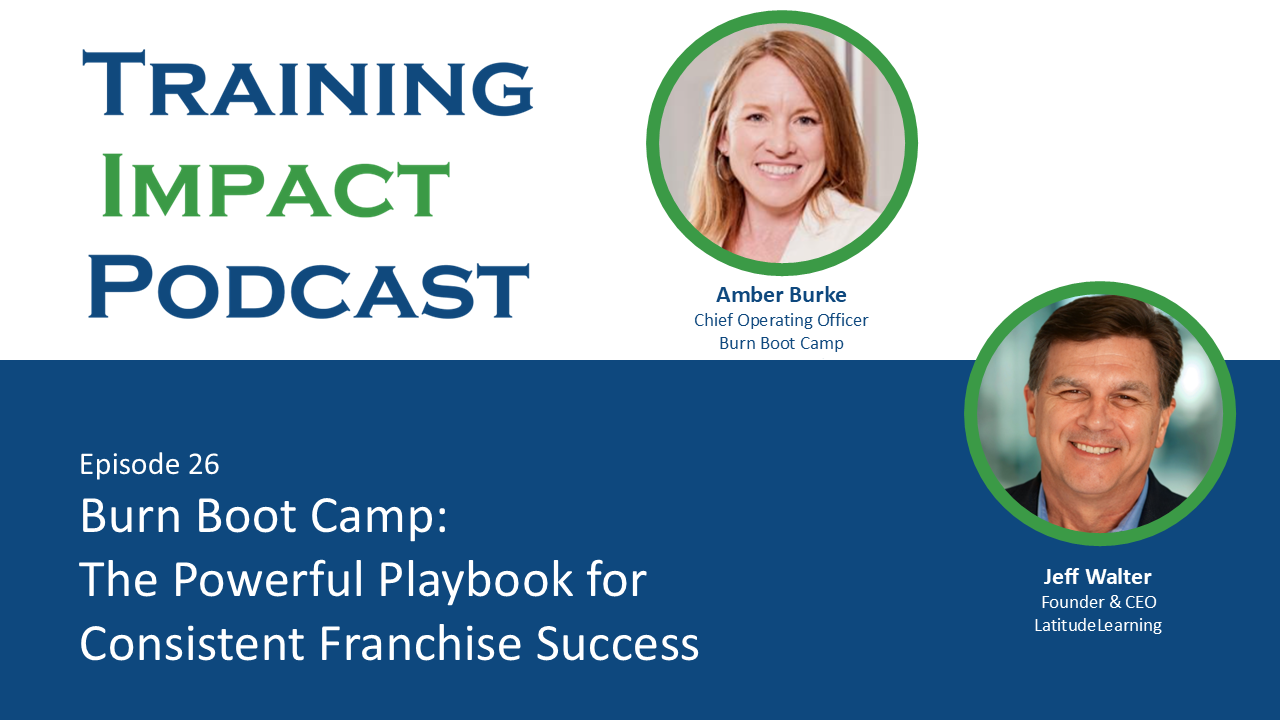
Perhaps the most important cultural characteristic is that the majority of franchise partners start as members. They were first transformed by the product, then drawn to build a business that could recreate that transformation in others. As COO Amber Burke explained, most owners have either experienced Burn Boot Camp personally or been influenced by a family member who has. This member-to-owner pipeline creates early emotional alignment and an immediate sense of stewardship. Franchisees are not starting from curiosity. They are starting from conviction.
This foundational alignment sets the stage for what comes next: a structured system that ensures every franchise partner can translate belief into operational excellence.
Even with a strong brand, a clear purpose, and a passionate base of potential owners, selecting the right franchise partners remains one of the hardest challenges in franchising. Growth pressure can tempt franchisors to overlook red flags or rush candidates through the process. Misalignment at the start creates turbulence later—from cultural clashes to operational inconsistencies to declining unit performance.
Burn Boot Camp avoids many common pitfalls by grounding its franchisee recruitment around three pillars of fit: operational readiness, cultural alignment, and learning engagement.
Operational readiness is more than having the capital to open a location. Burn Boot Camp looks for franchisees who understand what it means to operate a people-intensive business. Some prospective owners come from fitness; many do not. Some arrive with strong marketing experience, others with management backgrounds. Whatever their history, the franchisor evaluates whether they can lead teams, manage performance, and embrace the systems that drive daily execution.
Cultural alignment may be the most important pillar. Burn Boot Camp’s brand is built on energy, positivity, and member engagement. Trainers are expected to know everyone’s name, give high-fives throughout camp, motivate personally and collectively, and create a space where every member feels seen. A franchisee who does not embrace this relational culture will struggle to maintain member retention or protect the brand’s reputation. As Burke put it during the interview, alignment begins by understanding who you are as a franchisor, articulating it clearly, and ensuring candidates can embody that identity.
Learning engagement, the third pillar, reflects a candidate’s willingness to go through a rigorous education and training sequence. The Burn Learning Portal, immersive headquarters training, and ongoing coaching require significant time and personal involvement. Franchisees must show a desire not just to receive information, but to apply it. They need curiosity, discipline, and adaptability. Many owners come in with knowledge gaps—fitness, biomechanics, or business operations—but success depends on their mindset to learn.
Across the industry, franchisors often overweight financial capacity and underweight temperament. Burn Boot Camp does the opposite. It looks for owners who are resilient, coachable, mission-driven, and eager to learn. Those qualities are harder to measure, but easier to depend on.
Once a franchise partner demonstrates fit and signs the agreement, Burn Boot Camp activates a structured onboarding strategy designed to create clarity, build competence, and reinforce expectations. The process begins immediately, not at grand opening.
The brand assigns each new owner a franchise opening specialist who walks them through data systems, platforms, marketing tools, and business fundamentals. This ensures new franchisees understand how Burn Boot Camp operates digitally before they ever step foot into the physical training environment.
Alongside this orientation comes the new franchisee’s first exposure to the Burn Learning Portal. This digital learning platform houses role-specific curriculum for franchise partners, lead trainers, operations leads, child watch team members, and Burn ambassadors. It serves as the baseline for preparing each learner group to understand the brand, operate within its systems, and deliver a consistent experience.
Franchise partners begin with courses rooted in the brand’s identity. Devan and Morgan Klein lead modules that explain the mission, the four core values, and what those values look like in everyday operational decisions. The onboarding continues with instruction on the Burn Operating System, financial literacy basics such as reading a P&L, and fundamental business skills like marketing and sales. The digital courses are a blend of video, content, quizzes, and measurable checkpoints to ensure progress.
This onboarding system reflects an important philosophy: alignment starts well before a franchisee opens their doors. The franchisor sets expectations early, gives access to the tools required to achieve those expectations, and provides transparency about what success looks like.
A unique element of Burn Boot Camp’s strategy is its emphasis on franchisee self-awareness during hiring. Using the Culture Index assessment, the franchisor encourages owners to build teams that complement—not replicate—their strengths. This reduces knowledge gaps and helps ensure each location has the right people in the right seats.
The strategy culminates in a requirement that every location employ at least one Burn-certified lead trainer. This role is not optional. The lead trainer must attend Burn Trainer University at headquarters and learn how to scale personal training to a group dynamic. They become the custodian of the member experience, the protector of training quality, and the operational anchor for the franchisee.
By combining a structured learning path, a required certification process, and clearly defined roles, Burn Boot Camp creates alignment long before the franchise opens. It removes guesswork and replaces it with clear expectations, consistent systems, and a developmental path for every learner.
Burn Boot Camp’s training ecosystem transforms readiness into real-world performance through a blended learning model that follows the logic of the Surefire Training Impact framework: organize people, organize content, shape the user experience, manage access, track progress, and continuously improve.
Digital learning comes first. Every role begins with a structured sequence of self-paced courses delivered through the Burn Learning Portal. These modules focus on foundational knowledge: biomechanics basics, Burn Operating System orientation, customer experience standards, safety procedures, and the science behind Burn’s training protocols. Franchise partners learn to read business metrics. Trainers learn how to coach form, lead warm-ups, and deliver motivational cues. Ambassadors learn how to engage members and execute front-desk operations.
Digital learning prepares learners for the next stage: immersive hands-on training at Burn Boot Camp’s headquarters in Charlotte, North Carolina. This is where the brand truly differentiates itself.
During the immersive week, franchise partners, lead trainers, and operations leaders practice real scenarios, create job descriptions, build KPI dashboards, and model daily operational rhythms. Trainers break down the components of camp—from the greeting to the cool-down—and rehearse them repeatedly. They run live camps with real members, receive coaching, and refine their delivery. Feedback becomes a loop rather than an event.
Immersive learning mirrors the skill development and individual performance stages of the Training Program Roadmap. Learners practice, perform, receive feedback, and practice again. This repetition builds competency, confidence, and consistency.
After training concludes, franchise partners return to their markets with the expectation that learning continues through application. Local franchise networks encourage new owners and trainers to visit nearby locations for shadowing, peer feedback, and hands-on experience. Trainers continue to sharpen their skills through ongoing practice and real-time adjustments informed by the Blue Carpet Checklist—a performance standard used to maintain consistency in member experience.
Burn Boot Camp’s training execution extends beyond technical skills. The brand intentionally reinforces relational expectations: trainers must know every member’s name, offer personal motivation, deliver high-fives throughout camp, and create an environment where every person feels encouraged. These behaviors are built into training and measured in performance reviews.
This level of detail matters because the Burn Boot Camp model relies heavily on human interaction. The product is not equipment or square footage. It is energy, coaching, connection, and transformation. Training ensures that no matter where a member goes—Charlotte, Laguna Niguel, or Detroit—they will experience the same structure, the same programming, and the same sense of belonging.
This is how alignment turns into performance. This is how culture scales.
The outcomes of Burn Boot Camp’s training and alignment strategy are visible across key franchise metrics.
First, every location delivers a consistent workout experience thanks to standardized programming. Whether it is total body strength, lower body, metabolic conditioning, or core conditioning, the national programmer ensures all locations follow the same schedule. Members can trust the experience no matter where they travel, increasing loyalty and engagement.
Second, the emphasis on personal connection strengthens retention. The requirement that trainers know every member’s name, provide one-to-one motivation, and create a celebratory environment produces a relational bond uncommon in traditional fitness models. Members feel invested in, not just instructed.
Third, the presence of a certified lead trainer at every location preserves quality. This structural requirement reduces variability and sets a minimum standard of expertise that franchisees can trust. It also creates continuity when turnover occurs.
Fourth, the clear training pathways enable better hiring and onboarding. Franchisees use Culture Index data to place people in roles where they naturally excel. Operations leads receive dedicated training that helps stabilize front-of-house execution. Burn ambassadors learn how to represent the brand with confidence from day one.
Finally, the brand’s alignment efforts create a healthier franchise relationship. Owners who join the system already understand the mission, embrace the culture, and believe in the product. They begin the journey aligned, stay aligned through structured training, and remain aligned through performance systems and ongoing support.
When retention rises, member referrals increase, and operational consistency improves, unit economics naturally strengthen. Burn Boot Camp’s focus on generational wellness—serving families today and raising future members and future franchise partners—ensures that performance results extend beyond temporary gains. They contribute to long-term vibrancy.
Burn Boot Camp’s story reveals several essential lessons for franchisors across industries.
First, great franchisors do not simply sell franchises. They cultivate partners. They articulate their mission clearly, evaluate candidates holistically, and build alignment at the outset. Franchisees begin their journey with clarity, not confusion.
Second, training is the bridge between cultural alignment and operational performance. Digital modules establish knowledge. Immersive learning builds skill. Continuous feedback drives mastery. When training is structured intentionally, it becomes the engine of brand consistency.
Third, clear frameworks reduce conflict and reinforce trust. Tools like the Burn Operating System help franchisees understand how to lead, measure, hire, and coach. Structure empowers autonomy. Clarity reduces ambiguity.
Fourth, a people-first model requires more than good intentions. It requires systems that support human excellence. Burn Boot Camp integrates soft skills, customer experience standards, and relational expectations into every layer of training. Culture isn’t preached. It is practiced.
Looking forward, the future of franchising belongs to systems that prioritize alignment and education. Brands that invest early in selecting the right franchise partners, teaching them well, and supporting them through structured learning will outperform those that rely on enthusiasm alone. Burn Boot Camp demonstrates that when purpose, training, and operations intersect, franchise systems gain something rare: partners who perform well, stay longer, and bring the mission to life in every market they serve.
To learn more about Burn Boot Camp visit their website https://burnbootcamp.com/