Scale Channel Performance

Most organizations rely on partner networks to drive growth. But those networks are often inconsistent, undertrained, and hard to scale.

Dealers, distributors, franchisees, and service partners are expected to represent your brand and execute correctly in the field. Without the right systems, performance varies from location to location.

LatitudeLearning helps organizations build the training and knowledge infrastructure needed to improve partner capability, consistency, and performance—at scale.

Channel performance doesn’t break because of people. It breaks because of systems.

Most organizations want faster onboarding, better product knowledge, and more consistent execution across their network.

But these outcomes don’t come from effort alone.

They come from systems that make performance repeatable.

In many organizations, those systems don’t exist—or they exist in fragments.

  • Training lives in one place.
  • Knowledge lives somewhere else.
  • Support fills the gaps.

And as the network grows, inconsistency grows with it.

This is what inconsistent channel performance looks like

In most distributed networks:

  • New partners take too long to become productive.
  • Some locations perform well, others struggle.
  • Training depends on local managers.
  • Product knowledge varies widely.
  • Support teams repeat the same answers over and over again

No one set out to create this.

It happens because there is no system holding it together.

Without infrastructure, performance becomes local.

And local performance does not scale.

From training activity to performance systems

Many organizations think about training as a set of courses.

But courses alone don’t create consistent performance.

What’s needed is a system that supports how partners:

  • Learn
  • Apply knowledge
  • Get help
  • Improve over time

This is the shift:

    From training as an activity
    To training as infrastructure for performance

When training becomes infrastructure, it stops being an event—and starts becoming a system that drives results.
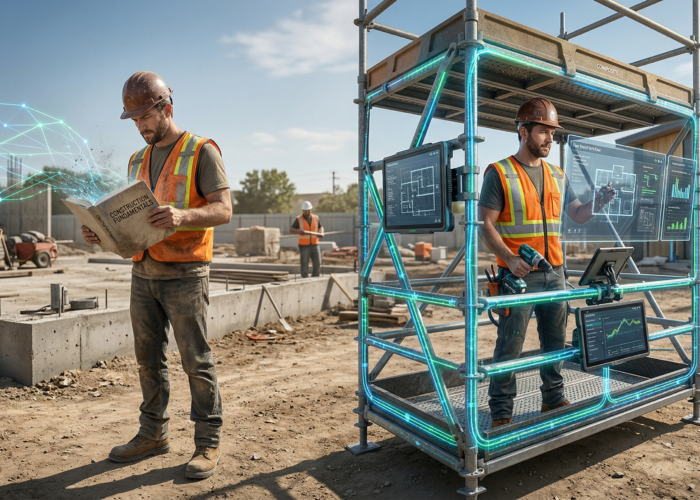
Channel performance is what actually happens in the field

Channel performance is not about how much training is delivered. It’s about whether your network can execute—consistently and correctly.

At a practical level, it means your partners:

  • Know what to do
  • Know how to do it
  • Do it consistently
  • Improve over time

When this happens, you get alignment between strategy and execution.

A simple way to think about it: Capability → Consistency → Performance

If your network is capable and consistent, performance follows.

A Practical Framework for Scaling Channel Performance

Improving channel performance requires more than content.

It requires a system for how your network learns, executes, and stays aligned as it grows.

Most organizations try to solve performance problems with isolated initiatives—more training, more communication, more oversight.

But performance does not scale through isolated efforts.

It scales through structure.
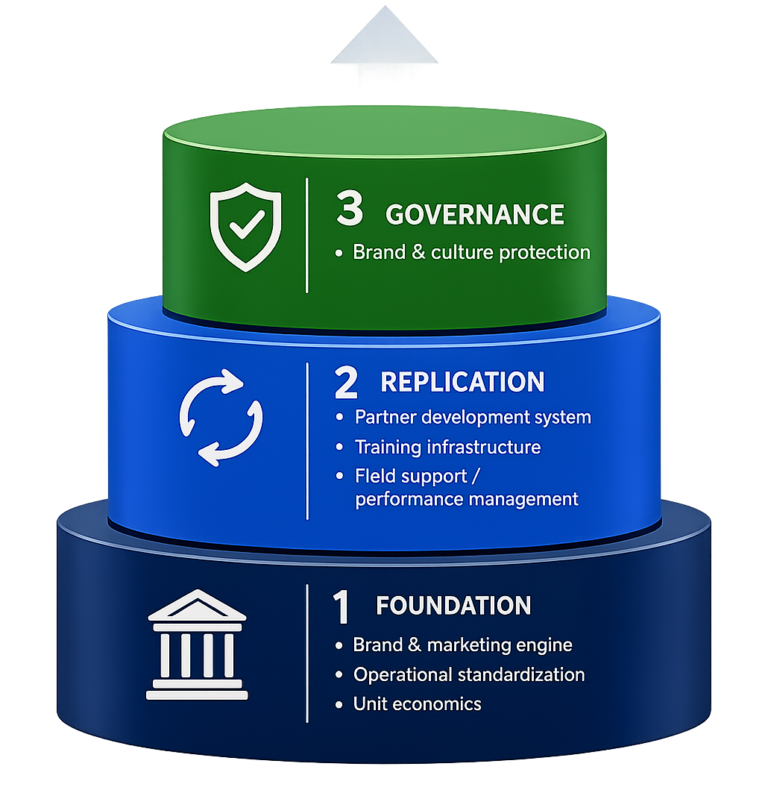
Channel Performance Framework Pyramid
We organize channel performance into three layers:

Foundation

The Base of Consistency

This is where performance begins.
The foundation defines how your business operates at a system level—how it is marketed, how it makes money, and how work gets done.
Without a strong foundation, every location interprets the business differently.
And when that happens, consistency breaks down before training even starts.

Replication

 The Engine of Scale

Once the foundation is defined, it must be replicated across the network.
This is where training, support, and performance systems come into play.
Replication ensures that every partner—regardless of location—can execute the model the same way.
This is where most organizations struggle.
They attempt to scale without building the systems required to replicate capability.

Governance

 The Protection Layer

As the network grows, maintaining consistency becomes harder.
Governance ensures that partners continue to operate in alignment with your standards, brand, and culture.
Without governance, even well-trained networks drift over time.

The disciplines that make the framework work

Foundation Disciplines

(Define the business model and operating standards)

Brand & Marketing Engine

Defines how demand is generated and how the brand shows up consistently across the network.

Unit Economics Discipline

Ensures the business model works at the unit level, creating clarity on how partners succeed financially.

Operations Standardization

Defines how work gets done—processes, procedures, and expectations that create consistency across locations..

Replication Disciplines

(Scale capability and execution across the network)

Network / Franchise Development System

Establishes how new partners are recruited, onboarded, and brought into the network.

Training & Replication Infrastructure

Creates the systems that deliver onboarding, product knowledge, operational training, and certification at scale. This is the engine that turns knowledge into repeatable performance.

Field Support & Performance Management

Reinforces execution in the real world—coaching, support, measurement, and continuous improvement.

Governance Discipline

(Protect consistency as the network grows)

Governance & Culture Protection

Ensures partners operate in alignment with brand standards, values, and expectations. This includes compliance, accountability, and maintaining the integrity of the network over time.

Training infrastructure is the engine behind scalable performance

In high-performing networks, training is not ad hoc.

It is designed, structured, and repeatable.

Training infrastructure allows you to scale:

  • Onboarding for new partners
  • Role-based training across functions
  • Product and operational knowledge
  • Certification and compliance programs
  • Ongoing knowledge access

Instead of relying on local knowledge and informal training, you create a system that delivers consistent capability everywhere.


Training only matters if it improves performance

The goal is what happens after.

When training is built as infrastructure, it leads to:

  • Faster onboarding
  • Stronger confidence
  • More consistent execution
  • Better customer experiences

Training becomes the input.

Performance becomes the outcome.

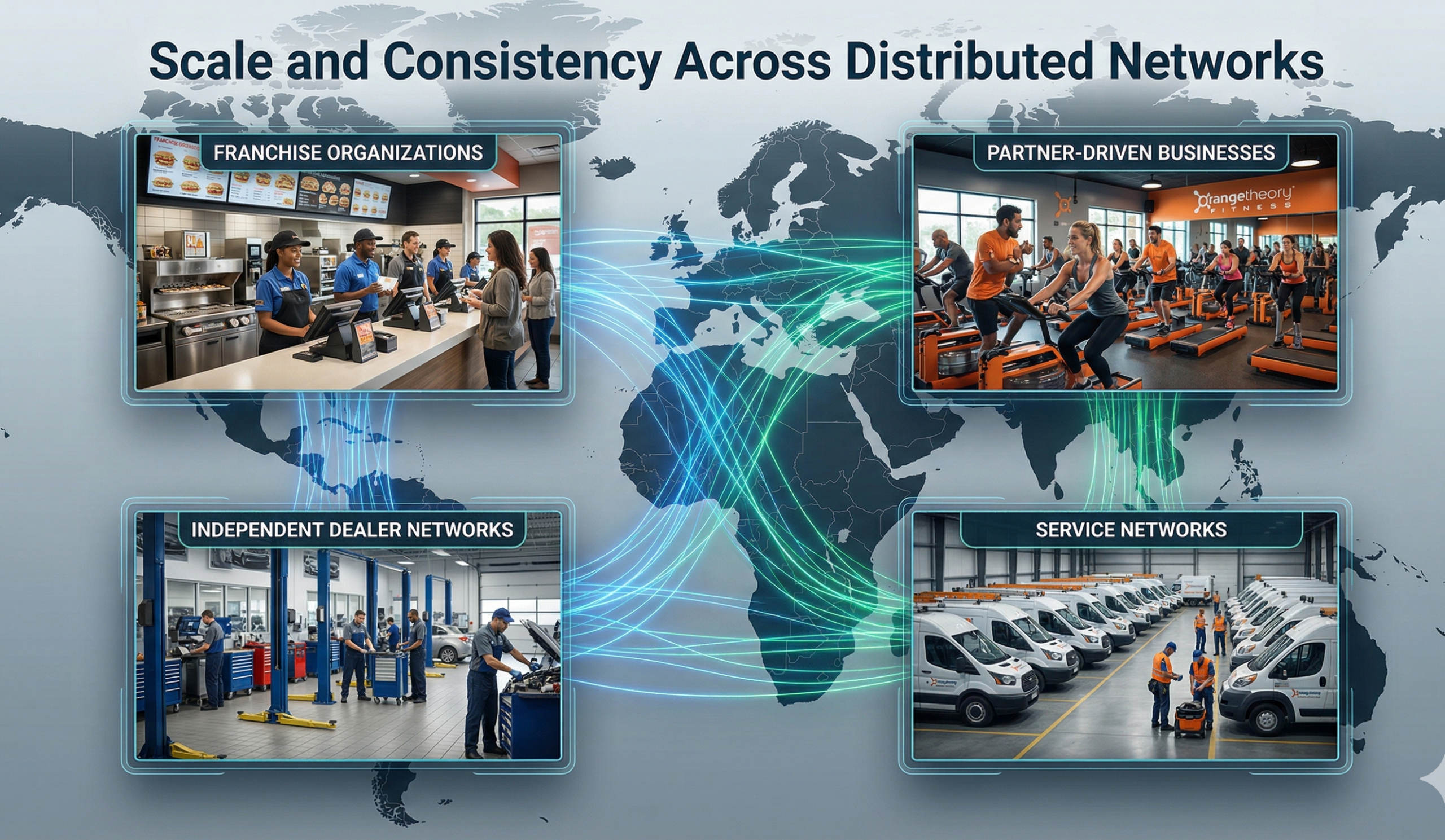
Built for organizations that depend on distributed networks

This approach matters most when your growth depends on people outside your corporate walls.

Manufacturers
Align dealer, distributor, and service networks around consistent execution.

Franchise organizations
Create consistency across independent operators and distributed employees.

Partner-driven businesses
Scale onboarding, enablement, and certification across external partners.

Service networks
Ensure field readiness, service quality, and compliance across locations.
What happens when you get this right

When organizations build the right infrastructure, the impact shows up quickly in the field.

  • New partners become productive faster
  • Execution becomes more consistent across locations
  • Product and operational knowledge improves
  • Compliance becomes measurable and manageable
  • Support teams spend less time answering repeat questions
  • Leadership gains visibility into readiness and performance

Most importantly:

You can grow your network without losing control of how it performs.

Infrastructure for channel performance

LatitudeLearning is built specifically to support distributed partner networks.
LatitudeLearning LMS

Provides the structured training and certification systems needed to build capability across your network.

From onboarding to compliance, it ensures partners are trained, aligned, and ready.

Lumina — AI Knowledge Companion

Gives partners instant access to trusted answers from your approved resources.

It reinforces training in real time and reduces dependency on support teams.

Together, they create a complete system:
  • Training builds capability.
  • Knowledge access supports execution.
  • Performance becomes consistent.

Learn how to scale channel performance

We don’t just provide software—we provide the frameworks behind it.

Explore:

These resources are designed to help organizations move from training activity to performance systems.

Ready to improve channel performance?

If your organization depends on dealers, distributors, franchisees, or service partners, the next step is not more disconnected training.

It’s building the infrastructure that makes performance scalable.

Frequently Asked Questions

Channel Performance FAQs

What is channel performance?

Channel performance is the ability of your partner network—such as dealers, distributors, franchisees, or service partners—to execute consistently and effectively in the field.

It means partners:

  • Know what to do
  • Know how to do it
  • Do it consistently
  • And improve over time

Strong channel performance creates alignment between your strategy and what actually happens across your network.

How do you improve channel performance?

Channel performance improves when organizations move from ad hoc training to structured systems.

This includes building infrastructure for:

  • Onboarding new partners
  • Delivering role-based training
  • Providing product and operational knowledge
  • Supporting partners in real time
  • Measuring readiness and performance

When these systems are in place, partners become more capable, execution becomes more consistent, and performance improves across the network.O

Why does channel performance break down?

Channel performance typically breaks down when there are no systems in place to support consistency.

Common causes include:

  • Inconsistent training across locations
  • Fragmented knowledge and resources
  • Reliance on local managers
  • Lack of standardized processes
  • Limited visibility into partner readiness

Without centralized infrastructure, performance becomes dependent on individual locations—and that does not scale.

What is training infrastructure?

Training infrastructure is the system that delivers knowledge, skills, and standards across a distributed network.

It includes:

  • Onboarding programs
  • Role-based training
  • Product and operational training
  • Certification and compliance programs
  • Knowledge access for real-time support

Training infrastructure turns knowledge into a repeatable system that can scale across your entire network.

How do you scale partner performance across distributed networks?

Scaling partner performance requires more than adding more training.

It requires building a structured system that supports how partners learn, execute, and improve.

This includes:

  • Defining a clear operating model
  • Building training and knowledge systems
  • Reinforcing execution through field support
  • Maintaining consistency through governance

When these elements work together, organizations can grow their network without losing control of how it performs.

Still have questions?

Let’s walk through how your organization can improve channel performance.