
Organizations have never had more access to learning technologies, performance data, collaboration platforms, and workforce development resources. Learning leaders invest heavily in employee development, leadership programs, onboarding initiatives, and knowledge management systems. Operations teams continuously refine processes in pursuit of greater efficiency and consistency. Technology leaders deploy increasingly sophisticated tools designed to connect people and information.
Yet despite these investments, one challenge continues to surface across industries, organizations, and teams.
People often struggle to understand one another.
Projects become delayed because expectations are interpreted differently. Teams encounter friction despite having highly capable individuals. Managers and employees approach the same challenge from completely different perspectives. Communication gaps emerge not because people lack intelligence or commitment, but because they process information, solve problems, and interact with the world in fundamentally different ways.
For Monty Miller and Doug Breckenridge, this challenge became the foundation for a decades-long exploration into human behavior, communication, and organizational effectiveness. Their journey ultimately led to the creation of Vujade, a platform designed to help organizations transform communication from a persistent obstacle into a strategic advantage.
On this epsidoeTheir story offers valuable insights for learning and development leaders, training managers, workforce enablement professionals, and operations executives seeking to improve performance through stronger collaboration and deeper understanding.
The origins of Vujade can be traced back to the late 1990s.
At the time, Monty Miller was pursuing a doctorate in Organizational Change at Pepperdine University. As part of his academic work, he traveled to India to support a transformation initiative involving a company that was attempting to reinvent itself and position for significant growth.
The project required more than strategic planning. Success depended on helping people embrace change, learn new ways of working, and align around a common vision. To support that effort, Miller sought local organizational development expertise and connected with Doug Breckenridge, who was operating an organizational development consultancy in New Delhi.
The partnership quickly proved effective.
Working together, they helped support a transformation that enabled the organization to expand from roughly twenty-five employees to more than five hundred while achieving profitability faster than originally projected. The experience reinforced something both men would continue to encounter throughout their careers: organizational success ultimately depends on people.
The project also marked the beginning of a professional relationship that would continue for nearly thirty years.
While Miller focused on helping organizations align people strategies with business objectives, Breckenridge built multiple businesses throughout Asia, worked with organizations including Apple and Motorola, and helped develop large-scale customer service and workforce operations. Their experiences differed, but both remained focused on understanding how organizations could improve performance through people.
Over time, they repeatedly found themselves confronting the same question.
Why do communication challenges continue to limit organizational performance even when organizations invest heavily in training, leadership development, and technology?
As their careers evolved, both men spent years working with leadership teams, managers, consultants, and employees across a wide range of industries. They participated in organizational transformations, workforce development initiatives, training programs, and change management efforts.
Again and again, they observed a similar pattern.
Organizations were investing in development. Employees were participating in training. Leaders were gaining access to better information and improved tools. Yet communication breakdowns continued to undermine performance.
People misunderstood one another. Teams struggled to align. Projects moved slower than expected.
Collaboration often depended more on personal chemistry than on any systematic understanding of how people worked together.
Like many professionals in learning and development, Miller and Breckenridge frequently used behavioral assessments and personality instruments. These tools often generated valuable conversations and increased self-awareness. They helped individuals understand their preferences and provided useful frameworks for discussing differences.
However, they also recognized an important limitation. Most assessments described people. Few assessments helped people work together. The gap between awareness and action remained surprisingly large.
Organizations could identify personality traits, communication styles, and behavioral tendencies, yet still struggle to improve day-to-day collaboration.
That realization became a turning point. Rather than asking how people could better understand themselves, the founders began asking how people could better understand each other.
The challenge of operationalizing communication became the driving force behind Vujade.
Breckenridge became particularly interested in the limitations of traditional assessment methodologies. While many existing tools offered valuable insights, he believed they often lacked the precision necessary to understand the nuanced differences between individuals.
Over several years, he focused on developing analytical approaches that could provide greater detail and more meaningful comparisons between people. Drawing inspiration from statistical models and relational analysis techniques used in other industries, he began exploring ways to normalize behavioral data and reduce assessment bias.
The goal was not to create another personality profile.
The goal was to create a framework capable of helping individuals communicate more effectively with one another.
That effort eventually led to the development of the analytical engine that powers Vujade.
The platform was designed around a simple but powerful premise: every individual possesses a unique combination of strengths, preferences, and communication tendencies. By understanding those differences in greater detail, organizations can improve collaboration, strengthen relationships, and accelerate performance.
One of the most compelling aspects of the Vujade philosophy is its emphasis on communication as a foundational business capability.
Organizations often view communication as a soft skill. Vujade treats communication as performance infrastructure.
Every organizational objective depends on people exchanging information, making decisions, solving problems, and coordinating actions. When communication breaks down, performance suffers regardless of how effective the underlying strategy may be.
The founders therefore focused their work on helping people understand how others experience information.
Some individuals naturally process information visually. Others prefer verbal explanations. Some learn most effectively through direct experience and hands-on engagement. These differences influence how people communicate, how they learn, and how they interpret information.
Understanding these distinctions creates opportunities for more productive interactions.
Rather than assuming everyone thinks the same way, individuals gain insight into how colleagues prefer to receive information and engage with ideas.
For learning professionals, this concept has significant implications. The effectiveness of any training initiative depends not only on content quality but also on the organization’s ability to communicate knowledge in ways that learners can absorb and apply.
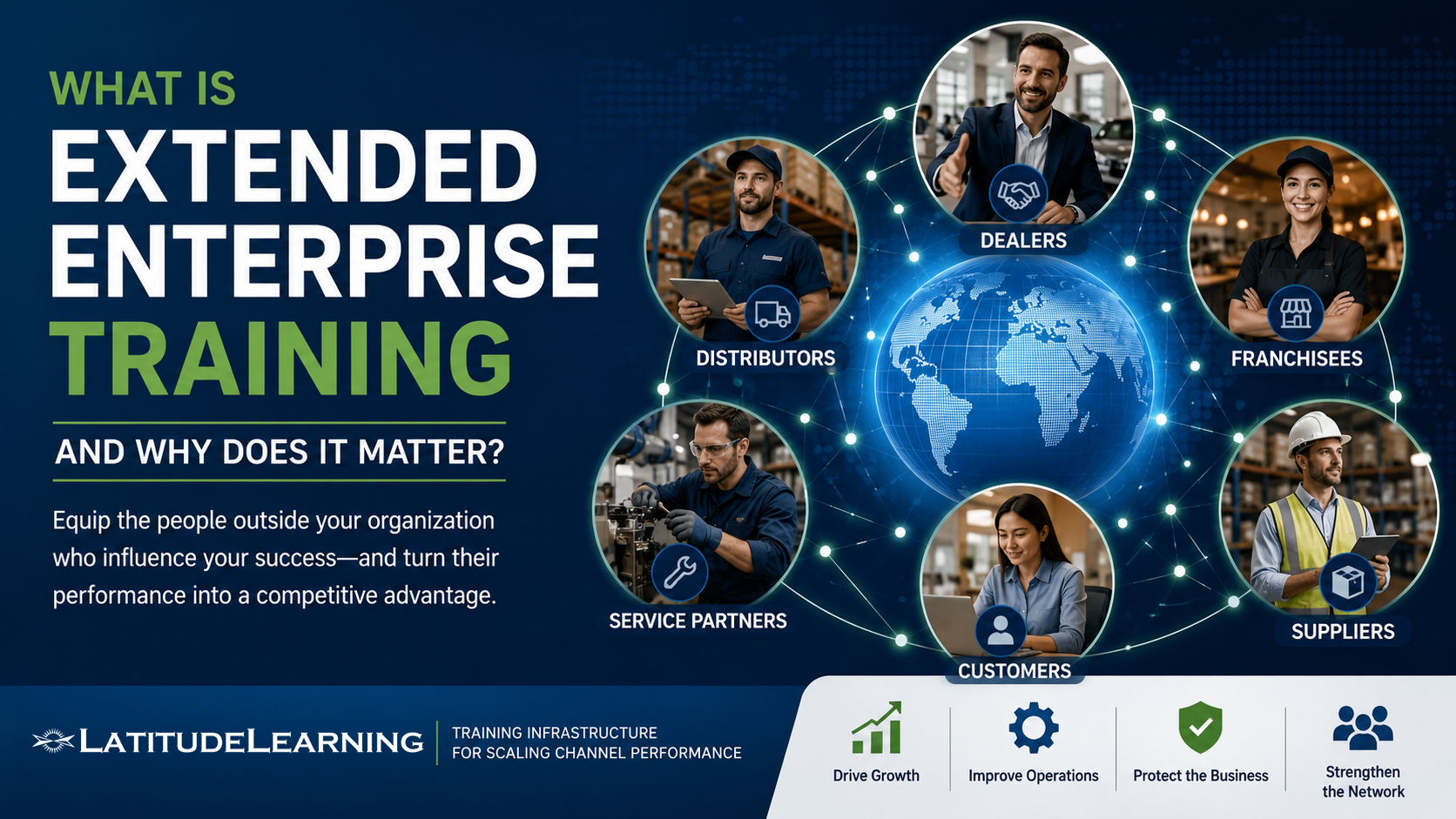
Whether supporting internal workforce development, large-scale customer enablement efforts through customer training, or distributed partner ecosystems commonly associated with extended enterprise training, communication remains central to successful knowledge transfer.
Many organizations unintentionally treat differences as barriers.
Different communication styles create frustration.
Different working styles create tension.
Different perspectives create conflict.
The Vujade approach encourages organizations to view these differences differently.
According to Miller and Breckenridge, diversity of thought often represents one of an organization’s greatest assets. Innovation, creativity, and problem solving frequently emerge when people with different perspectives collaborate effectively.
The challenge is not eliminating differences. The challenge is creating understanding.
By helping individuals recognize how others process information, approach decisions, and contribute to discussions, Vujade seeks to transform differences into opportunities for stronger collaboration.
This perspective aligns with a growing recognition among organizational leaders that workforce performance depends as much on relationship quality as it does on technical expertise.
Knowledge matters. Skills matter. Experience matters.
But the ability to collaborate effectively often determines whether those capabilities translate into meaningful outcomes.
Trust emerged as one of the most important themes in the discussion.
The founders repeatedly returned to the relationship between understanding and trust.
When people better understand one another, they are less likely to make assumptions. Reduced assumptions create opportunities for empathy. Empathy supports stronger relationships. Stronger relationships create trust.
Trust, in turn, improves collaboration.
The process becomes self-reinforcing.
Individuals who understand each other’s preferences, strengths, and communication styles are often more willing to share ideas, acknowledge weaknesses, and engage in productive dialogue.
This level of openness becomes particularly valuable in modern organizations where teams frequently operate across geographic boundaries, time zones, and functional disciplines.
Building trust at scale requires more than good intentions.
It requires mechanisms that help people understand one another.
The founders believe communication intelligence provides one such mechanism.
One of the most memorable examples shared by the founders involved work with a team associated with NASA.
When the team was analyzed using the Vujade framework, the results revealed something unexpected.
Very few team members occupied average positions across measured dimensions. Instead, most individuals fell toward the outer ranges of the assessment spectrum.
At first glance, this might seem unusual.
However, the founders observed that these individuals demonstrated exceptional levels of self-awareness, openness, and willingness to engage with different perspectives.
Rather than creating dysfunction, their differences appeared to contribute to innovation.
The team understood itself remarkably well.
Members were comfortable discussing strengths and limitations.
They embraced diversity of thought rather than resisting it.
The result was a highly effective environment for problem solving and collaboration.
The example serves as a reminder that high-performing teams are not necessarily composed of similar individuals. They are often composed of people who understand, appreciate, and leverage their differences.
For learning and development professionals, the Vujade story offers an important perspective on workforce performance.
Organizations frequently focus on what people need to learn.
The Vujade approach encourages leaders to also consider how people communicate.
Knowledge acquisition remains essential. Structured development frameworks such as the LatitudeLearning Training Program Roadmap emphasize the importance of building foundational knowledge before learners can successfully apply skills and improve performance.
Yet communication influences every stage of that journey.
Communication affects onboarding.
Communication affects coaching.
Communication affects collaboration.
Communication affects knowledge transfer.
Communication affects execution.
Organizations that improve communication often improve learning outcomes, operational consistency, and workforce readiness simultaneously.
This insight becomes particularly relevant in distributed environments where learning must scale across employees, customers, franchisees, partners, and other external audiences.
The themes explored by Miller and Breckenridge extend beyond communication theory and into broader questions of workforce performance, organizational effectiveness, and learning strategy.
Readers interested in a deeper examination of these concepts should also explore the companion case study, Vujade: Transforming Communication Intelligence into Organizational Performance.
The case study provides a more structured analysis of how communication intelligence supports workforce development, learner engagement, organizational readiness, and performance improvement. It also examines how these concepts align with established learning frameworks and operational best practices.
Together, the podcast episode and case study provide a compelling exploration of how communication can become a measurable organizational capability rather than an abstract interpersonal skill.
The story of Vujade is ultimately a story about understanding people.
After decades of organizational development work, consulting engagements, business ventures, and workforce transformation projects, Monty Miller and Doug Breckenridge arrived at a surprisingly simple conclusion.
Organizations perform better when people understand one another.
Communication becomes easier. Trust develops faster. Collaboration improves. Performance follows.
For learning leaders, training managers, and workforce enablement professionals, that lesson may be more relevant today than ever before. As organizations continue to navigate increasingly complex and distributed work environments, communication intelligence has the potential to become one of the most important enablers of organizational success.
Want to go deeper?
🎧 To explore the full conversation, listen to the Training Impact Podcast episode featuring Monty Miller and Doug Breckenridge of Vujade.
📄 Download the companion case study: Vujade: Transforming Communication Intelligence into Organizational Performance
🌐 Learn more about Vujade on their website: https://www.vujade.ai/