- Channel Performance
- Training Infrastructure
- LatitudeLearning LMS
- Lumina
- Services
- Company
- Pricing
- Demo
As artificial intelligence becomes increasingly integrated into business operations, organizations face a challenge that extends beyond learning how to use emerging technology. While generative AI offers opportunities to improve productivity, streamline workflows, and accelerate decision-making, its effectiveness depends on the human expertise guiding its application. For organizations seeking sustainable growth, the central question is no longer simply what artificial intelligence can accomplish, but how people can remain knowledgeable, accountable, and capable of exercising sound judgment throughout AI-supported processes.
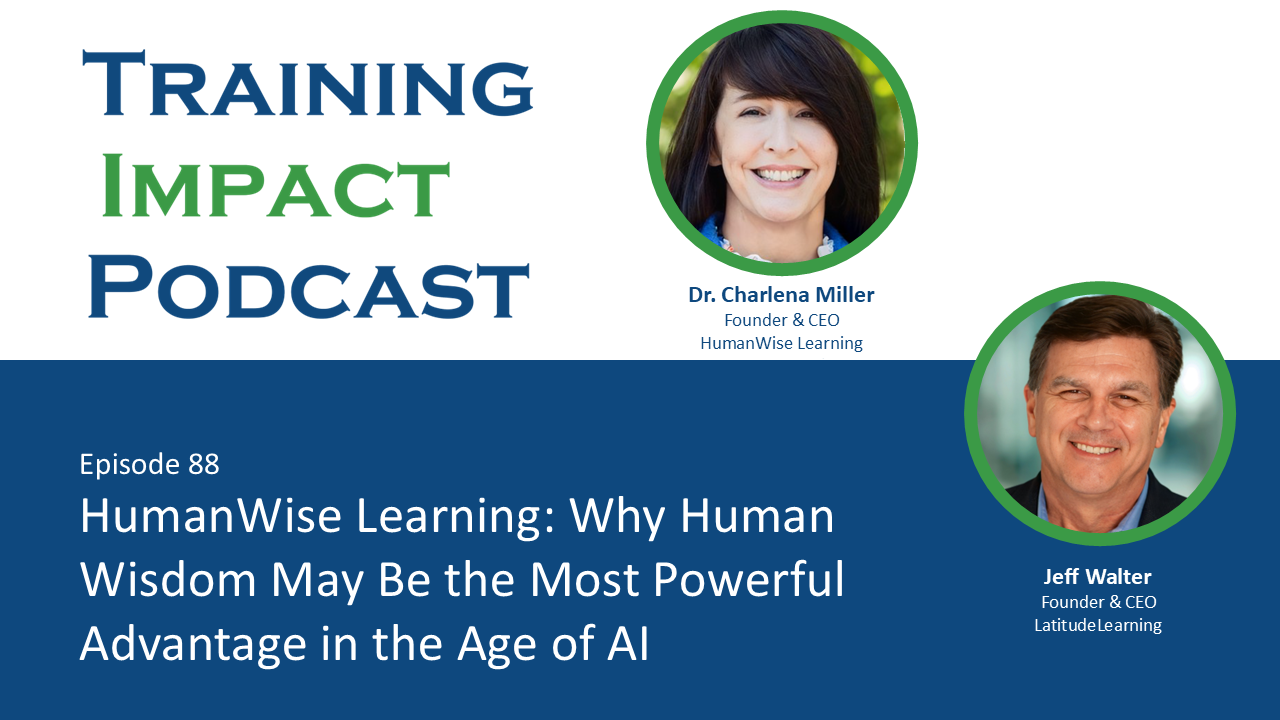
HumanWise Learning addresses this challenge through an approach to leadership development and organizational learning that emphasizes human wisdom, discernment, and accountability. Rather than concentrating exclusively on technical AI proficiency, the organization helps leaders understand how artificial intelligence affects business systems, professional responsibilities, and the long-term development of human expertise.
Its philosophy recognizes that meaningful human oversight requires more than assigning someone to approve an AI-generated result. Effective oversight depends on professionals who understand the work, recognize potential risks, and possess the authority and judgment necessary to intervene when appropriate.
This emphasis distinguishes HumanWise Learning’s stated approach from training that focuses primarily on tool adoption or immediate productivity improvements. By connecting AI education with systems thinking, organizational responsibility, and human development, the provider addresses both the operational and human dimensions of technological change.
HumanWise Learning emerged from its leadership’s longstanding commitment to helping people develop their potential and navigate significant transitions. Having experienced earlier technological transformations, including the expansion of the internet and social media, its founder recognized that generative AI was introducing an unusually rapid and far-reaching period of disruption.
Unlike technologies that primarily improved access to information or communication, artificial intelligence increasingly participates in the creation, analysis, and execution of work. This shift has created uncertainty among employees and leaders who must determine how to adopt powerful new capabilities without compromising professional standards or organizational responsibilities.
The organization was established to help address that gap by developing AI-strategic leaders and supporting the continued application of human discernment within AI-augmented workflows.
Its approach is informed by experience in organizational strategy, management education, emerging technology, and the study of meaning and purpose in an AI-enabled society. These perspectives contribute to a philosophy that views technological adoption as both a business challenge and a human development challenge.
HumanWise Learning describes a proprietary methodology designed to keep human wisdom, discernment, and accountability active and traceable throughout AI-supported processes. The discussion of its work identifies workflow mapping, stakeholder participation, and the placement of qualified human oversight as important elements of that approach.
The available account does not establish the organization’s founding date, employee count, client count, revenue, or other measures of scale. Its profile is therefore best understood through its stated mission, described client work, and contributions to discussions about responsible AI leadership rather than unsupported claims about organizational size or accomplishments.
HumanWise Learning works with organizations confronting the operational and leadership challenges associated with integrating artificial intelligence into established business processes.
Healthcare is one specifically identified client industry. In this environment, AI-supported workflows may involve sensitive patient information, privacy obligations, and decisions requiring specialized professional oversight. An inaccurate output or improperly managed process can create consequences extending beyond operational inefficiency to include information security and compliance concerns.
The provider also describes working with clients to examine workflows that may cross functions such as legal, supply chain management, sales, and customer service. These examples identify the types of organizational responsibilities involved in AI-supported processes, although they do not establish that HumanWise Learning has separate client engagements in each of those industries.
The methodology has broader relevance to businesses operating through distributed networks. For example, organizations coordinating franchise training across independently operated locations or managing customer training for external audiences face similar questions about consistent knowledge, decision-making, and accountability.
These are potential applications of the principles discussed, not documented HumanWise Learning client engagements. Their relevance lies in demonstrating how the need for qualified oversight and coordinated learning can extend beyond a traditional corporate workforce.
Across these environments, effective training must prepare people to understand both their individual responsibilities and the consequences of decisions made within larger organizational systems.
Organizations implementing AI often begin with individual experimentation. Employees explore generative AI tools, identify opportunities to automate routine activities, and discover ways to improve personal productivity. While this experimentation can encourage innovation, it does not necessarily establish the organizational structures required to manage AI reliably at scale.
HumanWise Learning’s described work helps clients move toward a more deliberate approach by examining how work currently moves through an organization, identifying the people and systems involved, and clarifying where responsibility should reside as AI becomes part of those workflows.
The intended outcome is a process in which appropriate specialists can evaluate AI-generated outputs, recognize potential problems, and provide meaningful approval at critical decision points. This requires organizations to distinguish between simply including a person in a process and ensuring that the person has the competence and authority to exercise genuine oversight.
A related objective is to help leaders understand how AI may alter existing organizational structures. When automated workflows cross several departments, traditional reporting relationships may no longer align neatly with the activities being performed. Businesses must therefore consider who owns the process, who is responsible for its outcomes, and how specialists contribute their expertise.
These objectives connect operational reliability and risk management with leadership development and long-term organizational sustainability. The available discussion establishes these as important goals of the provider’s approach, but does not supply quantitative evidence demonstrating the extent to which individual clients have achieved them.
HumanWise Learning’s explicitly stated focus is developing AI-strategic leaders who can guide organizations through the responsible integration of artificial intelligence.
These leaders need to understand how AI affects workflows, professional responsibilities, and organizational structures. Their learning needs include systems thinking, informed decision-making, accountability, and the ability to recognize where specialized expertise is required.
Experienced professionals also play an important role in the organization’s approach. Their knowledge of a particular field allows them to evaluate AI-generated outputs, recognize errors, and understand consequences that may not be obvious to someone without comparable experience.
The provider emphasizes that this expertise cannot be replaced simply by placing an employee in an approval role. Meaningful oversight requires people who know what to examine, understand the relevant standards, and can accept responsibility for the decisions being made.
The broader discussion also identifies emerging professionals as an important population for workforce development, although they are not specifically established as direct participants in HumanWise Learning’s programs.
As AI assumes more routine knowledge-based tasks, organizations may reduce entry-level positions that traditionally helped employees acquire professional experience. This raises questions about how future specialists and leaders will develop the judgment needed to supervise increasingly sophisticated systems.
The learning implications are significant. Organizations may need to reconsider how employees progress from acquiring foundational knowledge to applying that knowledge in unfamiliar situations, developing sound judgment, and assuming greater responsibility.
One of the most significant challenges addressed by HumanWise Learning is the assumption that including a human in an AI process automatically provides adequate oversight.
A reviewer may approve an AI-generated result without possessing the expertise to recognize an error. Another employee may understand an individual task but lack visibility into the broader consequences of the workflow. These limitations become more serious when AI-supported processes cross organizational boundaries and involve multiple systems.
HumanWise Learning responds by emphasizing explicit responsibility and the placement of qualified professionals at appropriate decision points.
A second challenge involves the transition from individual AI experimentation to coordinated organizational implementation. Companies may discover useful applications within individual departments without developing a comprehensive understanding of how those applications interact with existing processes, responsibilities, and controls.
A third challenge concerns the potential erosion of professional talent pipelines. As experienced employees become increasingly valuable for their judgment, organizations may simultaneously reduce the entry-level opportunities through which future experts traditionally develop that judgment.
This creates tension between immediate efficiency and long-term capability. Reductions in developmental opportunities may produce short-term savings while introducing risks that become visible only after several years.
The provider’s philosophy also challenges the traditional separation between technical competence and interpersonal or cognitive capabilities. Skills such as communication, ethical reasoning, conflict resolution, and systems thinking are sometimes treated as secondary, even though they are essential when professionals must interpret ambiguous information and make decisions affecting other people.
HumanWise Learning’s described methodology begins with understanding work before attempting to transform it.
Rather than introducing AI into an isolated activity and assuming the resulting process will function effectively, the provider works with clients to map existing workflows, identify the departments and systems involved, and clarify how information and decisions move through the organization.
Stakeholder participation is important because different specialists understand different risks and responsibilities. A workflow involving legal review, customer service, and supply chain management may require several forms of expertise that cannot be adequately represented by a single reviewer.
This documented approach is consistent with principles of adult learning, particularly the importance of relevance, problem-centered instruction, and connecting new knowledge to authentic professional responsibilities.
It also has conceptual similarities to experiential learning, in which understanding develops through examining situations, reflecting on their implications, and applying insights to practical decisions.
These are educational interpretations of the methodology rather than confirmation that HumanWise Learning formally follows a particular learning theory or delivers instruction through a specific experiential learning model.
The provider’s approach can also be examined through the LatitudeLearning Training Program Roadmap, particularly Stage 1, which establishes training foundations, and Stage 2, Knowledge Acquisition.
At the foundational stage, organizations need to understand the performance problems they are addressing, the learners involved, and the capabilities required for successful outcomes. HumanWise Learning’s emphasis on identifying workflows, stakeholders, responsibilities, and risks is consistent with the importance of establishing a clear operational context before designing training.
Stage 2, Knowledge Acquisition, focuses on helping learners develop the knowledge and understanding required for effective performance. Applied to AI leadership, this means providing more than instructions for operating a technology platform. Learners must understand AI capabilities and limitations, organizational processes, relevant professional standards, and the circumstances requiring human intervention.
The provider’s workflow-oriented approach offers a useful foundation for contextual learning because it connects knowledge to actual decisions and responsibilities rather than presenting information as an isolated subject.
For example, a training team applying these principles could ask learners to examine an AI-supported workflow, identify points requiring expert review, and evaluate how responsibility should be assigned when several departments participate in the process.
Such activities represent potential applications of the methodology, not verified descriptions of HumanWise Learning’s instructional delivery.
Similarly, microlearning, blended learning, and structured experiential exercises could support knowledge acquisition in an AI leadership program, but the available account does not establish that the provider currently uses these formats.
The strongest documented practices are its emphasis on systems thinking, stakeholder participation, domain expertise, workflow analysis, and informed human judgment.
The available evidence of HumanWise Learning’s impact is primarily qualitative. The discussion provides examples of client work and professional engagement, but does not establish measurable improvements in client productivity, compliance, employee performance, or financial outcomes.
One concrete example involves a healthcare client, where the provider’s work addresses the importance of qualified oversight within workflows involving sensitive information. The example demonstrates the practical relevance of identifying responsible professionals and ensuring that appropriate expertise is applied throughout a process.
However, the account does not provide numerical results for this engagement, such as reductions in errors, compliance incidents, processing time, or operating costs. It therefore supports the relevance of the provider’s methodology rather than a verified claim of performance improvement.
Another indication of professional interest comes from the organization’s humaning framework, which emphasizes the intentional development of human capacities necessary for meaningful work and life.
At a professional conference, a presentation about this framework reportedly attracted an audience that filled the largest available room, with additional attendees sitting around its edges. This response suggests interest in examining AI through questions of human development, purpose, and responsibility rather than productivity alone.
The broader conversation also includes an example from automotive service training in which employees reportedly described improvements in their personal relationships after participating in training focused on interpersonal and life skills.
This example concerns another training organization and is not a HumanWise Learning client outcome. Its relevance is illustrative: it shows how developing human capabilities can have benefits extending beyond immediate technical responsibilities.
Together, these examples reinforce the importance of human-centered learning while also highlighting an opportunity for more formal measurement.
As organizations implement AI leadership development programs, meaningful evaluation could examine improvements in decision quality, clarity of accountability, risk identification, learner confidence, and the preservation of professional development pathways.
These are suggested measures for future evaluation, not outcomes already demonstrated by HumanWise Learning.
HumanWise Learning offers a distinctive perspective on workforce development by addressing a challenge that conventional technology training can overlook: the need to preserve and strengthen human judgment as artificial intelligence becomes increasingly capable.
Its emphasis on workflow analysis, domain expertise, meaningful accountability, and systems thinking provides organizations with a framework for considering how AI should be integrated into complex business operations.
Equally important is its recognition that professional capability develops over time. Organizations that prioritize immediate automation without considering future learning opportunities risk weakening the expertise required to manage increasingly sophisticated systems.
The provider’s approach also reinforces the importance of treating communication, ethical reasoning, critical thinking, and professional judgment as essential capabilities rather than secondary skills.
Although quantified client outcomes and detailed instructional delivery metrics are not established in the available account, HumanWise Learning presents a promising example of a human-centered AI learning strategy grounded in organizational responsibility and long-term professional development.
The broader lesson is that effective AI training should prepare people not merely to operate powerful tools, but to exercise the wisdom, discernment, and accountability necessary to guide those tools toward meaningful and sustainable outcomes.
For more information on HumanWise Learning, visit their website https://www.humanwiselearning.com/