Skills & Competency Management for Franchise, Dealer, Distributor, and Partner Networks.
Course completions tell you who finished training. They do not, on their own, show who has demonstrated the skills their position requires – or whether every location has enough qualified people.
LatitudeLearning LMS helps you define position-based competencies, determine how skill levels are measured, and establish minimum training requirements across your network, with adjustments for individual locations.
See how many locations – and what percentage of your network – meet those requirements.
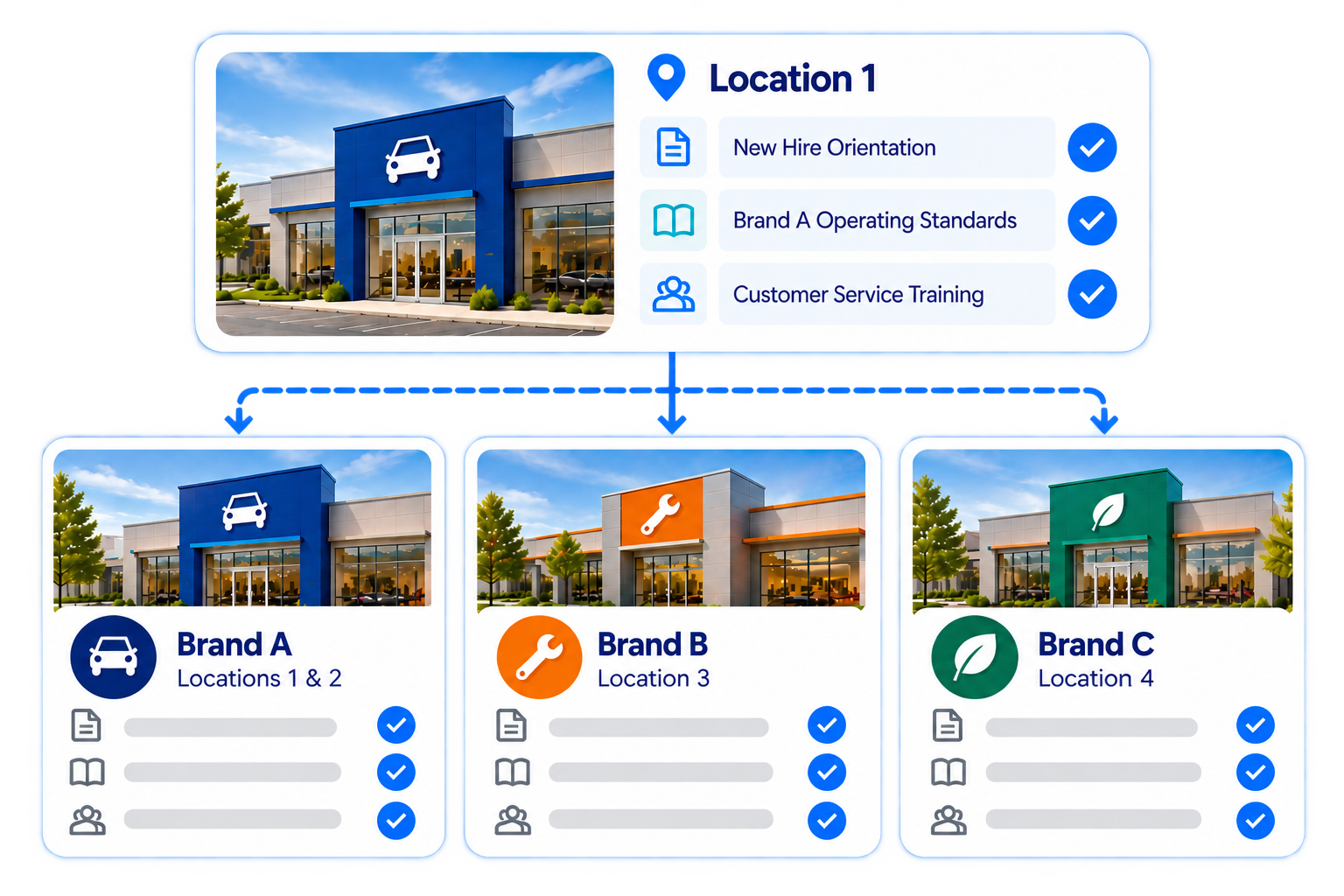
A completed course is an important milestone. But managing training across a distributed network requires answers to more than one question.
You need to understand whether people meet your competency standards, whether each location has enough qualified people, and how consistently those requirements are being met across the network.
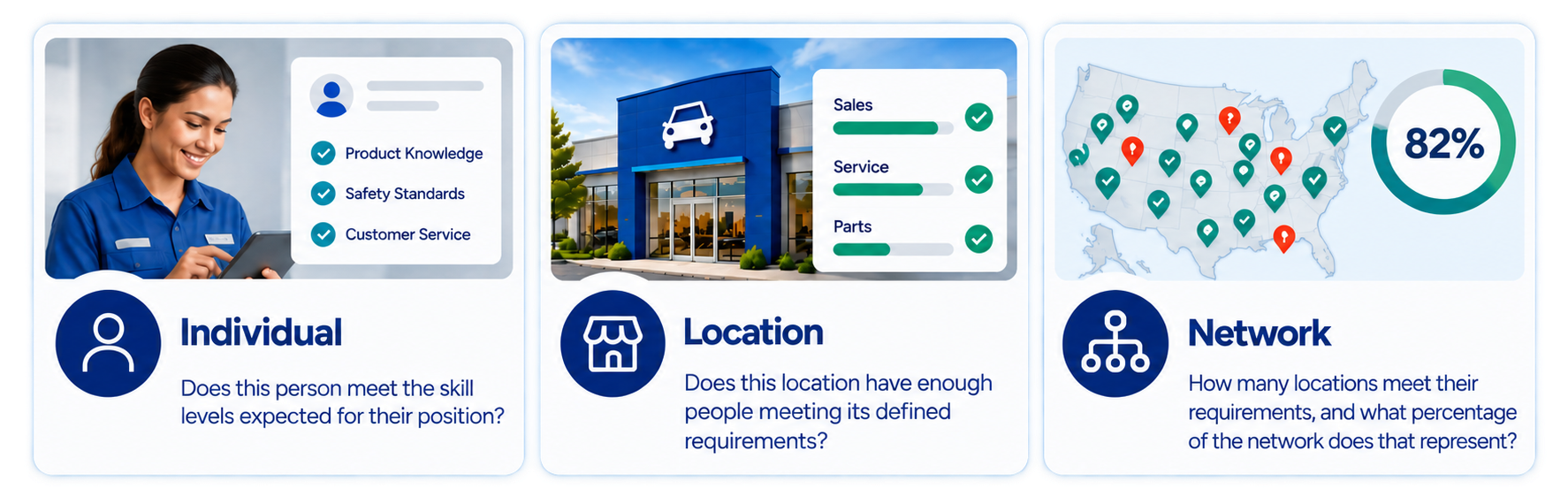
Move beyond counting course completions to understanding the qualifications of your people and the training requirements of your locations.
A large franchise location and a small location may follow the same competency standards while needing different numbers of qualified employees.
LatitudeLearning allows administrators to establish network-wide minimum training requirements and configure location-specific overrides. These requirements specify the minimum number of learners who must meet defined training or skill-level requirements at a location.
Requirements can cover competencies associated with multiple positions, helping your organization define what a sufficiently trained location looks like.
A coffee franchisor defines what employees must achieve to be considered proficient baristas. It then establishes how many proficient baristas each location needs.
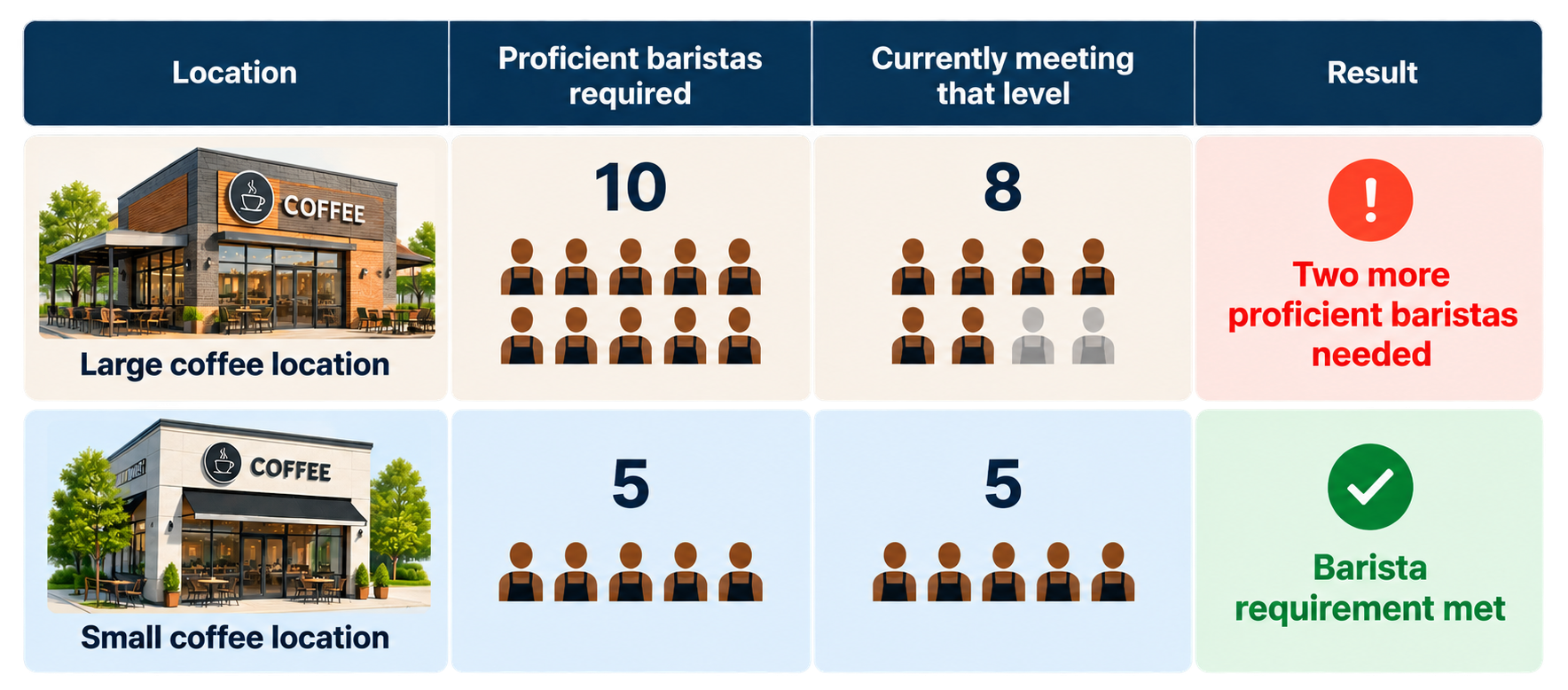
Both locations use the same definition of proficiency. The number of proficient people required reflects each location’s needs. Additional requirements can address other positions or skills, such as shift supervision and store management.
Define the standard once, then account for differences in location size and staffing needs.
Meeting the barista requirement does not establish that every location requirement has been met. These standards measure qualified personnel, not who is scheduled on a particular shift.
Once location requirements are defined, the next question is how consistently they are being met.
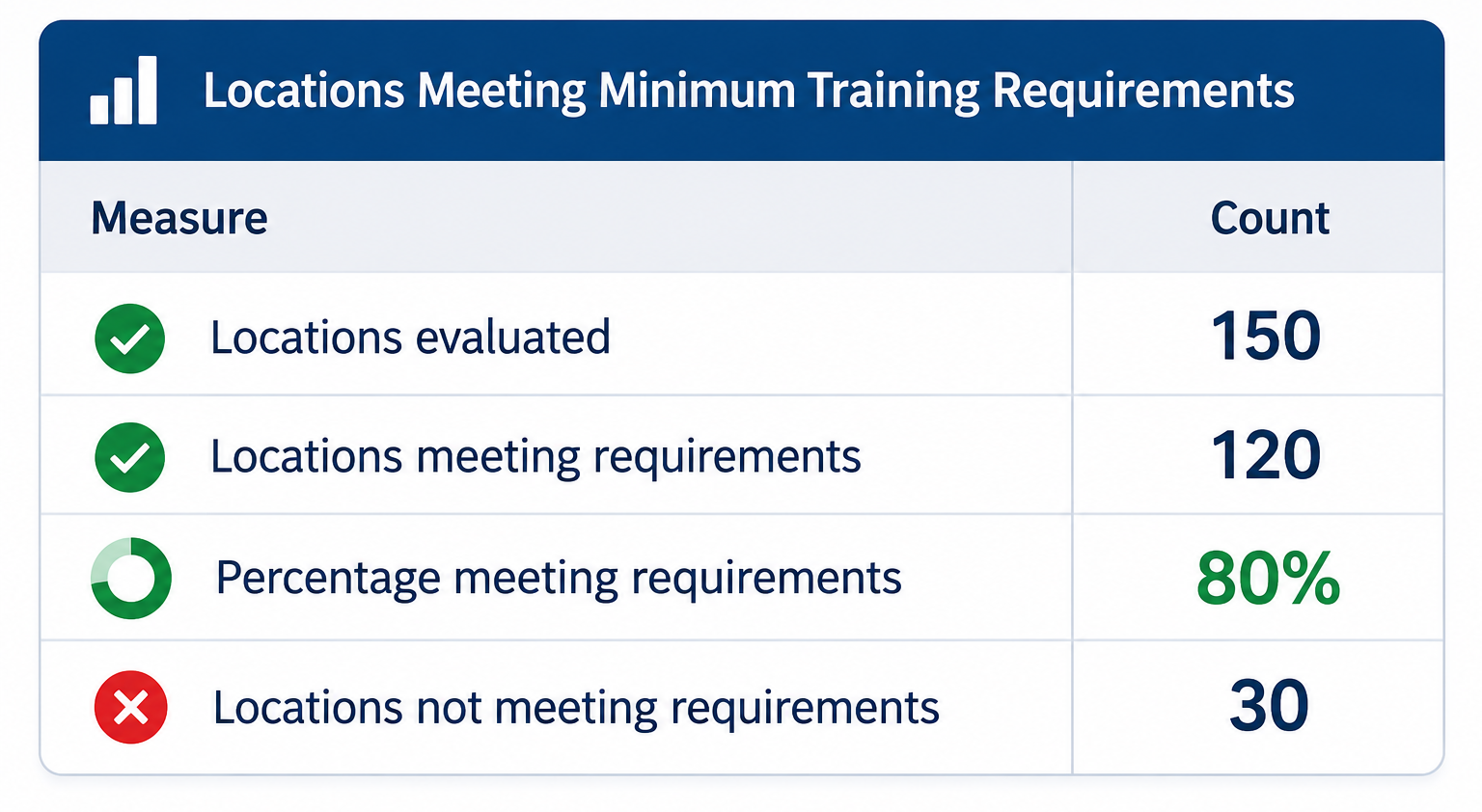
LatitudeLearning gives administrators and field representatives visibility into the number and percentage of locations meeting their minimum training requirements. This turns individual training and competency information into a measurable view of training standards across the network.
The foundation of location training readiness is a clear definition of the skills people need.
LatitudeLearning uses Skill Profiles to organize related Skill Areas and Skill Levels. Positions can be associated with the profiles relevant to their responsibilities.
A skill profile can apply to multiple positions, and a position can have multiple skill profiles. This lets your organization reuse common competency definitions while addressing specialized responsibilities.
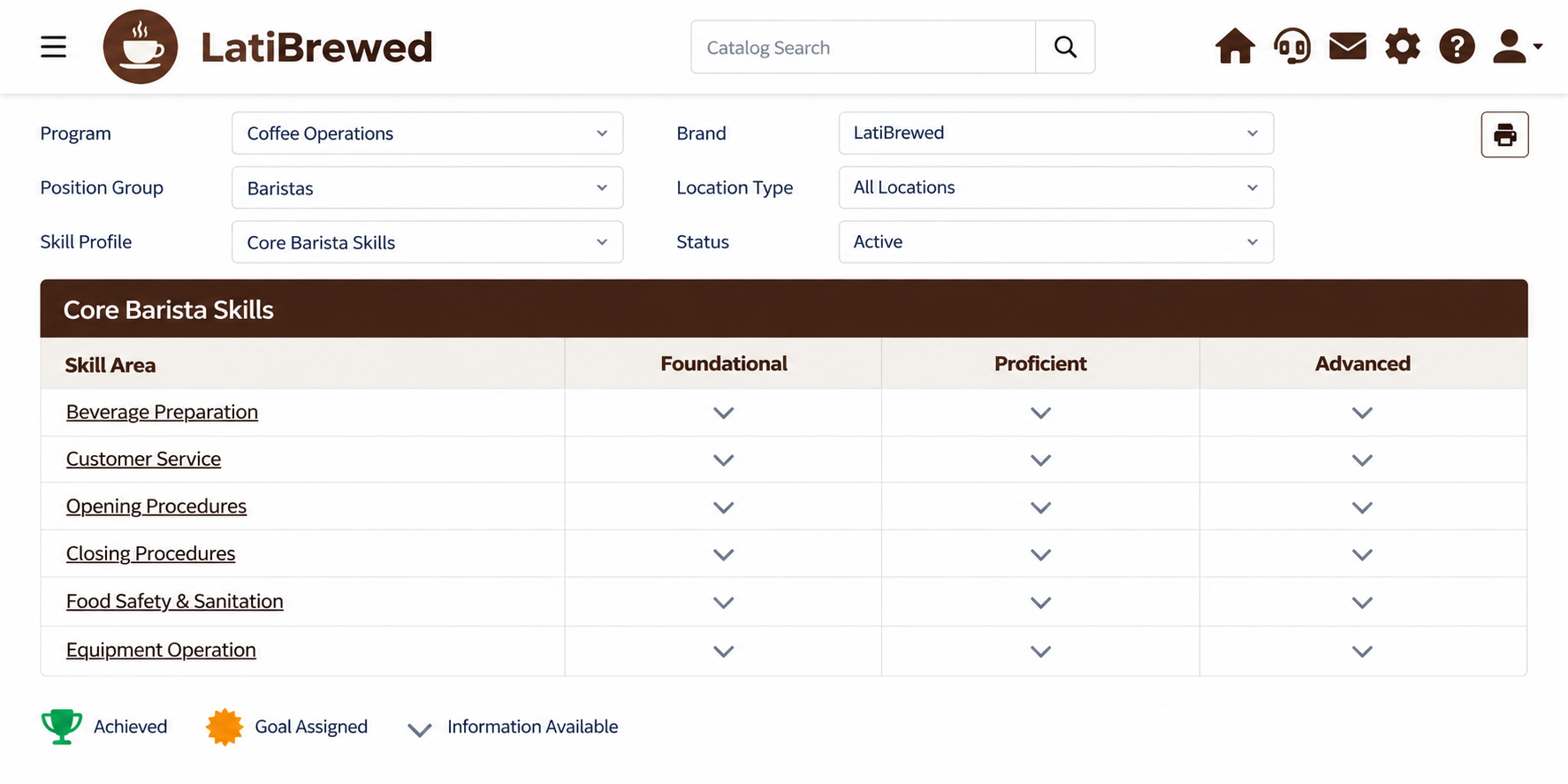
Shared Standards, Position-Specific Responsibilities
The Coffee Operations profile could apply to both Baristas and Shift Supervisors. The Shift Supervisor position could also have a People Development profile, adding competencies relevant to supervising and developing employees.
One profile can support multiple positions. One position can have multiple profiles.
Different competencies require different evidence.
LatitudeLearning allows your organization to define the requirements used to determine a skill level. Those requirements can include completed training, performance metrics, manager or administrator observations, and – for management responsibilities – the training accomplishments of subordinates.
Your organization defines what each level means and the evidence required to achieve it.
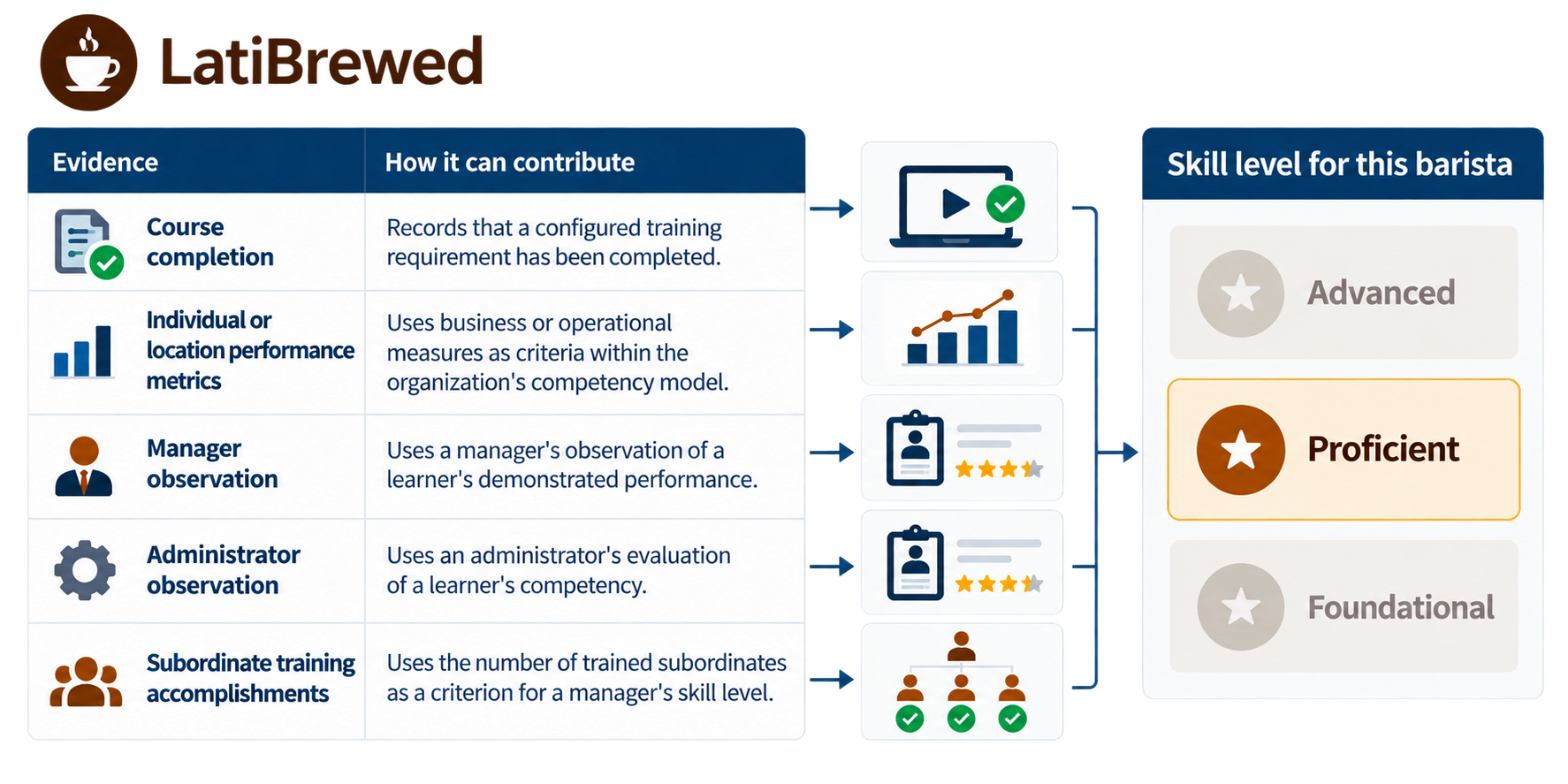
For example, a franchise organization might use observed performance when determining a barista’s beverage-preparation level, while using the number of trained team members as part of a manager’s people-development requirements.
Match the evidence to the competency instead of treating every course completion as proof of proficiency.
Competency standards are more useful when learners can see them.
LatitudeLearning enables learners to view the skills and levels associated with their positions alongside their own competency levels. Skills and specific levels can also be assigned as training goals.
This helps learners understand the competency framework for their position and the goals they are working toward.
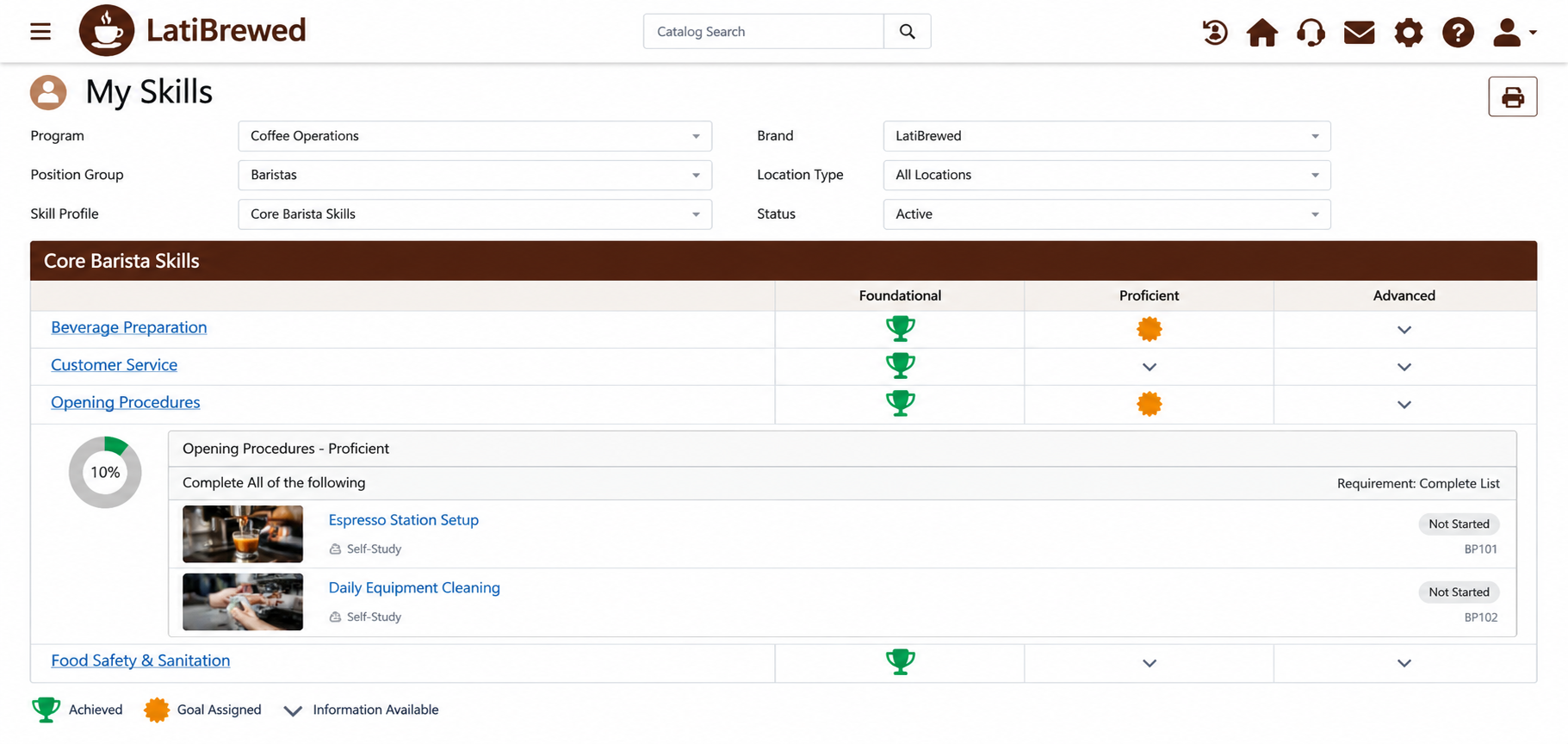
Make expectations and development goals visible – not something learners must infer from a list of courses.

Define competencies for franchise owners, managers, and frontline employees. Establish location-specific qualified-personnel requirements and measure how many locations meet them.

Organize competencies for sales, service, and management positions. Evaluate skill levels and qualified-personnel requirements across dealerships and distributor locations.

Define technical skill levels, evaluate supporting evidence, and establish qualification requirements for service partner locations.
Know more than who completed a course.
Define the skills people need, establish the evidence behind each competency level, and determine how many qualified people each location requires.
Then see how many locations – and what percentage of your network – meet those standards.
Discover how LatitudeLearning connects individual development with location requirements and network-wide training visibility.