
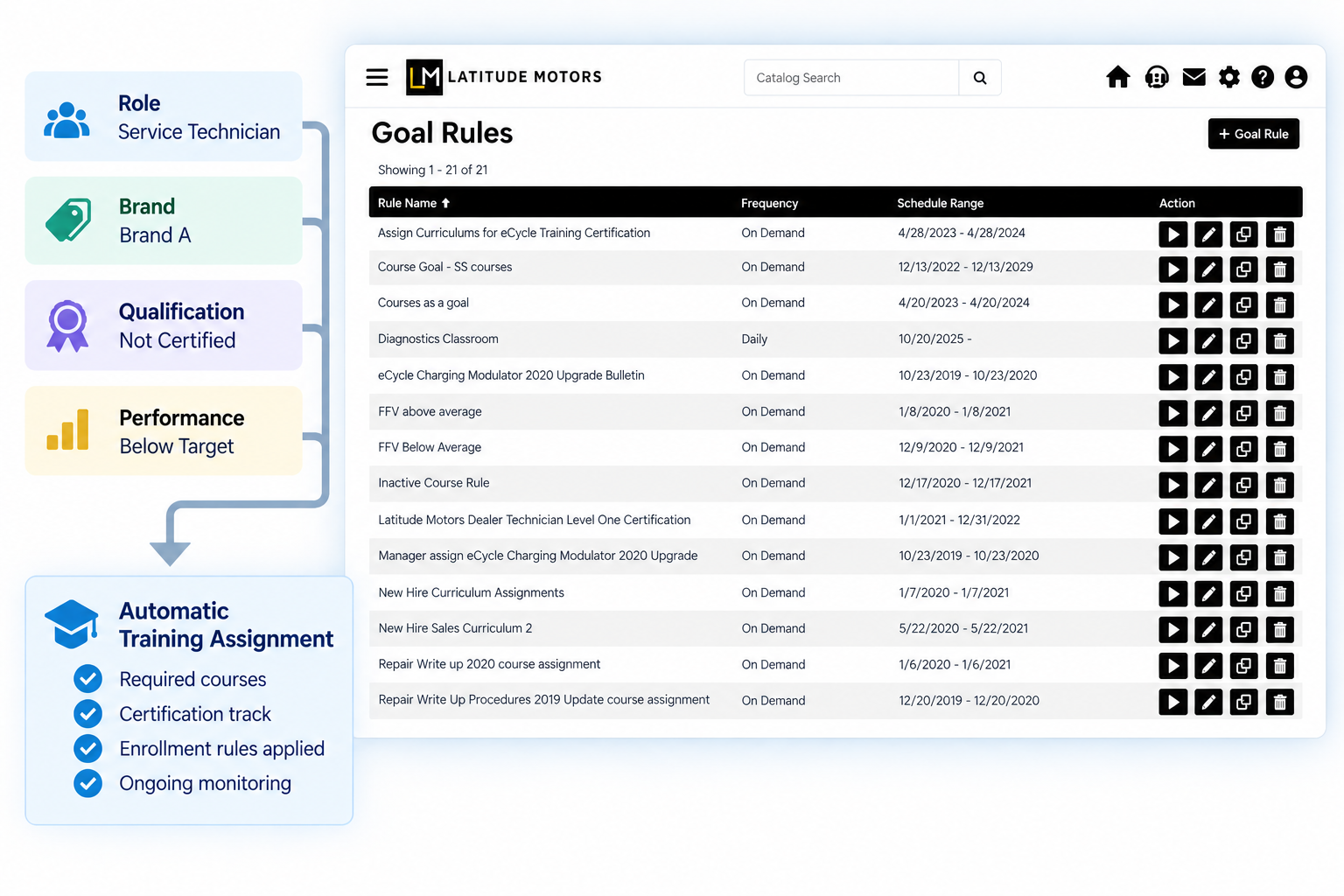
Assign the right training based on roles, brands, qualifications, and business performance.
Training a distributed network should not require manually managing every course assignment, certification requirement, or enrollment rule.
LatitudeLearning automates course and certification assignments across franchise, dealer, distributor, and service partner networks. Use organizational relationships, learner qualifications, brand requirements, and individual or location performance metrics to deliver training that fits the people and places you support.
When roles, organizations, and requirements vary across your network, one-size-fits-all training assignments create unnecessary administrative work. LatitudeLearning lets you configure rules that assign courses and certifications based on the conditions that matter to your organization.
Build training assignment criteria around learning history, learner attributes, organizational relationships, and operational performance. Instead of administering every assignment individually, you can apply consistent rules across your distributed network.
| Rule Category | Supported Assignment Criteria |
|---|---|
| Learning History and Qualifications | Completed courses, course scores, certifications |
| Learner Characteristics | Position, audience, user group |
| Organizational Relationships | Organization, network, region |
| Business Performance | Individual performance metrics, location performance metrics |
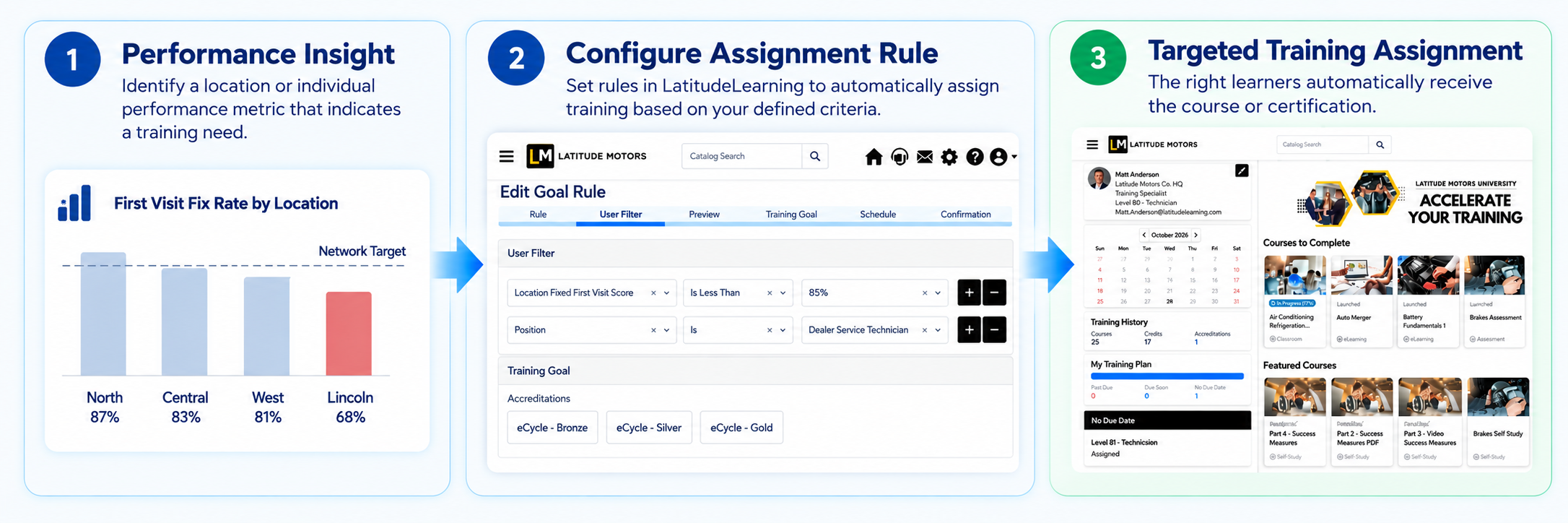
Training should support the performance of the people and locations representing your business—not just satisfy a checklist.
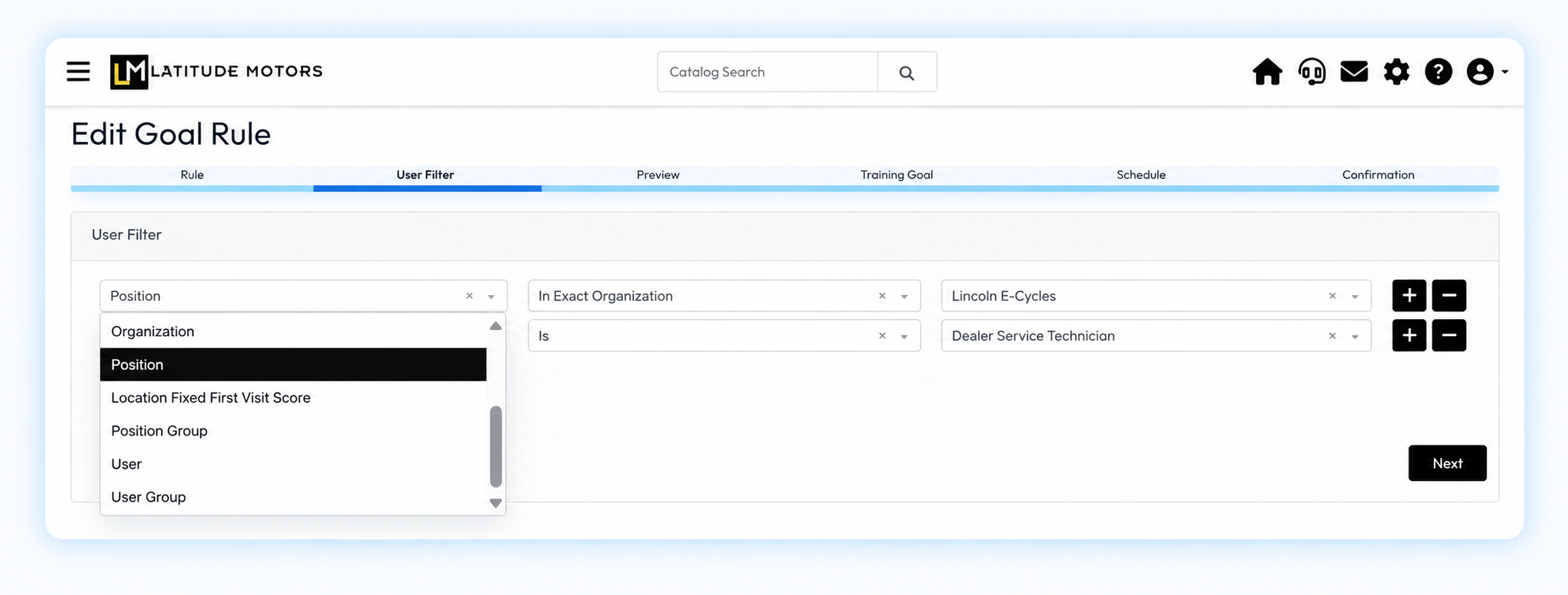
LatitudeLearning can use individual and location performance metrics as criteria for automated course and certification assignments. This helps organizations target training to conditions affecting sales, service, or other measured operational results.
For example, a manufacturer could configure training assignment rules that direct additional sales training to salespeople with low sales volume. A service organization could use location-level performance metrics to assign training to people at locations with poor customer satisfaction scores.
Performance-based rules connect your training program to the measures your organization already uses to manage its network.
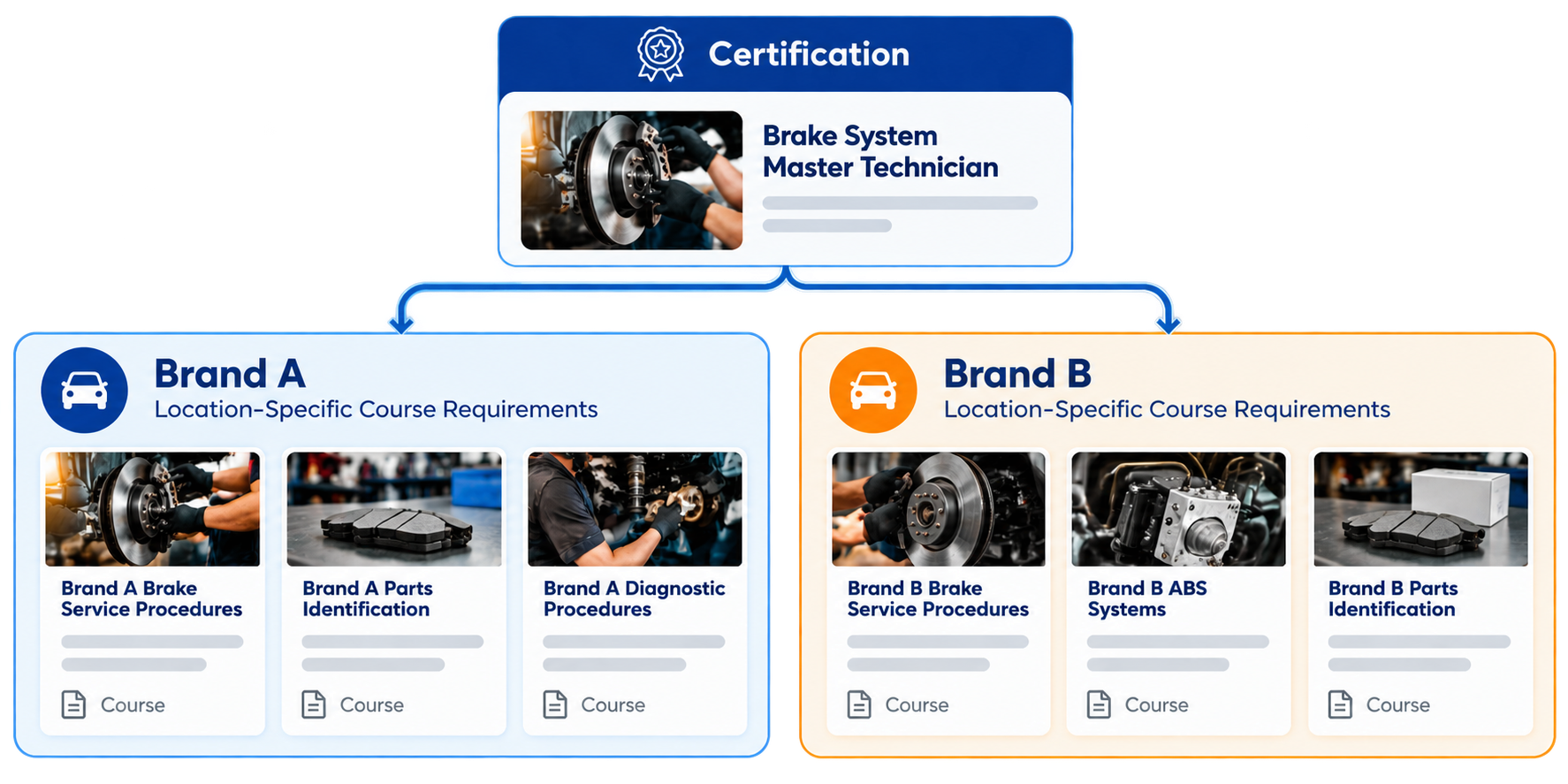
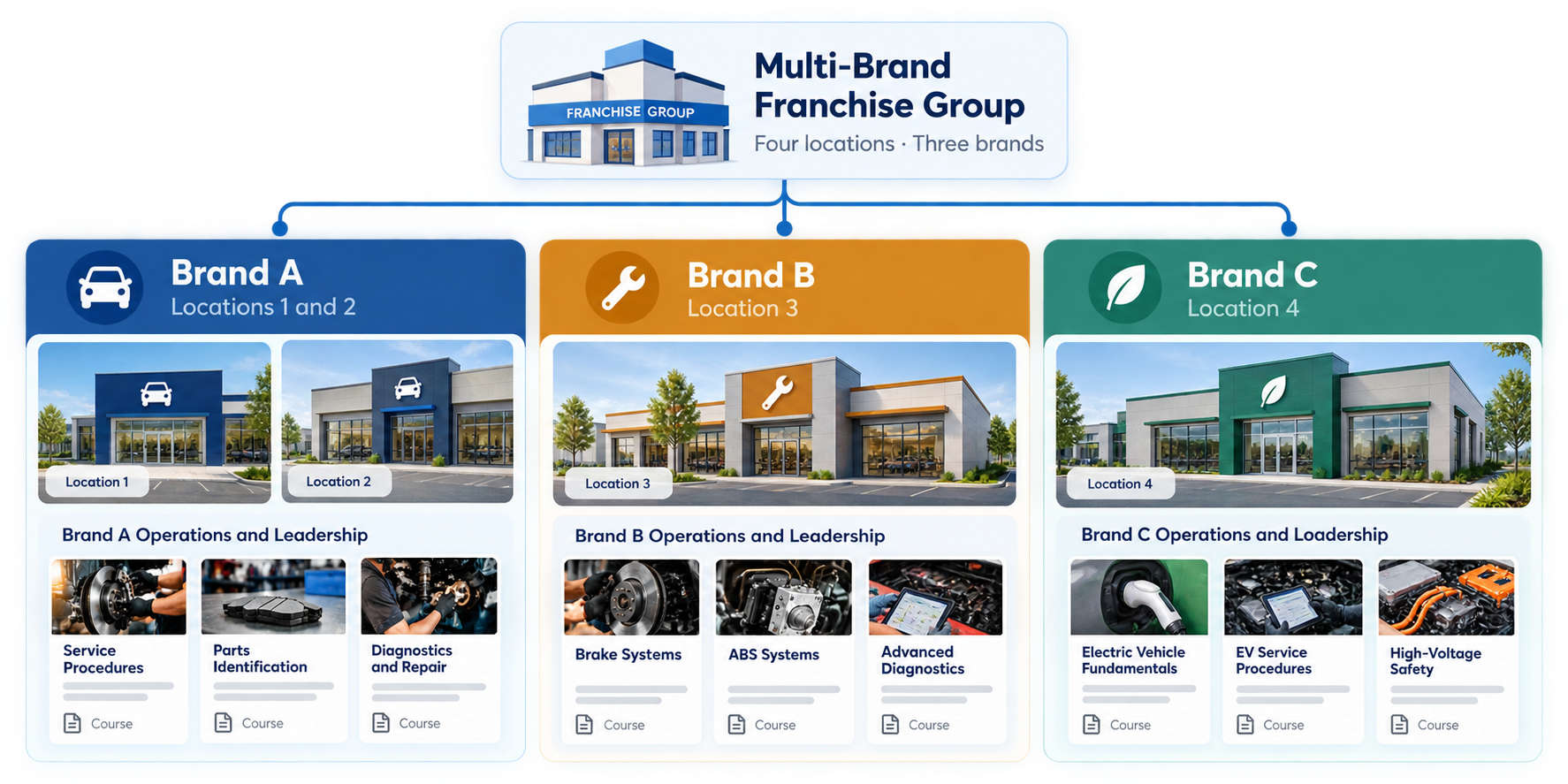
Multi-brand networks need consistent training programs without giving every learner the same brand-specific requirements. LatitudeLearning accounts for the brands represented at each partner location.
Associate courses and partner locations with one or more brands. A brand-specific course is available only to learners at locations associated with that brand. Locations representing multiple brands can access the courses associated with each of those brands.
A single certification can combine common training requirements with brand-specific courses. LatitudeLearning applies the brand-specific requirements that match the brands associated with a learner’s location.
For example, Certified Sales Professional can require Core Sales Training for everyone. Learners at a Brand A location also need Brand A Product Training; learners at a Brand B location need Brand B Product Training. A location representing both brands can have requirements for both brands within the same certification program.
Manage one certification framework while delivering the product knowledge each location needs.
The right training program should know when learners are ready for a course—and when their existing qualifications already satisfy a requirement.
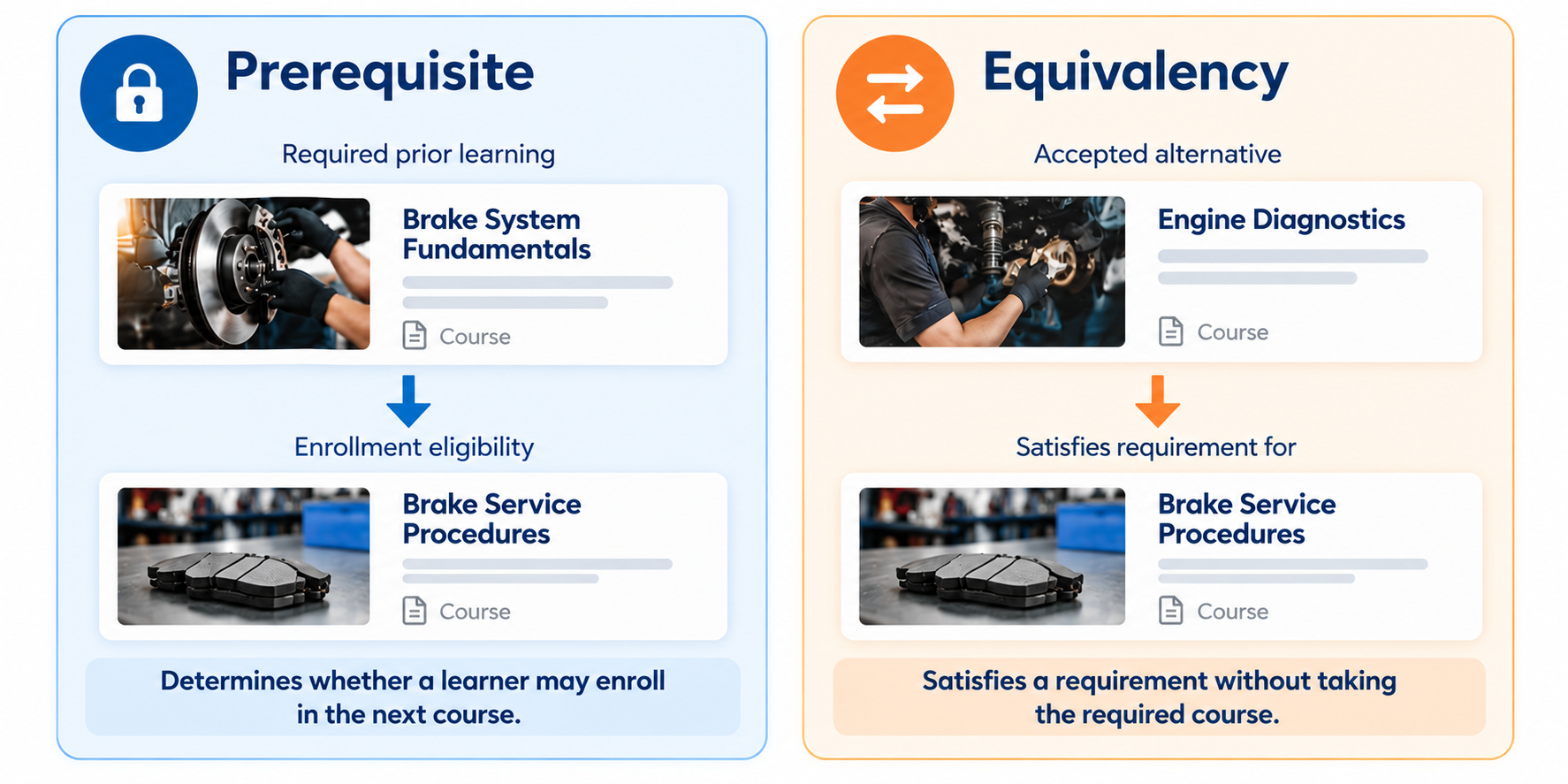
Set course enrollment prerequisites using courses, positions, position groups, user groups, certifications, or skills. Prerequisites help ensure learners meet the conditions you define before entering more advanced training.
Example: An advanced service course can require a technical certification before enrollment.
Use courses, positions, position groups, user groups, certifications, or skills to satisfy a course requirement through a configured equivalency. When a learner qualifies for an equivalency, the requirement can be satisfied without the learner taking that course.
Example: A Sales Certification includes Introduction to Sales. A new salesperson takes the course. A learner in the Senior Salesperson position can satisfy the requirement through a configured course equivalency.
Reduce redundant training, respect existing qualifications, and maintain consistent program requirements.
Training access does not have to be purchased or managed one learner at a time. LatitudeLearning supports course subscriptions at the partner-location level and helps make relevant learning opportunities easier to find.
A partner can subscribe to a set of courses for a location. That subscription may be paid or free, and any subscription transaction takes place outside LatitudeLearning LMS. Once the subscription is associated with a partner location, every learner at that location can enroll in the covered courses without paying individual course tuition.
Promote courses included in a location’s subscription on learners’ My Learning pages so employees can discover training already available to them.
Each location can also have its own featured courses. Highlight important training for a new partner location, an upcoming product introduction, or a particular operational need—without making every recommended course mandatory.
The training rules that work for a single corporate workforce may not reflect the relationships, brands, and operating requirements of a distributed partner network. LatitudeLearning is built to help you manage those differences without administering every learner individually.

Use position-based rules to assign onboarding, feature courses by location, and support franchise groups operating multiple brands through location subscriptions and brand-aware course availability.

Make brand-specific courses available at the right locations, adapt certification requirements by represented brand, and assign training using individual or dealer-location performance metrics.

Apply technical prerequisites, recognize existing qualifications with course equivalencies, and assign certifications based on roles, organizational relationships, or business performance criteria.
One infrastructure for coordinated training across a network that does not operate like one central office.
Your partner network is complex. Your training administration does not have to be.
See how LatitudeLearning uses roles, brands, qualifications, and performance criteria to automate training assignments while supporting prerequisites, course equivalencies, and location-based training access.