Certification should reflect the requirements people meet today—not simply what they achieved in the past.
LatitudeLearning LMS helps you define qualification standards, automatically evaluate applicable certifications, and keep achievement status aligned as requirements and learner results change.
Give learners a clear view of their progress and outstanding requirements while managing certification standards across your distributed network.
A franchise introduces new equipment. A manufacturer releases a product requiring a different installation technique. A performance-based certification enters a new reporting period.
The work changes. The requirements for qualification can change with it.
A certification earned previously tells you someone met the standard at that time. It does not necessarily tell you whether they satisfy the requirements that apply today. 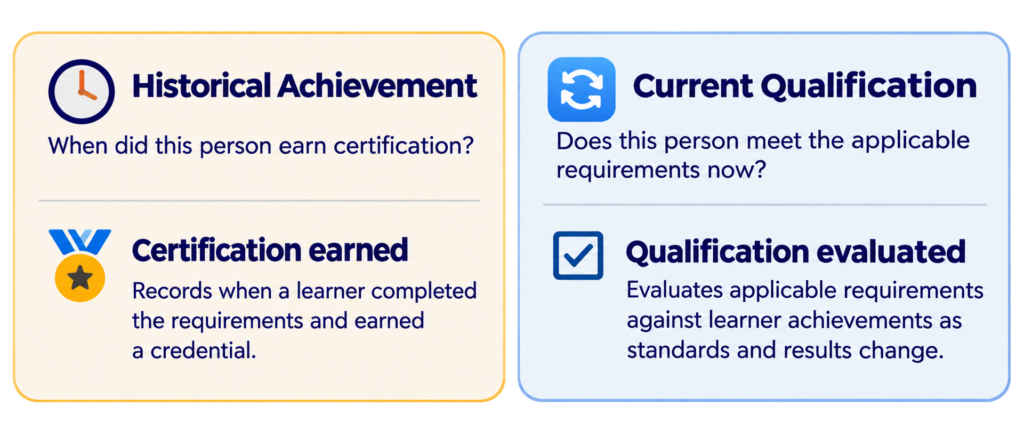
Living Certifications are certifications whose achievement status is reevaluated against applicable qualification requirements as those requirements and relevant learner results change.
Recognize past achievement while maintaining a clear view of current qualifications.
When your business changes, the knowledge required to do the job can change too. LatitudeLearning lets your organization update an existing certification to reflect new requirements, reevaluate affected learners, and provide a clear path to meeting the updated standard.
A cleaning-service franchise introduces a new piece of equipment. Certified operators understand the existing equipment, but they need additional knowledge to use the new equipment correctly.The franchisor adds a New Cleaning Equipment Operation course to its operator certification. The updated requirement becomes part of the standard against which affected operators are evaluated.The operator has not lost their existing expertise. The qualification standard has changed because the work has changed.
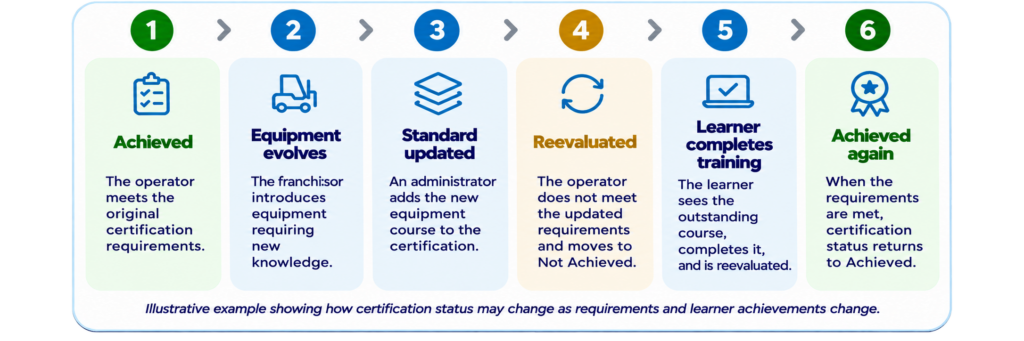
When a new lift model introduces a solar panel, the manufacturer can add the required solar-panel installation training to its existing installer certification.
Certifications are associated with position groups. With automatic calculation configured, learners in the relevant positions are evaluated against the applicable certification requirements.
Learners do not need to separately enroll in a certification or select it as a training goal before their achievement can be recognized.
Administrators control program settings for automatic calculation and whether an achievement can be end-dated when the learner no longer meets the requirements.
When a qualifying change is recorded in LatitudeLearning, affected learners are queued for certification reevaluation. Queued evaluations are processed within four hours.
Learners can see completed certification elements, percentage complete, and the specific requirements still outstanding.
When certification is lost, status changes from Achieved to Not Achieved, and an email notification is sent. When certification is regained, status returns to Achieved, with another email notification.
Not Achieved means the learner does not currently satisfy the applicable requirements. Percentage complete describes progress toward those requirements—not a measure of how competent the learner is.
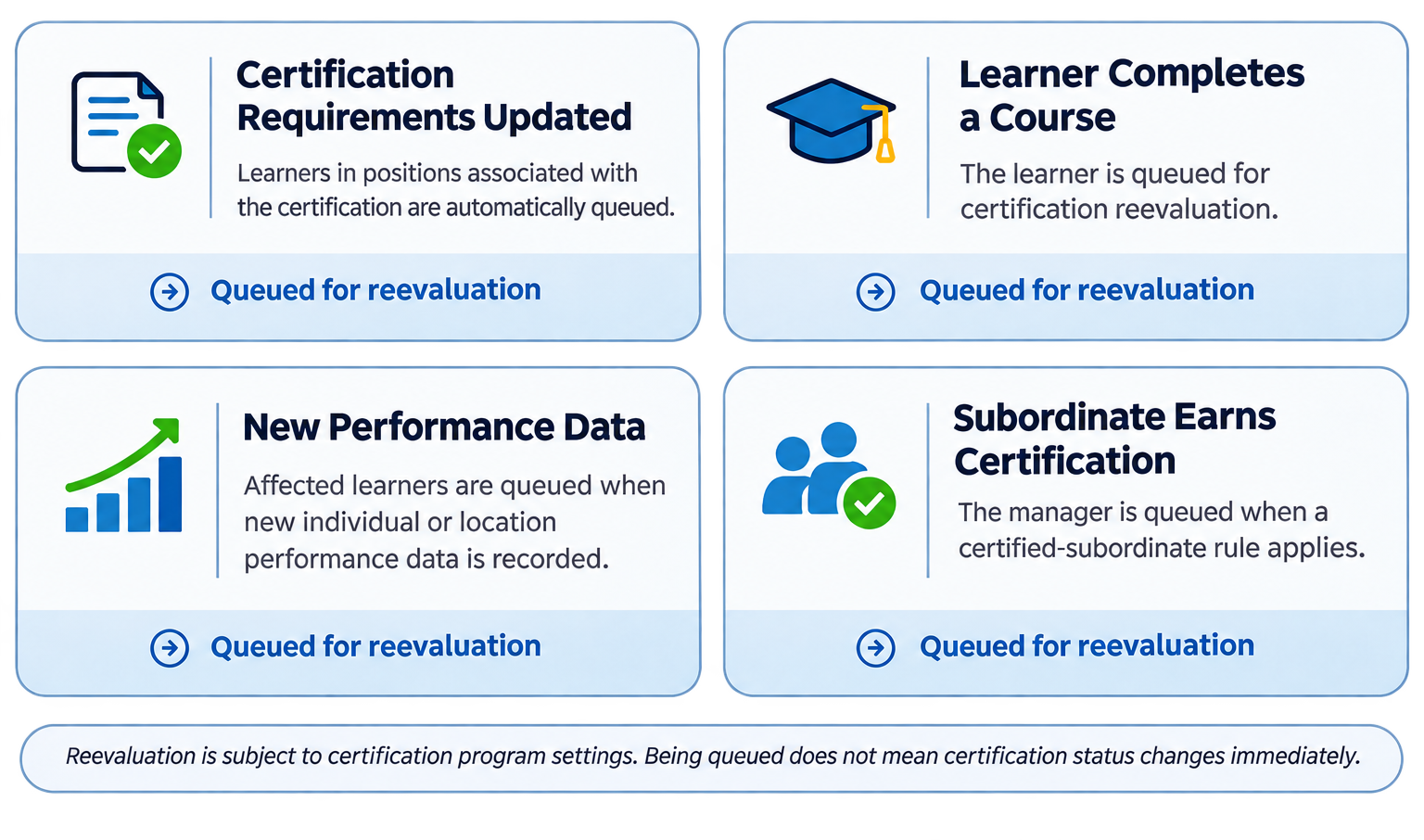
Certification evaluation determines whether a learner meets a qualification standard. Training goals and assignment rules determine the training the learner is directed to pursue.
A learner can achieve an applicable certification without selecting it as a goal. Organizations can also assign certification goals to guide development. Automatic certification evaluation does not, by itself, mean every outstanding course is automatically assigned.
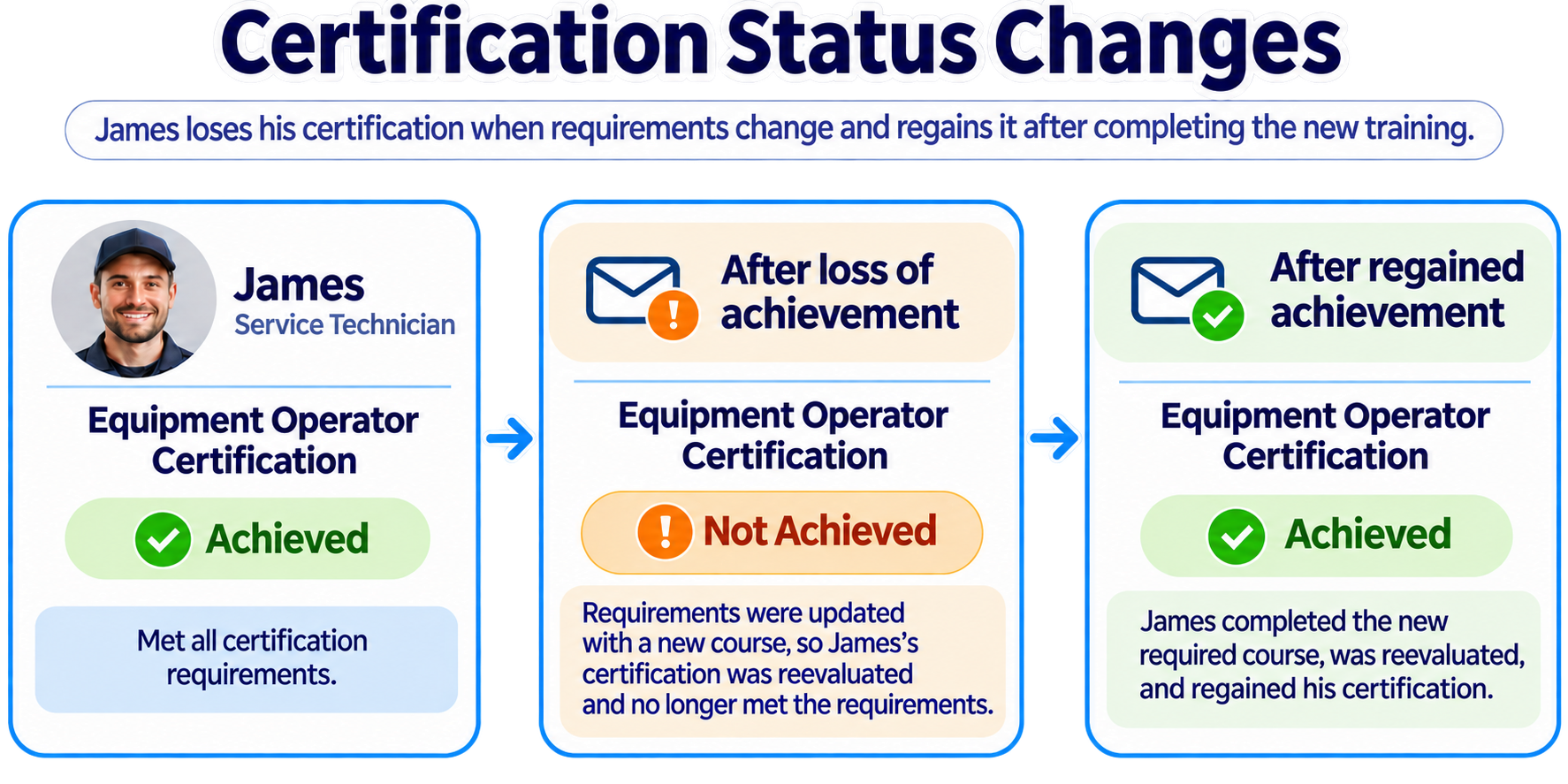
See an existing certification change when a new equipment requirement is introduced—and follow the learner’s path back to achievement.
Different responsibilities require different qualification standards.
LatitudeLearning allows organizations to combine required training, electives, performance measures, and team-development requirements within certification programs.
Performance-based requirements use the relevant metrics supplied to LatitudeLearning; integration or configuration may be needed to make those data available.
| Requirement | Example |
|---|---|
| Required courses | Complete mandatory franchise operations or product installation training. |
| Elective courses | Complete a defined selection of approved electives. |
| Individual performance | Meet individual unit-sales or sales-volume criteria for a month or quarter. |
| Location performance | Meet location sales-volume or customer-satisfaction criteria. |
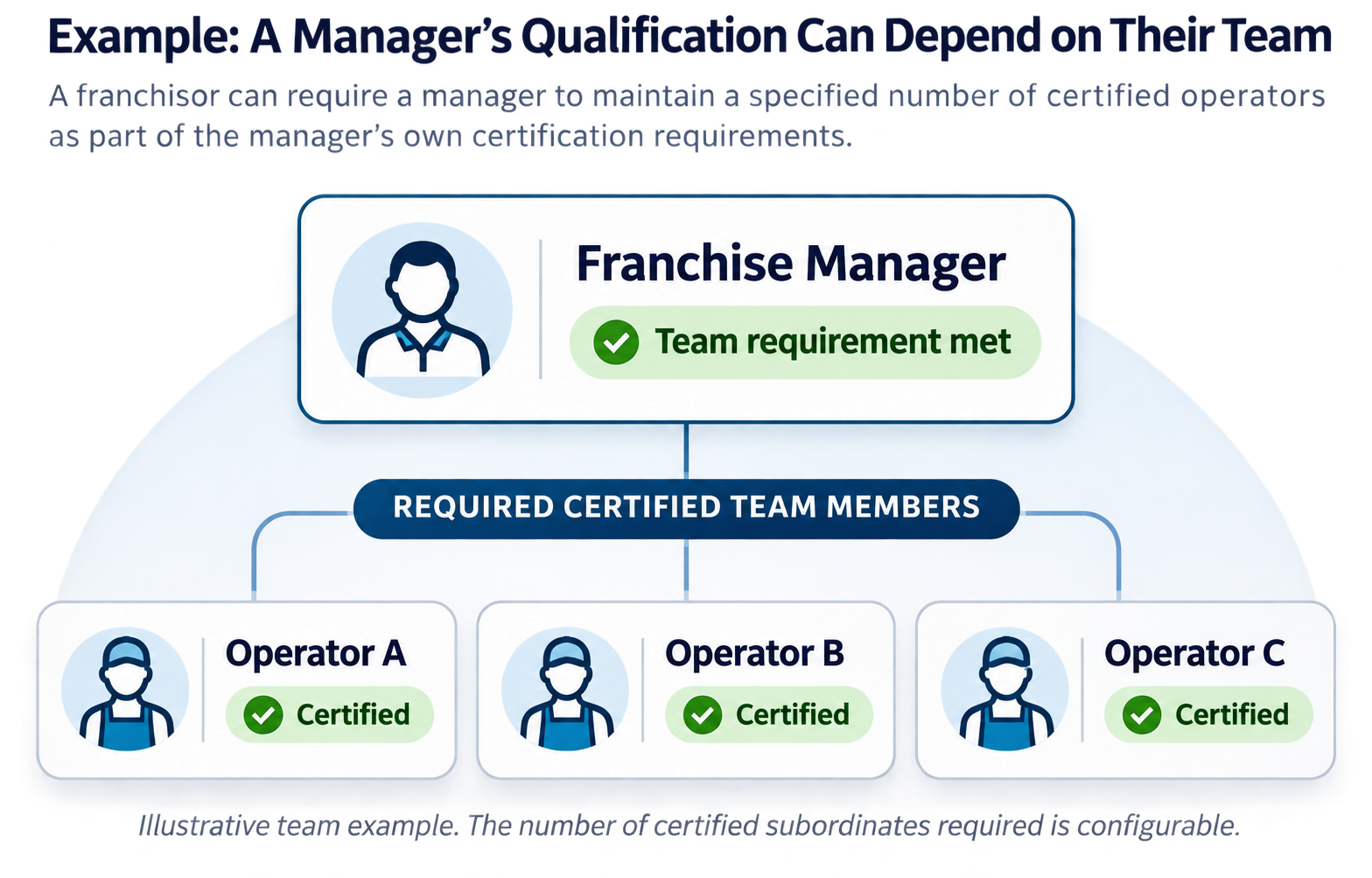
| Certified subordinates | Have a specified number of subordinates holding a defined certification. |
| Top-performer criteria | Rank within a defined top percentage for the current or latest performance period. |
Illustrative requirement examples; actual rules are configured by the organization.
A top-performer certification can recognize a learner who meets the configured ranking requirement for the current or latest reporting period. When the next period’s results become available, the learner is reevaluated and may move to Not Achieved if the required ranking is no longer met.
Define the requirements that matter for the responsibility—not just a fixed list of courses.
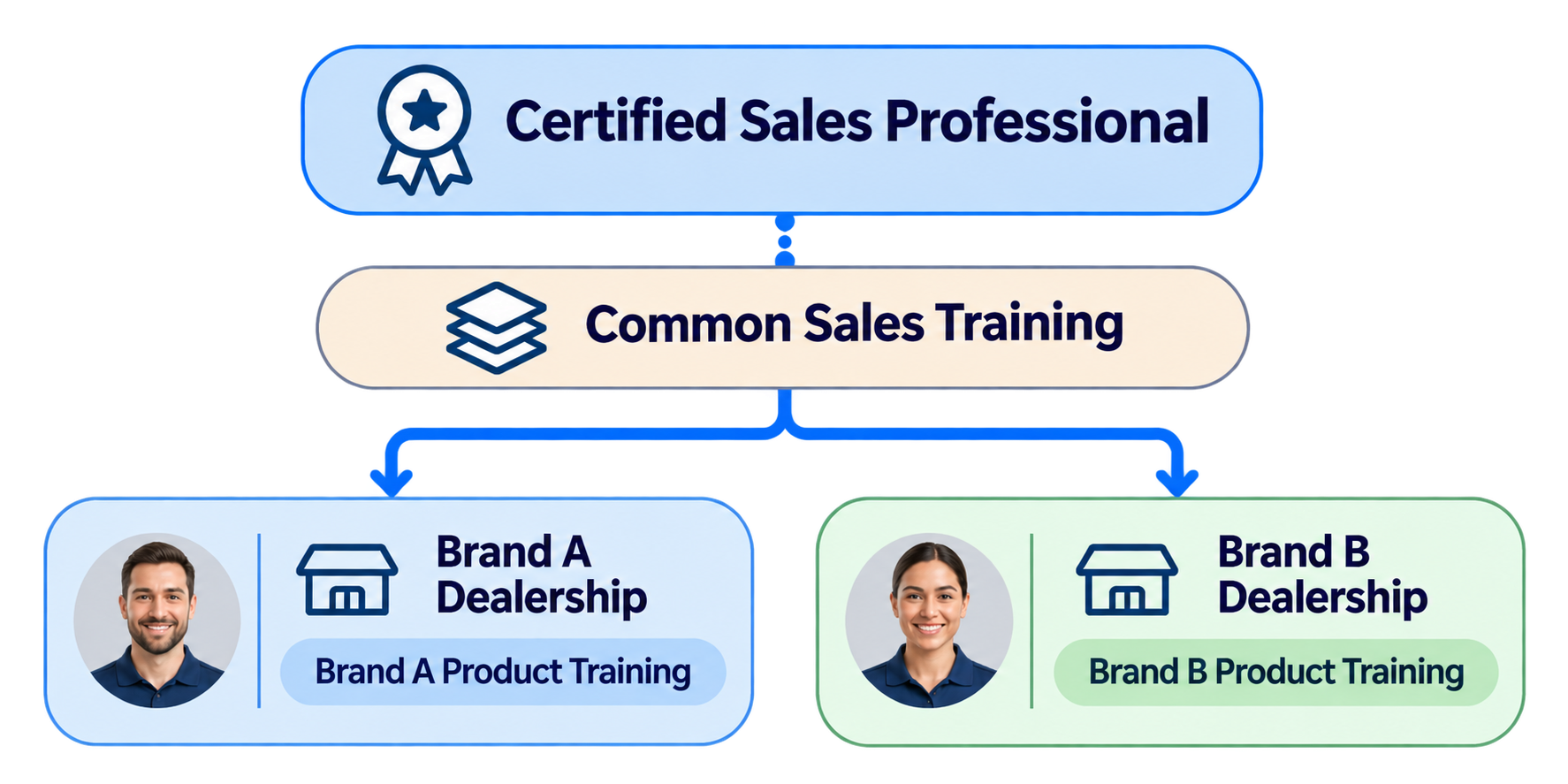
When several certifications share the same requirement, administrators should not have to maintain separate versions of it.
LatitudeLearning supports reusable rules so common requirements can have a common maintenance point.
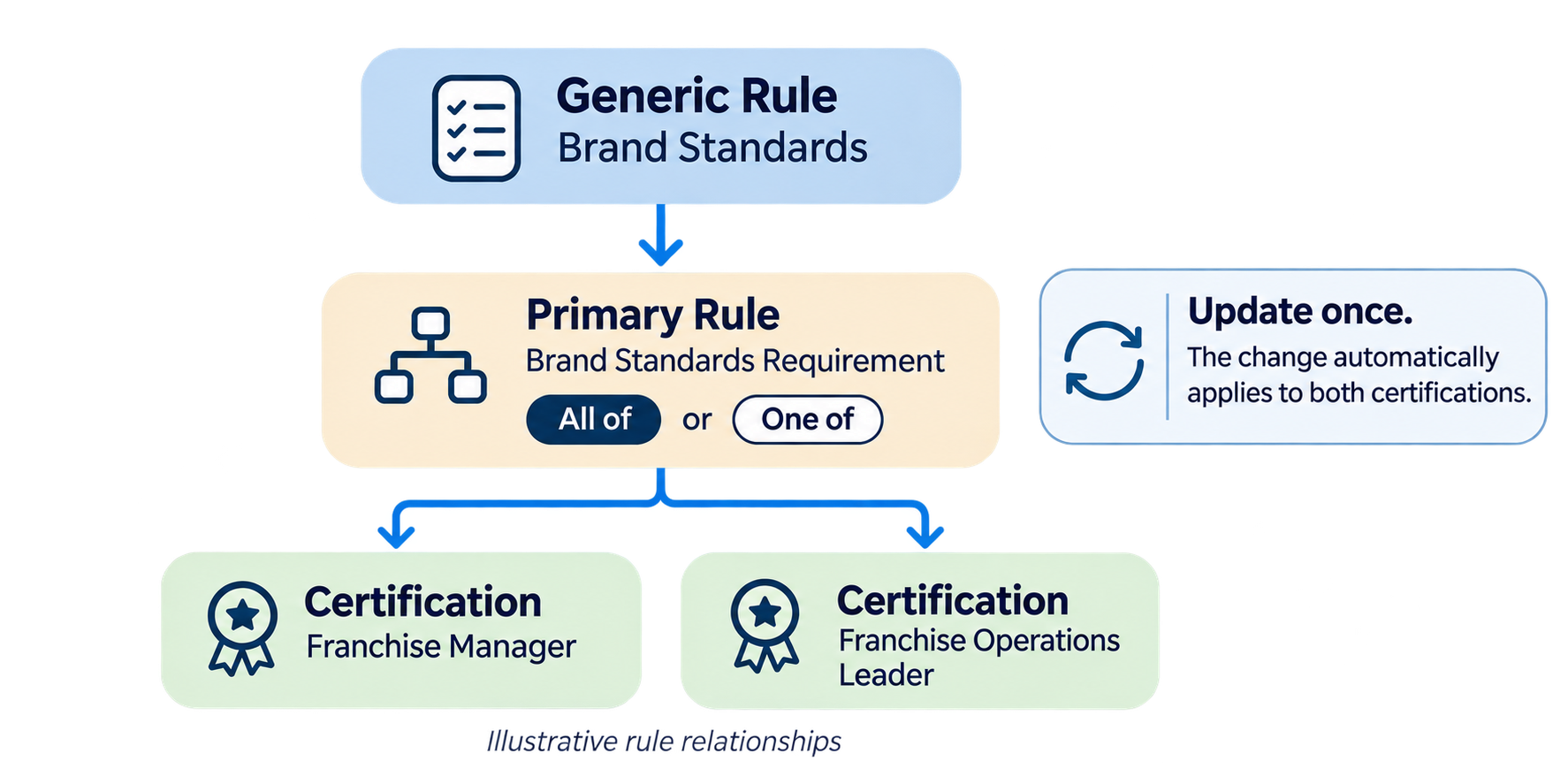
Generic Rules define reusable individual requirements. Primary Rules combine Generic Rules using supported All of or One of logic, and can also be reused across certifications.
A franchisor uses one Brand Standards rule in both its Franchise Manager and Franchise Operations Leader certifications.
When that requirement changes, the administrator updates the shared definition rather than editing duplicate configurations.
Define common requirements once. Keep them consistent wherever they are used.
Portal administrators can use Report Writer to choose a reporting area, select columns, define filters, and organize reports into folders. Share report definitions with appropriate roles so other authorized users can run them within their permitted scope.
Use run-time filters for questions that change from one review to the next. Keep the criteria that must remain consistent in the report definition.
Available reporting areas cover course activity, accreditation information, account and organizational data, and assessment information. Report Writer produces downloadable results for use in your organization’s reporting and analysis process.
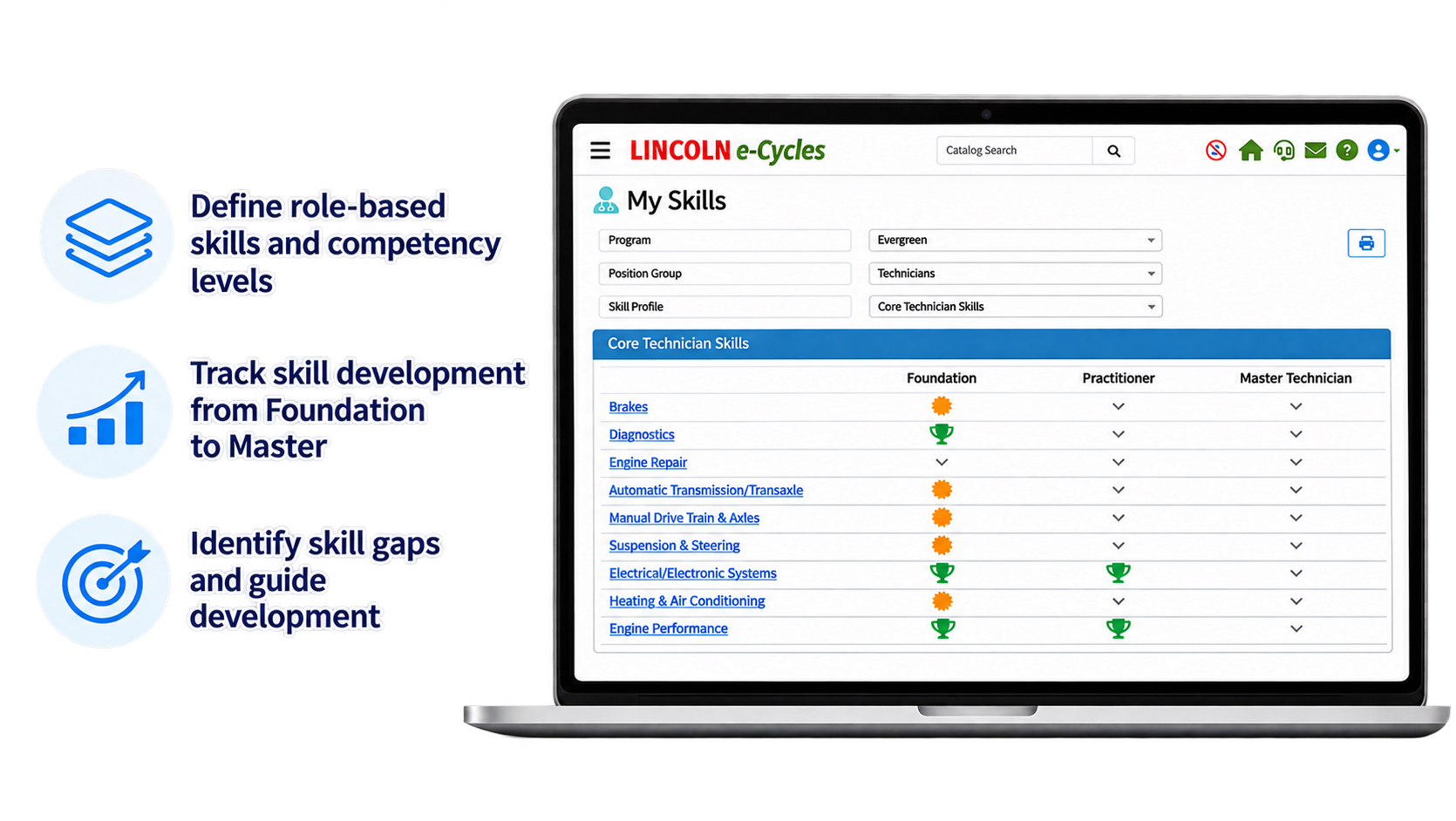
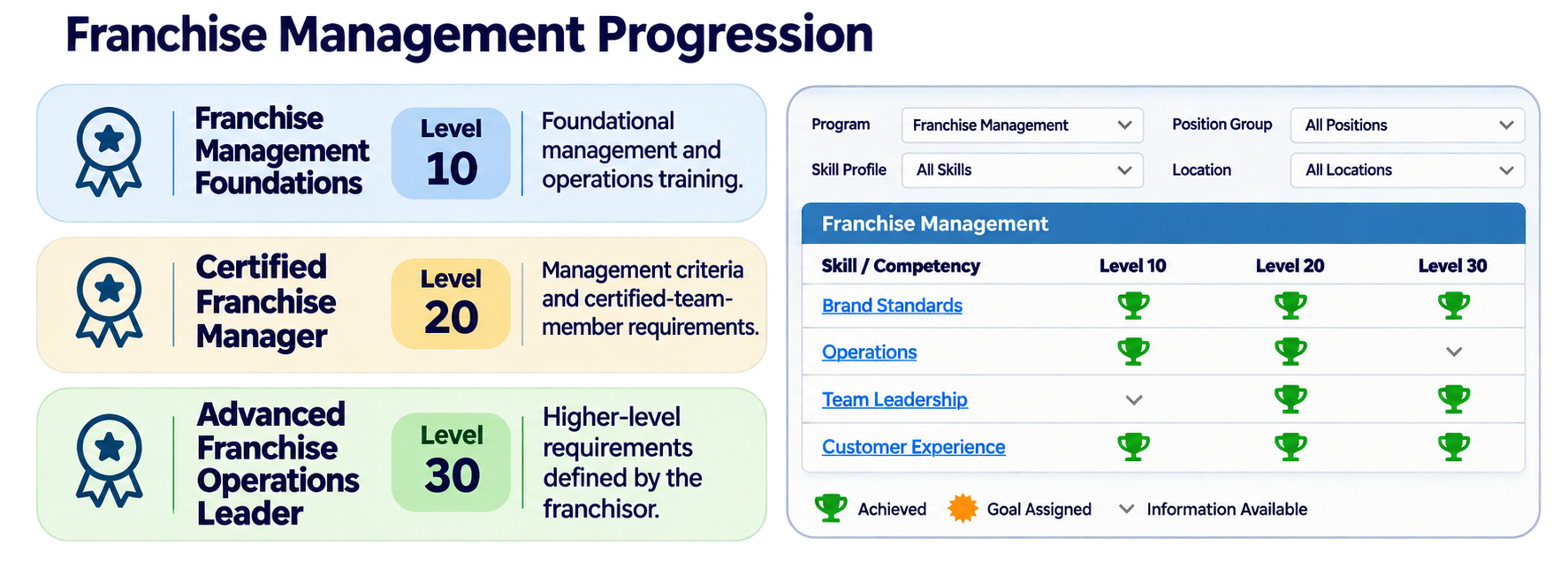
LatitudeLearning allows each certification to have a numeric level, giving organizations a way to represent progressively advanced qualifications.
The level identifies progression; the certification rules determine what the learner must accomplish.
The My Learning page shows the highest-level certification a learner has achieved. Organizations can also report on the highest certification level achieved.
Each level belongs to a separate certification record. A numeric level does not automatically make one certification a prerequisite for another; any dependency must be defined in the requirements.
Administrators can create certification structures directly from supported learning paths, providing a starting point for course-based qualification programs.
Certifications can be assigned as training goals, giving learners a qualification to pursue. A goal guides development; evaluation determines achievement.
Your organization may need to manage several qualification initiatives at once.
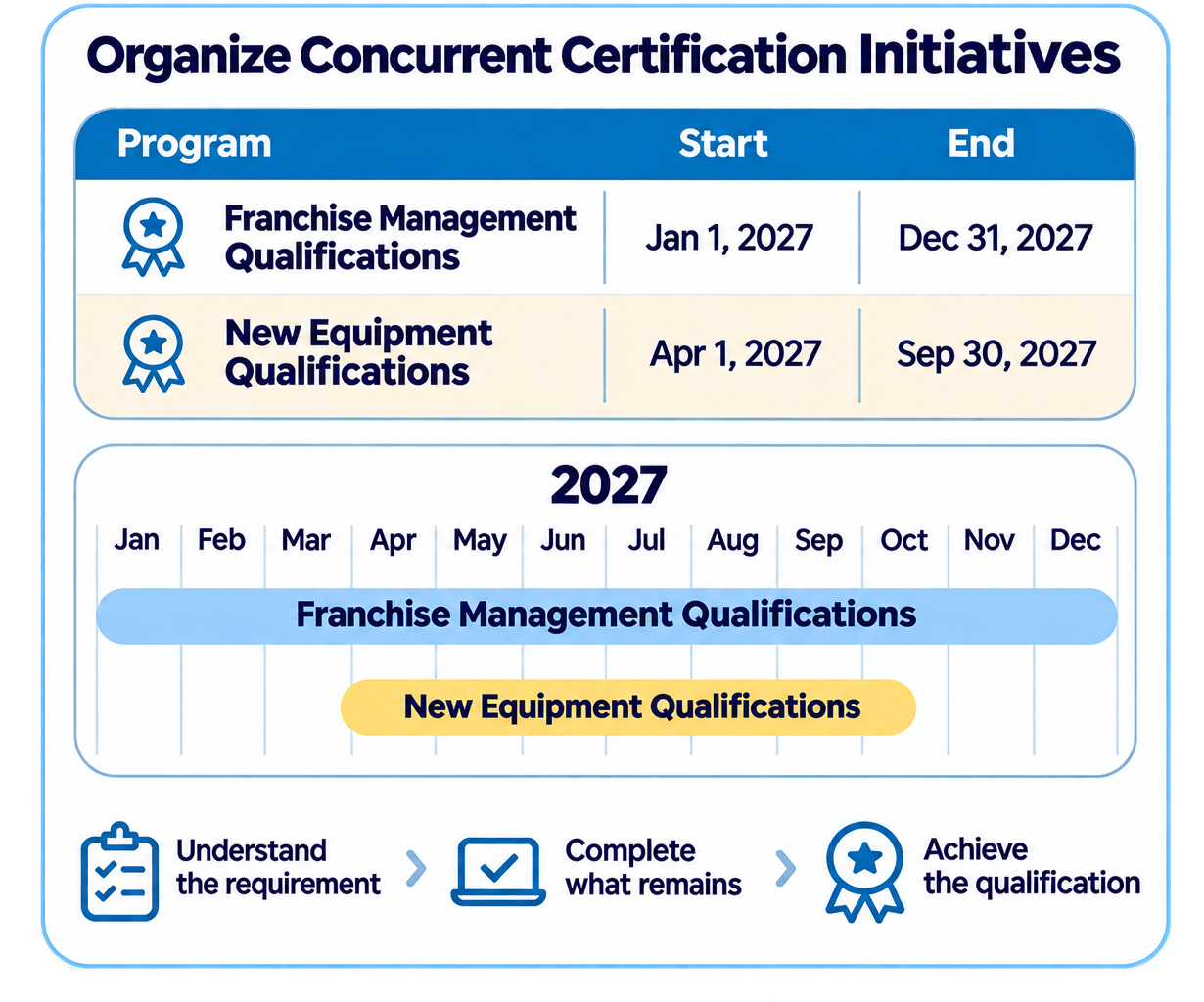
LatitudeLearning lets administrators organize certifications into programs with separate start and end dates. Multiple programs can operate concurrently.
Certification rules define what must be achieved. Program dates define when the associated certification can be earned.
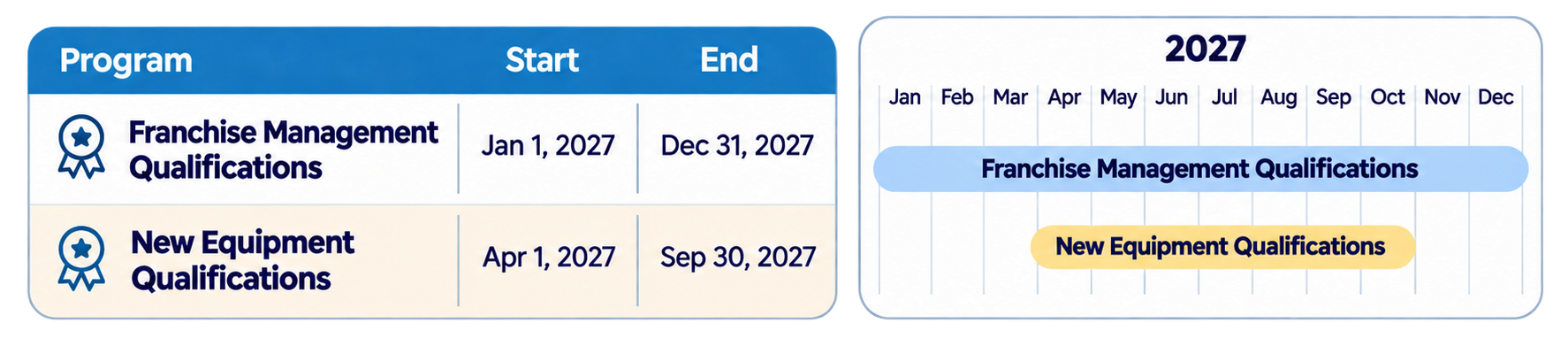
Closing a program ends the opportunity to earn its associated certification during that program period. It does not erase historical achievements. Program timelines are separate from whether a learner currently satisfies applicable qualification requirements.
Manage different qualification initiatives and timelines within one LMS.
Your equipment, products, and operating requirements evolve. Your certification standards should keep pace.
LatitudeLearning helps you update qualification requirements, reevaluate applicable learners, communicate achievement changes, and show people what they need to complete.
See how Living Certifications, reusable rules, brand-specific requirements, progressive achievements, and concurrent programs work together across your franchise, dealer, distributor, and partner networks.