Executive Overview
Leadership is often measured by visible outcomes. Organizations evaluate engagement, productivity, retention, financial performance, and culture, looking for evidence that leaders are moving people and businesses in the right direction. While those outcomes matter, they rarely reveal where effective leadership actually begins. Strong leadership is not simply the result of better communication techniques or management processes. It begins much earlier, with an individual’s ability to understand their own thinking, regulate their emotional responses, and consistently lead with intention regardless of external circumstances.
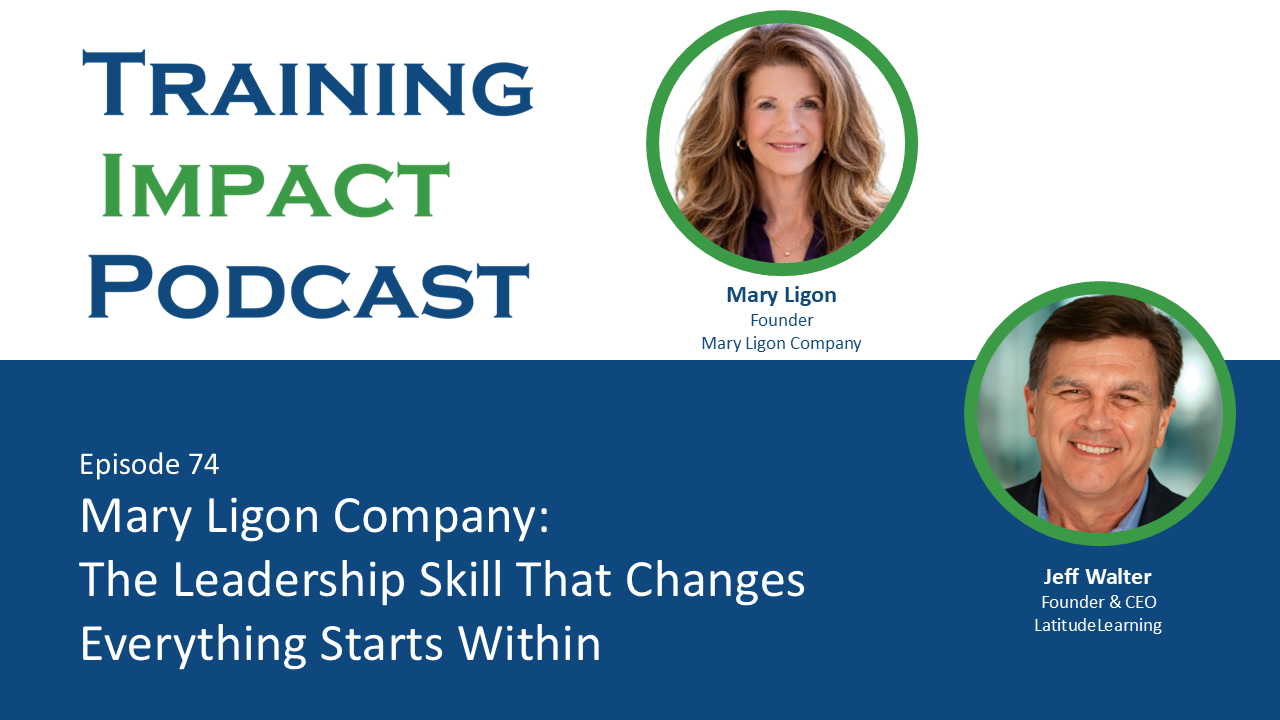
That philosophy defines the work of Mary Ligon Company. Rather than treating leadership as a collection of management skills, the firm approaches leadership development as the process of strengthening the person behind the position. Executives, entrepreneurs, managers, and emerging leaders all face moments where uncertainty, pressure, and competing priorities influence the quality of their decisions. By helping leaders develop greater self-awareness, emotional resilience, and intentional communication, Mary Ligon Company enables organizations to create healthier cultures, stronger teams, and more sustainable business performance.
The firm’s approach recognizes an important reality facing organizations today. Operational excellence, strategic planning, and technical expertise remain essential components of business success, but they cannot fully compensate for inconsistent leadership. Leaders establish the emotional climate in which employees perform. They influence how conflict is resolved, how change is accepted, how vision is communicated, and whether individuals feel connected to something larger than their individual responsibilities. Developing those capabilities requires more than management instruction. It requires helping leaders understand themselves first.
Mary Ligon Company approaches leadership through the belief that people follow confidence, clarity, and authenticity long before they follow authority. Position alone rarely inspires commitment. Employees choose to invest their energy when they trust the individual providing direction, understand the vision being presented, and believe their contributions matter.
This perspective shifts leadership development away from simply improving management techniques and toward developing leaders capable of creating meaningful relationships with the people around them. Great leaders recognize potential before others recognize it themselves. They observe strengths that may still be hidden, encourage growth through coaching, and create environments where employees become increasingly confident in their own abilities. Leadership, in this sense, becomes less about directing activity and more about developing people.
Communication also takes on a different meaning within this philosophy. Every conversation reinforces or weakens organizational culture. Leaders are constantly communicating expectations, values, priorities, and purpose, even when they are not consciously attempting to do so. The way leaders respond during difficult conversations often influences organizational trust far more than the decisions themselves. Calm, thoughtful communication creates confidence. Reactive communication creates uncertainty.
The organization therefore views leadership as an ongoing practice rather than a collection of isolated skills. Technical competencies remain important, but they become significantly more effective when supported by emotional maturity, self-awareness, and the ability to remain composed under pressure. Those qualities influence every interaction throughout an organization, creating cultures where people feel respected, supported, and motivated to contribute.
The origins of Mary Ligon Company’s philosophy are deeply connected to Mary’s own professional and personal journey. Before establishing the firm, she spent years studying communication, leadership, clinical hypnotherapy, and human behavior, gradually developing an understanding of how thought patterns influence personal performance and organizational effectiveness.
A significant turning point came through her own experience overcoming severe panic attacks. Rather than accepting those experiences as permanent limitations, she began exploring why the human mind responds to stress the way it does. That pursuit led her into extensive study of meditation, hypnosis, behavioral change, and emotional regulation. Over time, those disciplines evolved into practical methods for helping individuals recognize and change the unconscious thought patterns influencing their daily decisions.
What distinguishes this background is not simply the breadth of knowledge it provided, but the practical perspective it created. The leadership principles developed through Mary Ligon Company are not abstract theories disconnected from real-world challenges. They emerged through years of applying behavioral techniques to genuine business situations involving executives, entrepreneurs, organizational leaders, and professionals seeking to perform at higher levels.
Today, the organization works with both individuals and leadership teams, tailoring development programs to each organization’s unique circumstances. Some engagements involve coaching senior executives responsible for organizational transformation. Others support entrepreneurs navigating the transition from employee to business owner or managers preparing for increased leadership responsibility. Across every engagement, however, the objective remains remarkably consistent: strengthening the internal capabilities that allow leaders to create lasting external impact.
One of the defining characteristics of Mary Ligon Company’s work is its broad relevance across industries and organizational structures. Leadership challenges rarely depend upon market sector. They emerge wherever people are responsible for influencing others, making decisions under pressure, and creating environments where individuals perform at their best.
The firm’s clients include executives, CEOs, entrepreneurs, solopreneurs, managers, aspiring leaders, and professionals whose success depends upon their ability to influence people effectively. Even individuals working independently face leadership challenges because they remain responsible for directing their own businesses, communicating their value, managing professional relationships, and making strategic decisions that shape long-term success.
Organizations likewise seek leadership development for a wide variety of reasons. Some are experiencing rapid growth and need leaders capable of maintaining organizational culture as new employees join the business. Others recognize that technical expertise alone no longer prepares managers for increasingly complex workplace environments. Many simply understand that sustainable performance depends upon developing leaders who can build trust, coach employees, communicate effectively, and guide organizations through continuous change.
These same principles naturally extend into franchise organizations, customer education initiatives, dealer networks, and other extended enterprise learning environments. Distributed business models rely heavily on individuals who must lead consistently across multiple locations while maintaining alignment with broader organizational objectives. Operational systems provide consistency, but leadership creates commitment. Organizations investing in franchise development, customer education, and partner enablement increasingly recognize that scalable growth depends not only on transferring knowledge but also on developing leaders capable of creating engaged, high-performing cultures across every part of the enterprise.
Organizations rarely invest in leadership development simply because they want managers to communicate more effectively. Leadership represents a business investment expected to produce measurable organizational outcomes. Improved employee engagement, stronger retention, healthier cultures, increased productivity, better decision making, and sustainable growth all depend upon leadership capable of creating environments where people consistently perform at their highest potential.
Mary Ligon Company approaches these objectives by recognizing that organizational performance begins with individual performance. Leaders continually influence how employees interpret challenges, respond to change, and engage with organizational goals. Every interaction either strengthens or weakens confidence in the organization’s direction.
This perspective transforms leadership into an ongoing process of creating belief. Leaders communicate purpose as much as process. Rather than simply assigning responsibilities, they help people understand why their work matters and how individual contributions support broader organizational objectives. Employees who believe in the organization’s direction become significantly more engaged than those who merely complete assigned tasks.
The result is leadership development that aligns naturally with modern learning strategies emphasizing engagement, ownership, and meaningful application. Whether supporting franchise organizations, customer education initiatives, or internal leadership development programs, the underlying objective remains the same: creating leaders capable of developing people while simultaneously strengthening organizational performance.
One of the distinguishing characteristics of Mary Ligon Company’s leadership methodology is its recognition that many organizational problems originate long before they become visible through declining engagement scores, turnover, or performance metrics. In many cases, the underlying issue is not a lack of knowledge or technical ability. Instead, it is the way leaders respond when pressure begins to influence their thinking.
As responsibilities increase, leaders face a constant balancing act. Senior executives are expected to deliver financial performance while navigating changing markets and organizational priorities. Middle managers often find themselves balancing executive expectations with the needs and concerns of their teams. Entrepreneurs and business owners carry the additional responsibility of protecting investments, supporting employees, and making decisions that directly influence the future of their organizations. These competing demands create continuous pressure, making emotional resilience just as important as technical expertise.
Under these circumstances, leaders frequently become reactive without realizing it. Fear of failure, concern about maintaining credibility, or anxiety surrounding difficult decisions can subtly change communication styles and decision making. Instead of coaching, leaders begin directing. Instead of listening, they interrupt. Rather than building trust, they become increasingly focused on protecting authority or controlling outcomes. These reactions rarely stem from poor intentions. They emerge because stress influences behavior long before individuals consciously recognize what is happening.
Mary Ligon Company’s methodology addresses these challenges by helping leaders identify those automatic reactions and replace them with intentional responses. Rather than attempting to eliminate pressure, the goal is to increase a leader’s capacity to remain thoughtful, emotionally balanced, and focused regardless of the circumstances surrounding them. Leaders who consistently operate from that position create healthier relationships, better communication, and stronger organizational cultures.
The learning philosophy employed by Mary Ligon Company aligns closely with evidence-based approaches to adult learning, even though its origins are rooted in executive coaching and behavioral development rather than traditional instructional design.
Adult learners bring substantial professional experience into every learning environment. They are motivated less by acquiring information and more by solving meaningful problems they encounter in their daily work. Leadership development therefore becomes most effective when new concepts are immediately connected to authentic workplace situations. Rather than focusing on abstract management theories, the firm’s coaching process addresses hiring decisions, conflict resolution, communication challenges, organizational change, and the emotional demands associated with leadership.
Reflection serves as a cornerstone of this learning process. Leaders are encouraged to examine how they interpret events, the stories they tell themselves during difficult situations, and the assumptions influencing their decisions. Increasing self-awareness allows individuals to recognize patterns that previously operated automatically, creating opportunities to replace habitual reactions with more thoughtful behaviors.
Experiential learning also plays an important role throughout the coaching process. Rather than simply discussing confidence, leaders practice ways of creating confidence. Visualization exercises, emotional regulation techniques, and structured reflection allow participants to experience different ways of thinking rather than simply hearing about them. One particularly powerful technique encourages leaders to mentally move beyond a stressful event and imagine themselves shortly after its successful completion. This subtle shift changes the brain’s focus from anticipating failure to envisioning success, allowing leaders to make decisions from a calmer and more confident state.
Equally important is the firm’s emphasis on coaching rather than instruction. Effective leaders become multipliers of learning by helping others recognize strengths, develop confidence, and solve problems independently. This creates a culture where leadership development continues well beyond formal coaching engagements because leaders begin applying the same developmental mindset throughout their organizations.
Mary Ligon Company’s methodology closely reflects the principles emphasized within the LatitudeLearning Training Program Roadmap, particularly the progression established through Stage 1 and Stage 2 of organizational capability development.
Stage 1 focuses on creating clarity, purpose, and alignment. Learners perform more effectively when they understand not only what is expected of them, but also why their work contributes to a broader organizational mission. This concept appears throughout Mary’s leadership philosophy. Effective leaders continually communicate purpose, helping employees understand how individual responsibilities contribute to organizational success. Vision becomes a practical leadership tool because it creates alignment long before specific tasks are assigned. People are significantly more engaged when they understand the destination as well as the path leading toward it.
Stage 2 centers on knowledge acquisition through guided practice, coaching, reinforcement, and meaningful application. Mary Ligon Company’s coaching model reflects these same principles by recognizing that leadership cannot be mastered through information transfer alone. New behaviors develop through repeated practice, reflection, reinforcement, and real-world application. Long-term coaching relationships allow leaders to continuously refine their thinking while applying new approaches to authentic organizational situations.
This philosophy also aligns naturally with extended enterprise learning initiatives. Organizations supporting franchise owners, channel partners, customers, or dealer networks must develop more than operational consistency. Sustainable growth depends upon helping distributed leaders build trust, communicate vision, and create consistent experiences regardless of location. Leadership development therefore becomes a strategic component of scalable business performance rather than an isolated management activity.
The impact of Mary Ligon Company’s work extends beyond individual leadership improvement to influence entire organizational cultures. Leaders who develop greater emotional resilience communicate more effectively, navigate conflict with greater confidence, and establish workplace environments where employees feel supported rather than managed. These cultural improvements frequently translate into stronger engagement, healthier collaboration, and more consistent organizational performance.
Another meaningful indicator of the firm’s effectiveness is the longevity of its coaching relationships. Many executive clients continue working with Mary over extended periods, reflecting the ongoing value leadership coaching provides as organizations evolve and new challenges emerge. Leadership is not viewed as a competency completed through a single workshop. It is a continuous process of refinement requiring regular reflection, accountability, and intentional development.
The principles developed through Mary Ligon Company also demonstrate remarkable scalability. Whether applied within executive teams, entrepreneurial ventures, franchise organizations, customer education programs, or distributed partner networks, the underlying concepts remain consistent because they address universal aspects of human behavior. Organizations may differ in products, services, and operational models, but leadership always depends upon communication, trust, emotional intelligence, and the ability to help people perform at their best.
Perhaps the greatest organizational impact lies in creating leaders who become developers of other leaders. Rather than concentrating authority at the top of the organization, effective leadership creates additional leadership capacity throughout the business. Teams become more capable, managers become stronger coaches, and organizations become increasingly resilient because leadership is distributed rather than centralized.
Mary Ligon Company represents a modern approach to leadership development that recognizes an often-overlooked truth. Organizational success begins long before performance metrics, operational systems, or strategic plans produce measurable results. It begins with leaders who understand themselves well enough to guide others with confidence, empathy, and intention.
By combining behavioral science, executive coaching, communication, and practical leadership development, the firm helps organizations strengthen the human side of business performance. Leaders learn to manage pressure without becoming reactive, communicate vision without relying solely on authority, and build cultures where employees willingly contribute their talents because they believe in the direction being created.
As organizations continue navigating increasingly complex business environments, leadership development will become less about teaching managers what to do and more about helping leaders become the kind of people others genuinely want to follow. Mary Ligon Company demonstrates that sustainable leadership is built from the inside out. When leaders strengthen their own thinking, emotional resilience, and ability to develop others, they create organizations capable of achieving lasting success while fostering cultures built on trust, purpose, and continuous growth.
For more information on Mary Ligon Company, visit their website – https://www.maryligonco.com/