
The transition from education into working life is often treated as a straightforward progression. Students complete an academic or vocational program, enter the workforce, and begin applying what they have learned. In practice, the transition is rarely so simple. Young adults can leave school with technical knowledge and academic credentials while having had limited opportunities to develop the financial judgment, relationship-building ability, communication skills, self-awareness, and professional habits that influence what happens next.
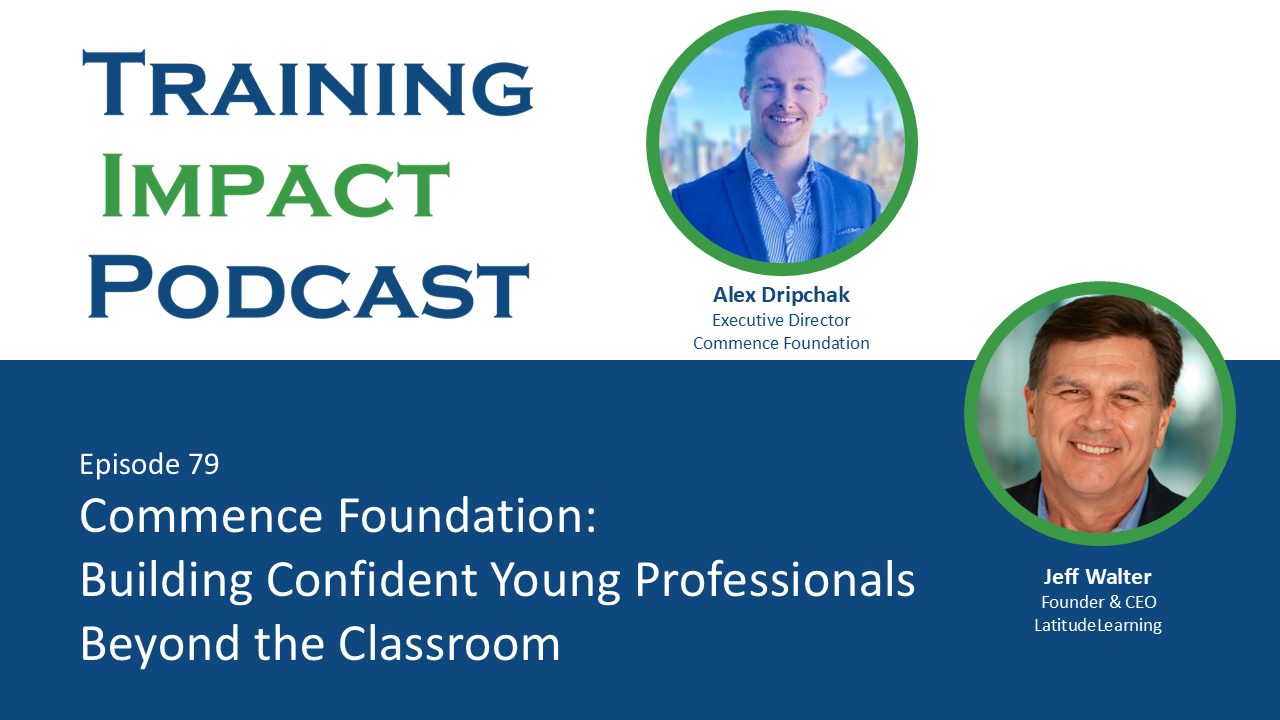
Commence Foundation was created to address this space between formal education and the practical demands of a career. Originally established as Commence in 2020 and later converted into a 501(c)(3) nonprofit organization, the foundation works with students and young adults through seminars, small cohorts, competitions, and other learning experiences. Its programs bring experienced professionals into educational settings to teach subjects they have applied in their own careers. The intent is not to replace traditional education, but to complement its structure with practical development rooted in real-world experience.
This approach has relevance beyond schools and colleges. Franchise organizations, partner networks, dealerships, and other distributed businesses frequently employ people near the beginning of their careers. These systems may provide an individual’s first sustained exposure to professional expectations, customer relationships, workplace communication, performance standards, and financial independence. As a result, the challenge addressed by Commence Foundation intersects with a broader question facing extended enterprise learning: how should organizations prepare people not only to perform a particular task, but also to develop the capabilities that support performance across changing roles and responsibilities?
The Commence Foundation model offers one perspective. Its programs are built around compounding skills, capabilities whose value can increase as they are practiced and applied over time.
Commence Foundation emerged from an effort to identify important professional and personal lessons that frequently exist outside traditional education. Formal education provides valuable structure and commitment, but students may still enter working life without exposure to some of the practical capabilities that influence how effectively they navigate careers, relationships, money, and professional opportunities.
The foundation consequently concentrates on areas that can influence both professional and personal outcomes. Its ten programs encompass financial well-being, advanced networking, productivity and peak performance, interviewing, presenting and storytelling, emotional intelligence, negotiation and persuasion, career pathing and planning, unique value propositions, and business communication.
The range of subjects reflects an important distinction in career preparation. Knowing how to perform technical work is only one dimension of readiness. Individuals must also understand how to communicate in a professional environment, establish productive relationships, present themselves to employers, negotiate, manage their resources, identify opportunities, and determine how their abilities fit into a changing career landscape.
This becomes particularly important because young people are often asked to select career directions before they have sufficient exposure to understand the range of occupations available to them. Many adults eventually work in industries or professions they did not know existed when they were in high school or college. A career-readiness system therefore cannot depend entirely on preparing an individual for a destination selected at the beginning of the process. It must also provide transferable capabilities that remain useful as new possibilities emerge.
Within a distributed business environment, the same principle can apply to franchise training, partner development, and other forms of workforce enablement. Entry-level employees may eventually become managers, specialists, operators, business owners, or leaders. The capabilities developed early in that progression can affect how successfully they navigate later responsibilities.
Financial well-being is Commence Foundation’s most developed and frequently delivered program. Its curriculum addresses investing, employee benefits, tax strategies, money management, financial principles and mindsets, side income, and related areas.
The program illustrates the larger philosophy behind the foundation because its objective is not limited to transferring financial information. It also addresses behavior.
A central principle is the long-term effect of starting early. The foundation emphasizes compounding and delayed gratification, helping students understand that relatively modest decisions made consistently over long periods can produce significantly different outcomes later in life.
The behavioral component is particularly important. The program teaches a “pay yourself first” mindset in which investing for the future is treated as an initial financial obligation rather than something done with whatever happens to remain after spending. It also distinguishes between saving and investing, emphasizing that simply accumulating cash is different from putting resources to work toward longer-term financial objectives.
This makes financial well-being an example of a broader category of development that is difficult to classify neatly as either technical or interpersonal. Understanding an investment vehicle may involve technical knowledge. Consistently allocating money toward a future objective requires discipline. Delaying a purchase requires self-control. Establishing an investment routine requires the ability to translate knowledge into sustained behavior.
That combination helps explain the concept of compounding skills. The immediate lesson may involve finance, but the underlying behaviors can influence decision-making in other areas of life and work.
Commence Foundation also demonstrates how instructional design can influence whether learners engage with unfamiliar material.
Financial concepts can become abstract quickly, particularly for students with little previous exposure to investing. Rather than relying exclusively on terminology and definitions, the foundation uses analogies, games, visual concepts, and stories to make the subject more accessible.
One example treats investments as players on a team. Different financial assets occupy different roles based on the objective they are expected to accomplish. Some may provide greater stability, while others pursue higher returns with greater risk. Cash can function as a reserve, while other investments are expected to be actively working toward longer-term goals. The learner effectively becomes the person assembling the team and deciding which roles are necessary for the objective at hand.
The analogy does more than simplify terminology. It gives learners a familiar mental structure into which unfamiliar information can be placed. Instead of memorizing isolated definitions, they can consider the purpose each component serves within a larger system.
Commence Foundation has also experimented with AI-generated video to visualize the idea of putting money to work. In one concept, figures represented on American currency are personified as workers contributing to the growth of an estate. The underlying financial concept remains the same, but the abstraction becomes a story with recognizable characters and actions.
The instructional principle has broader implications for customer training, franchise education, and other forms of distributed learning. Complex information does not necessarily become more understandable by adding more information. In many cases, effectiveness depends on connecting an unfamiliar concept to a framework the learner already understands.
For organizations supporting geographically dispersed learners, franchise employees, customers, partners, or other external audiences, that distinction matters. Training must compete for attention while accommodating significant differences in experience and prior knowledge. A familiar analogy or well-designed story can provide the bridge between information and understanding, particularly when the underlying subject is important but not inherently engaging.
Financial well-being represents only one dimension of the Commence Foundation model. The organization’s broader curriculum addresses a collection of capabilities that influence how individuals build relationships, communicate, make decisions, manage their performance, and navigate changing career opportunities.
Advanced networking is one of the foundation’s most significant programs. Rather than defining networking as attendance at professional events or the accumulation of contacts, the curriculum approaches network building as a skill based on authenticity, reciprocity, adding value, and developing advocates. The distinction is important because it shifts the emphasis from transactional interaction toward relationship development.
The same philosophy extends into productivity and peak performance, where the curriculum incorporates purpose, energy, and clarity. Additional programs address interview excellence, presenting and storytelling, emotional intelligence, negotiation and persuasion, career pathing and planning, unique value propositions, and business communication.
Together, these areas create a broader definition of readiness. A person may understand the technical requirements of a job while still struggling to articulate personal value, communicate effectively in a professional setting, build trusted relationships, negotiate, or determine which opportunities align with individual strengths. Commence Foundation addresses those capabilities as part of the same developmental continuum rather than treating them as secondary to technical preparation.
The terminology used to describe these capabilities can itself create challenges. The traditional label of “soft skills” can imply that communication, discipline, relationship building, emotional intelligence, and similar capabilities are less consequential than technical knowledge. Commence Foundation instead uses language such as essential skills and compounding skills to reflect their continuing value.
The distinction has direct relevance for training and development. Technical skills can enable someone to perform a particular task, but the ability to communicate, collaborate, build trust, exercise discipline, and adapt to new circumstances influences how effectively that technical knowledge is applied. These capabilities can also remain relevant as a person moves from one job or responsibility to another.
Commence Foundation’s instructional model is based in part on bringing experienced practitioners into educational environments. The professionals teaching the material have direct experience in the areas they address, creating a connection between concepts and their application outside the classroom.
That structure is significant because the subjects themselves frequently depend on application. Networking cannot be fully developed by defining networking. Business communication requires understanding how professional writing differs from academic writing. Interviewing involves presenting experience and value in a particular context. Negotiation requires judgment about people, objectives, and competing interests. Productivity becomes meaningful when learners can connect principles with the way they actually organize their time and energy.
The organization therefore uses multiple learning formats rather than relying on a single delivery model. Financial well-being is currently delivered in an approximately six-hour seminar format, although the material could expand into a semester-length experience with greater hands-on participation. Networking is generally delivered as an approximately four-hour seminar and can be condensed into a shorter session. Several other programs are delivered in formats of three hours or less, while the organization’s larger programs can be extended into a series of seminars or a more substantial course experience.
Virtual delivery is also part of the model, alongside in-person programs at schools and community colleges. This flexibility creates different ways to introduce the same underlying capabilities depending on the audience, available time, and institutional setting.
For distributed organizations, this combination of structured content and flexible delivery has parallels with extended enterprise training. Franchise networks, partner ecosystems, customer communities, and other decentralized audiences rarely learn under identical conditions. Some participants may need substantial development, while others need shorter interventions at particular stages of their relationship with the organization.
The challenge is therefore not simply producing content. It is determining what development is appropriate, when it should occur, and how the learning experience can remain relevant across different levels of experience and responsibility.
One of the strongest themes within the Commence Foundation model is that information alone is insufficient when the desired outcome depends on behavior.
The financial well-being curriculum demonstrates this clearly. Understanding compounding is different from beginning to invest. Knowing the value of delayed gratification is different from practicing it. Recognizing the importance of networking is different from consistently building relationships through reciprocity and value. Understanding productivity principles is different from establishing habits that improve personal performance.
The same distinction applies throughout organizational training. An employee can complete a course without changing behavior. A franchise employee can understand a customer-service standard without consistently applying it. A partner can learn the mechanics of a product without developing the communication skills necessary to explain its value. A new manager can understand a leadership framework without possessing the emotional intelligence required to use it effectively.
This creates an important connection between readiness and enablement. Effective learning systems must address more than whether information has been delivered. They must consider whether learners have opportunities to understand the material, connect it with familiar experiences, practice relevant behaviors, and apply what they have learned.
Commence Foundation’s use of small cohorts and hands-on learning reflects this need for participation. The organization describes a “done with you” approach for more extensive learning experiences, particularly when a topic warrants greater depth. That distinction recognizes that certain capabilities are difficult to develop through passive exposure alone.
For organizations developing employees, franchise teams, partners, or customers, the principle is similar. A scalable learning infrastructure can increase access to training, but scale should not be confused with simple content distribution. The larger objective is to create a pathway through which information becomes usable capability.
Commence Foundation is still developing the longitudinal evidence necessary to understand the full impact of its programs over time. The organization has been serving students for several years, but its transition to a nonprofit model and full-time organizational focus are comparatively recent.
Early participant feedback has nevertheless provided indicators of how learners perceive the experience. Survey results cited by the organization show a 100 percent likelihood of participants recommending the programming, while 93 percent reported that participation significantly increased their positive feelings toward their school. The organization also acknowledges that the number of data points remains limited and that longer-term measurement is still developing.
That distinction matters because many of the outcomes targeted by the foundation are inherently long term. The consequences of beginning to invest earlier, developing a professional network, improving communication, learning to negotiate, or becoming more deliberate about career planning may unfold over years rather than immediately after a learning experience.
This presents a familiar measurement challenge for learning and development organizations. Completion rates and immediate participant feedback are relatively easy to capture. Changes in behavior, career progression, financial decisions, relationship quality, retention, and long-term performance require a much longer measurement horizon.
The concept of compounding skills suggests that the most significant effects may emerge gradually. A networking skill developed early may lead to a relationship that creates an opportunity years later. Stronger business communication may influence advancement across several roles. Financial habits established at the beginning of a career may eventually create flexibility that would have been impossible to predict at the time the behavior began.
For extended enterprise environments, this perspective encourages a lifecycle view of training impact. The value of development does not necessarily end when onboarding is complete or when a learner passes an assessment. Some capabilities become more valuable precisely because they continue to be applied across repeated situations.
The Commence Foundation model also raises a broader question about what organizations expect training to accomplish.
Workplace learning is frequently designed around organizational requirements. Employees need technical knowledge, franchise locations need operational consistency, partners need product expertise, and customers need enough knowledge to use a product effectively. These are legitimate objectives, but they represent only one side of the learning relationship.
Development can also create value that belongs directly to the learner.
Financial judgment, communication, emotional intelligence, negotiation, relationship building, productivity, and career planning can improve job performance, but their usefulness does not disappear when an individual leaves a particular role. They can affect future employment, personal relationships, financial stability, and the ability to navigate unfamiliar circumstances.
That makes these capabilities fundamentally different from training that exists only to support a particular process or system.
For distributed organizations, this creates an opportunity to think more broadly about enablement. A franchise system, for example, may need frontline employees to understand operating procedures and customer-service expectations. Yet development in communication, conflict resolution, financial understanding, or relationship building can simultaneously strengthen the individual. Partner organizations can take a similar approach by combining product or process education with capabilities that help participants become more effective professionals.
The source material connects this kind of personal investment with an important human response: people recognize when development is intended to benefit them rather than exclusively extracting greater performance from them. Feeling valued can change the learner’s relationship with the organization providing the development.
This does not require separating personal development from business performance. In many cases, the two can reinforce one another. Better communication can improve customer interactions. Emotional intelligence can strengthen collaboration. Authentic relationship building can support sales and partnerships. Greater discipline can influence performance and reliability. The organization develops stronger capability while the individual receives knowledge and skills that remain personally useful.
The result is a more expansive view of enablement. Training becomes not only a mechanism for standardizing performance, but also a means of increasing the capacity of the people responsible for delivering that performance.
Commence Foundation’s transition to nonprofit status creates new opportunities to expand access to its programs. While schools have responded positively to the programming, funding and academic credit remain practical barriers. Grants and donor support have therefore become important components of the organization’s growth strategy.
The foundation is also exploring internships and apprenticeships as additional ways to reach young adults while continuing to use both in-person and virtual delivery. These options broaden the potential audience without changing the central objective: connecting practical development with the moments when individuals are preparing to enter or advance within the workforce.
For distributed learning organizations, the challenge is familiar. Growth requires greater reach and consistency, but scale should not come at the expense of relevance. Whether the audience consists of students, franchise employees, partners, customers, or other external learners, effective development must connect information with practical application.
The broader significance of the Commence Foundation model lies in its definition of readiness. Technical preparation remains important, but career success also depends on communication, financial judgment, relationship building, discipline, emotional intelligence, productivity, and the ability to recognize new opportunities.
These capabilities become particularly valuable because they are transferable. An individual may change jobs, industries, responsibilities, or career objectives, but the ability to communicate effectively, build authentic relationships, manage resources, and make thoughtful decisions continues to matter.
The same principle can inform extended enterprise learning. Franchise, partner, and customer training programs often begin with immediate operational requirements, but development can continue beyond onboarding. As learners assume new responsibilities, structured learning pathways can support capabilities that remain useful throughout the relationship.
Commence Foundation demonstrates how career readiness can extend beyond preparing someone for a first job. By addressing financial well-being, authentic networking, productivity, communication, emotional intelligence, negotiation, and career planning, the organization focuses on capabilities that can influence decisions and performance throughout a career.
The concept of compounding skills captures the larger lesson. Development delivered early can continue creating value as individuals apply what they have learned to new situations, relationships, responsibilities, and opportunities.
For learning and development leaders, the implication is straightforward. Effective training should prepare people for what they need to do now while also developing capabilities that help them adapt to what comes next. In distributed learning environments, that broader approach can strengthen both individual development and long-term performance.
For more information on the Commence Foundation, visit their website – https://www.commenceyourcareer.com/