
Franchise growth depends on more than the ability to attract prospective business owners. As franchise networks expand, their long-term effectiveness is influenced by how well individuals understand the opportunities they are considering, whether their expectations align with the operating model, and how successfully they can apply established systems after entering the business. These factors begin taking shape well before formal franchise training, making the earliest stages of discovery and evaluation important components of a broader enablement strategy.
For organizations operating through distributed networks, the challenge involves connecting individual aspirations with the requirements of a business model designed for consistency and replication. A prospective owner may bring substantial professional experience, financial ambitions, or an interest in entrepreneurship, but those characteristics alone do not establish whether a particular opportunity is appropriate. Meaningful alignment requires a more comprehensive understanding of personal objectives, operational responsibilities, and the value of participating in an established system.
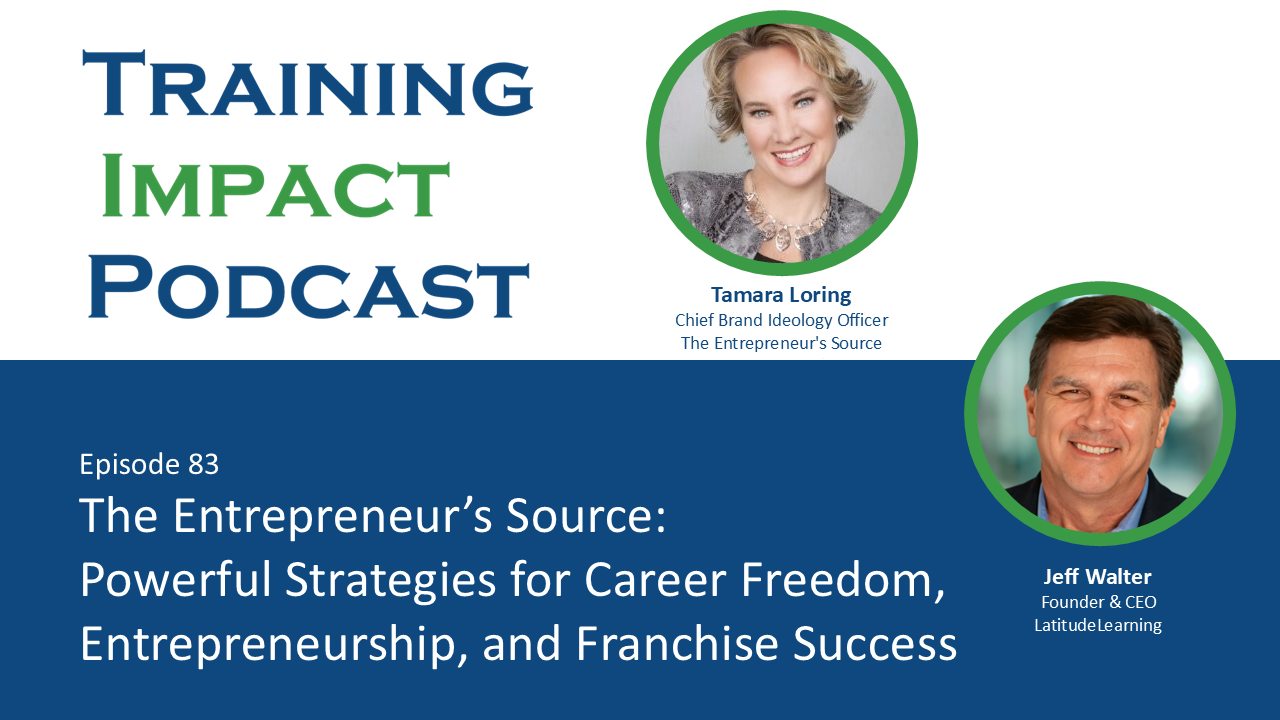
The Entrepreneur’s Source provides an example of how structured career ownership coaching can support this process. Rather than approaching prospective business owners exclusively as candidates for available franchises, the organization emphasizes education, discovery, and the examination of opportunities that individuals may not have previously considered.
Its model connects career ownership coaches, franchise organizations, funding members, and strategic partners within a broader entrepreneurial ecosystem. This structure illustrates how intermediary organizations can help individuals develop greater clarity while creating opportunities for franchise brands to engage with people who have begun exploring the realities of business ownership.
The resulting implications extend beyond franchise recruitment. When prospective owners understand their objectives and the nature of the business systems they are evaluating, franchisors have a stronger foundation for subsequent conversations about expectations, operational execution, and training.
The Entrepreneur’s Source operates within a franchise environment that serves both individuals considering career transitions and organizations seeking to expand their business networks. Its approach reflects the understanding that entrepreneurship is not limited to developing original products or launching companies around entirely new ideas.
Business ownership can also involve operating established concepts, acquiring existing businesses, or participating in franchise systems that have already developed processes for delivering products and services to customers.
This distinction matters because many professionals evaluate entrepreneurial opportunities through assumptions shaped by their previous employment. Someone with a background in hospitality may associate franchising primarily with restaurants, while an individual trained in engineering or technology may assume that ownership opportunities must correspond directly to those disciplines.
Such assumptions can narrow the range of businesses a person is willing to consider, even when other opportunities might better align with their financial objectives, preferred lifestyle, or professional capabilities.
The Entrepreneur’s Source addresses this challenge through career ownership coaching that encourages individuals to reconsider how they define entrepreneurship. The organization refers to the people entering its coaching process as seekers, emphasizing exploration rather than an immediate commitment to purchasing a franchise.
This distinction influences the relationship between coaches and prospective owners. Instead of beginning with a predetermined business concept, the process focuses on understanding what individuals hope to achieve and helping them evaluate possible paths toward those objectives.
The broader ecosystem includes franchisors that provide established business opportunities and strategic partners that contribute specialized services. Emerging and established franchise organizations can participate in this network, creating opportunities for collaboration between people exploring ownership and businesses seeking to develop their franchise systems.
The organization also convenes a private conference bringing together career ownership coaches, franchisors, funding members, and strategic partners. The gathering is designed to strengthen relationships, deepen mutual understanding, and support collaboration across the network.
This structure reflects a central characteristic of franchise enablement: sustainable growth requires coordination among participants whose responsibilities differ but whose activities are closely connected.
One of the most significant challenges in franchise development is that individuals may reject potentially suitable opportunities before understanding how those businesses operate.
Franchising is frequently associated with familiar consumer brands, particularly restaurants and retail businesses. However, the model extends into a wide variety of industries, including services that may receive comparatively little public attention.
The Entrepreneur’s Source recognizes that people often judge opportunities according to whether they personally enjoy a product or have previous experience in the industry. These preferences can influence initial interest, but they do not necessarily indicate whether someone could operate a business successfully.
A person might dismiss a portable sanitation business because the service seems unattractive, even though the underlying business model could warrant examination based on market demand, operational requirements, and the individual’s ownership objectives.
Conversely, strong personal enthusiasm for a product does not automatically translate into the ability to manage a successful business.
The distinction between technical expertise and business ownership capability is particularly important. Someone may be an accomplished professional in a specialized field while lacking experience in managing the broader operational responsibilities associated with ownership.
Franchise systems introduce another consideration because the business model generally requires owners to operate within established standards. Extensive industry experience may be valuable in some circumstances, but it can also create tension when an individual prefers to modify practices that the franchise system expects to remain consistent.
These challenges reveal why conventional recruitment methods based primarily on prior experience or immediate interest may provide an incomplete understanding of potential franchise suitability.
They also have implications for training. When individuals enter a franchise system with unrealistic expectations or a limited understanding of its operating requirements, onboarding must address assumptions that could have been explored earlier.
A structured discovery process cannot eliminate these challenges, but it can create opportunities to identify them before ownership decisions are made.
The Entrepreneur’s Source uses a patented coaching methodology known as the Journey of Discovery to help individuals explore career ownership possibilities.
The process begins with an emphasis on open-mindedness and learning rather than immediate selection. Participants are encouraged to consider alternatives without making premature decisions, allowing their understanding of available opportunities to develop as they examine different business models.
This approach differs from recruitment processes organized primarily around converting an existing expression of interest into a franchise transaction.
A seeker may begin with the belief that another traditional job represents the most practical next step. Through coaching and exploration, that individual may discover business ownership opportunities that were not part of the original career plan.
The organization reports that 95% of coached individuals who ultimately enter business ownership choose an opportunity they would not have independently considered. This is an organization-reported figure rather than an independently verified outcome, but it illustrates the extent to which the discovery process is intended to expand participants’ consideration of unfamiliar possibilities.
The methodology also emphasizes the importance of understanding personal goals before evaluating specific businesses. Financial expectations, lifestyle preferences, independence, and long-term aspirations can influence whether an opportunity deserves further consideration.
By separating these objectives from assumptions about particular industries, the process creates a more deliberate basis for evaluating potential ownership paths.
The approach does not imply that every seeker should become a franchise owner or that any particular business will produce a desired outcome. Its purpose is to support exploration and help individuals make decisions with a clearer understanding of their options.
For franchise organizations, the value lies in the possibility of engaging with individuals who have already begun examining their motivations and considering business ownership as a serious alternative.
This creates a more informed starting point for subsequent evaluation, although each franchisor remains responsible for determining whether a candidate meets its specific ownership requirements.
Structured discovery depends on the quality of the relationship between the individual seeking guidance and the organization providing it.
The Entrepreneur’s Source emphasizes an approach consistent with the platinum rule, which encourages treating people according to how they wish to be treated rather than assuming that everyone shares the same priorities.
Within career ownership coaching, this principle supports a more individualized understanding of goals, expectations, and decision-making preferences.
A prospective owner who values schedule flexibility may evaluate opportunities differently from someone primarily interested in developing a multi-location business. Another individual may place greater importance on community involvement, professional independence, or building a family enterprise.
Effective evaluation requires these differences to be recognized rather than reduced to a single definition of entrepreneurial success.
Trust also becomes important because career transitions can involve uncertainty. Individuals who have experienced layoffs, professional dissatisfaction, or limited advancement opportunities may be especially cautious about unfamiliar business models.
A coaching process that prioritizes education can provide space for individuals to examine possibilities without assuming that exploration must result in a particular transaction.
The Entrepreneur’s Source’s distinction between seekers and leads reinforces this philosophy. Language alone does not guarantee a different experience, but it reflects an organizational intention to treat career exploration as a developmental process rather than simply a sales qualification exercise.
For franchise systems, this perspective has broader relevance. Early interactions influence how prospective owners understand the brand, its expectations, and the nature of the relationship they may eventually enter.
When those interactions are grounded in clarity and trust, they provide a stronger basis for evaluating whether the relationship should continue.
Structured Evaluation as the Beginning of an Enablement Pathway
The Journey of Discovery illustrates how evaluation and education can overlap before a formal business relationship begins.
Although career ownership coaching is distinct from franchise onboarding, both activities require individuals to acquire new information, reconsider assumptions, and develop an understanding of unfamiliar responsibilities.
The discovery process introduces participants to business models and ownership considerations that may differ substantially from their previous professional experiences. It also encourages them to examine how established systems function and why successful franchise operations depend on more than enthusiasm for a product or service.
These activities resemble the earliest stages of an enablement pathway because they help individuals establish a foundation for more specialized learning.
Once a prospective owner begins evaluating a particular franchise, additional education is necessary to understand the brand’s operating requirements, customer expectations, and business practices.
The transition from general discovery to brand-specific evaluation is therefore important. Career ownership coaching can help individuals clarify their goals, while franchisors must determine whether their systems and expectations align with those goals.
This distinction prevents the discovery process from being mistaken for a substitute for formal franchise qualification or operational training.
Instead, the two can be understood as complementary stages within a broader ownership lifecycle.
For organizations developing franchise training programs, the implication is that training readiness begins with understanding who will be entering the system and what assumptions, capabilities, and expectations they bring.
The more clearly these factors are understood, the more effectively subsequent training can address the responsibilities of operating within an established brand.
A franchise system derives much of its value from the ability to replicate business practices across independently operated locations.
That replication depends on more than providing written procedures. Owners and their teams must understand how the system works, why its standards matter, and how individual responsibilities contribute to a consistent customer experience.
The Entrepreneur’s Source model illustrates the importance of preparing individuals to recognize the value of established processes before they assume ownership responsibilities.
One example involves a software professional who left a senior development position to establish a kickboxing franchise with his spouse. Although his technical background differed from the business he entered, he had gained exposure to organizational systems, training practices, and the operational disciplines associated with scaling businesses.
He subsequently applied those transferable capabilities to franchise ownership and became a successful multi-unit operator.
The example demonstrates that relevant preparation is not always limited to direct industry experience. Analytical thinking, familiarity with structured processes, and an understanding of operational consistency can also contribute to an individual’s ability to work within a franchise model.
For franchisors, this reinforces the need to distinguish between competencies that must exist before ownership and those that can be developed through training.
Formal onboarding can teach brand-specific procedures, systems, and operational standards, but it cannot automatically resolve every difference between an owner’s expectations and the franchise model.
This is where alignment and training intersect. Early evaluation helps establish whether an individual is prepared to operate within a defined framework, while training develops the knowledge and capabilities necessary to apply that framework.
The relationship is especially relevant in distributed organizations, where the effectiveness of training depends on consistent execution by people operating outside direct corporate management.
Franchise systems represent a practical example of the challenges associated with extended enterprise training.
Unlike employee training conducted entirely within a single organization, franchise enablement involves individuals and businesses operating through a network of contractual and commercial relationships.
Franchise owners may be independent business operators, but their decisions and the performance of their teams influence the experience customers associate with the broader brand.
This creates a need for learning systems that extend beyond corporate employees and support participants throughout a distributed business network.
The Entrepreneur’s Source does not describe a specific learning management system implementation or a documented technology architecture for delivering franchise training. Its contribution to this discussion is instead found in the structure of its relationships and its emphasis on established systems.
The organization connects individuals exploring ownership with franchisors that have developed repeatable business models. It also maintains relationships with strategic partners, including LatitudeLearning, that can contribute specialized operational and training resources.
These relationships demonstrate how franchise enablement can involve multiple organizations rather than a single centralized training department.
For franchisors, the broader implication is that training infrastructure must support the realities of distributed ownership. Learning requirements can differ between prospective owners, new franchisees, experienced operators, managers, and customer-facing employees.
An effective extended enterprise learning strategy must therefore consider both the consistency required by the brand and the distinct responsibilities of the people participating in its network.
The case also reinforces the importance of connecting learning to customer outcomes. Franchise systems ultimately depend on delivering services that meet local market needs, making operational knowledge and consistent execution central to the value of the business model.
The Entrepreneur’s Source ecosystem extends beyond the relationship between an individual seeker and a career ownership coach.
Its private industry conference brings together coaches, franchisors, funding members, and strategic partners to deepen their understanding of one another’s roles and objectives.
For coaches, the gathering creates opportunities to learn about franchise organizations, their expansion priorities, and the characteristics they seek in prospective owners.
For franchisors, it provides a setting in which they can better understand the Journey of Discovery methodology and the ways individuals may become interested in opportunities they had previously overlooked.
Strategic partners contribute another dimension by connecting growing businesses with specialized resources that may support operational development.
This arrangement illustrates the importance of knowledge exchange in a distributed business ecosystem. Participants bring different forms of expertise, and collaboration can reduce the need for every organization to develop each capability independently.
The same principle applies within franchise networks, where owners can benefit from sharing experiences with others operating similar businesses.
Established franchise systems offer access not only to procedures and brand standards, but also to communities of operators who encounter comparable challenges.
This peer network can complement formal training by providing opportunities to exchange practical knowledge, discuss operational decisions, and recognize effective approaches developed elsewhere in the system.
Such collaboration does not replace the need for standardized learning, but it can contribute to continuous improvement and reinforce the value of participating in a larger network.
The relationships established during franchise discovery can influence expectations long after the initial ownership decision.
Prospective owners are not simply selecting a product or service to sell. They are considering participation in a business system that includes operating standards, support relationships, and a community of other owners.
The Entrepreneur’s Source model places particular emphasis on helping individuals understand their objectives before deciding which opportunities deserve further evaluation.
This creates a useful distinction between short-term recruitment activity and the longer-term requirements of franchise participation.
An individual may initially be attracted to the independence associated with ownership, but successful participation also requires an understanding of the responsibilities that accompany an established business model.
Likewise, a franchisor may seek to expand its network, but the ongoing relationship involves supporting owners as they apply operating practices and respond to changing business conditions.
These considerations suggest that franchise enablement should be understood as a lifecycle rather than a single onboarding event.
Initial discovery and evaluation establish the context for ownership, while subsequent training, operational support, and peer collaboration help participants develop their capabilities over time.
For organizations designing extended enterprise learning programs, the challenge is to maintain continuity between these stages.
The same commitment to clarity that supports early evaluation should continue through role-based training, operational guidance, and ongoing development.
The broader strategic lesson from The Entrepreneur’s Source is that franchise growth depends on coordination between individual aspirations, established operating models, and the resources available to support participants.
The organization’s coaching methodology addresses one part of this challenge by helping people consider opportunities outside their initial expectations.
Its relationships with franchisors and strategic partners address another by connecting the discovery process to organizations that provide business systems and specialized expertise.
This ecosystem approach can broaden the range of opportunities individuals examine while supporting more informed engagement between prospective owners and franchise organizations.
However, the available information does not establish that the methodology produces higher franchise retention, faster onboarding, or superior financial performance. Those outcomes would require additional operational evidence.
What the model does demonstrate is a structured approach to education, relationship development, and opportunity exploration.
For franchise leaders, these practices offer a framework for considering how early alignment affects the demands placed on later training and support.
For learning and development teams, they reinforce the importance of treating participant readiness as a meaningful consideration when designing programs for distributed business networks.
As franchise systems expand, the ability to maintain consistent practices while supporting independently operated locations becomes increasingly important. Established processes, accessible expertise, and opportunities for collaboration provide mechanisms through which organizations can address that complexity.
The Entrepreneur’s Source provides a useful example of how structured coaching and collaborative relationships can contribute to the early stages of franchise enablement.
Its Journey of Discovery methodology encourages individuals to evaluate business ownership through a broader understanding of their goals and available opportunities, while its entrepreneurial ecosystem connects coaches, franchise organizations, and strategic partners around shared interests in business development.
The case reinforces an important distinction between attracting prospective owners and preparing them to participate in a distributed business system. Interest in entrepreneurship may begin the process, but effective franchise participation requires clarity about expectations, an understanding of established operating models, and access to appropriate training and support.
As franchise organizations continue to develop their networks, thoughtful alignment before ownership, structured learning after entry, and sustained collaboration throughout the relationship remain interconnected considerations.
The long-term value of franchise enablement lies in treating these activities as parts of a continuous process that supports operational consistency, informed decision-making, and responsible growth.
For more information on The Entrepreneur’s Source, visit their website – https://entrepreneurssource.com/